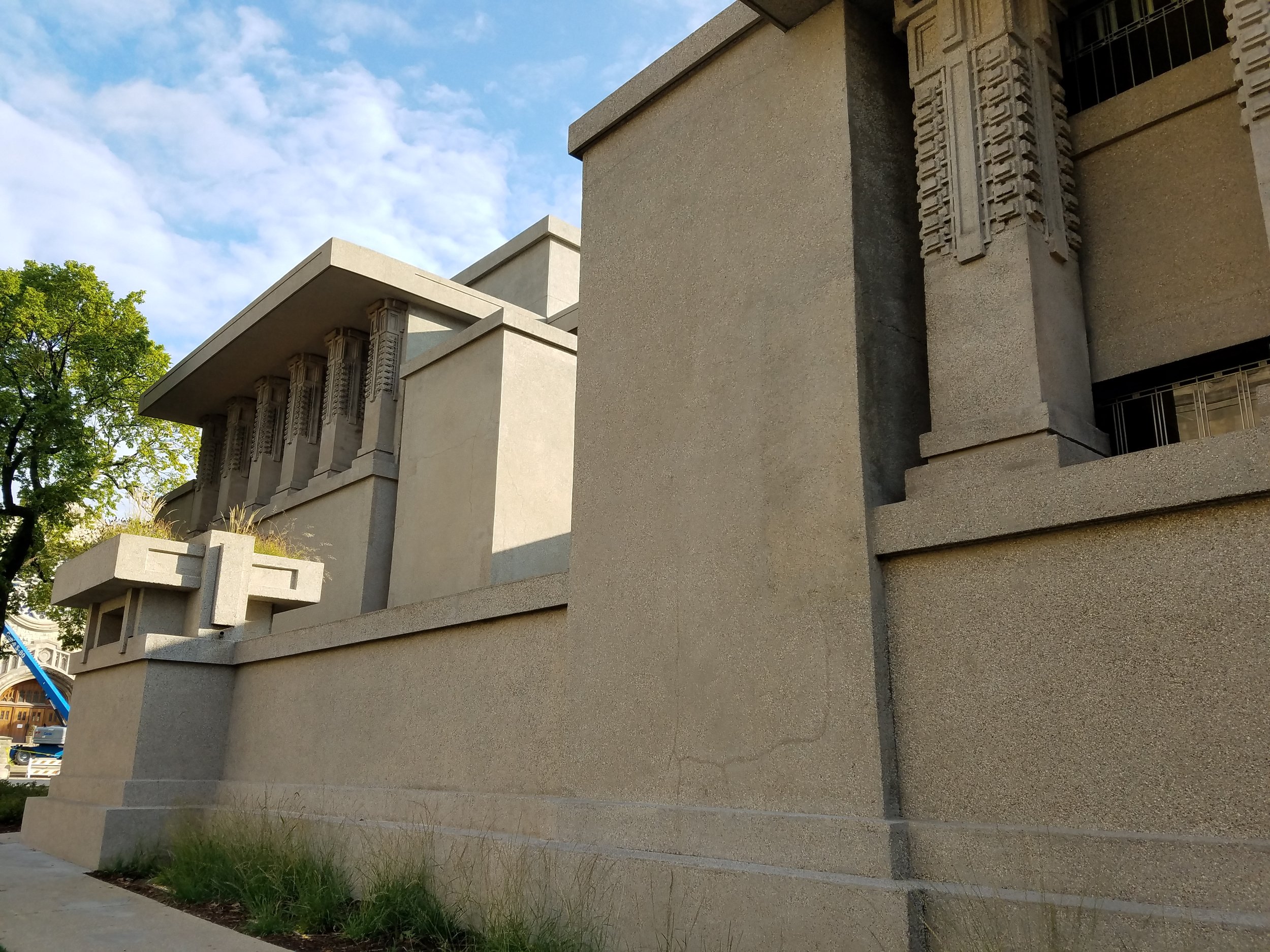
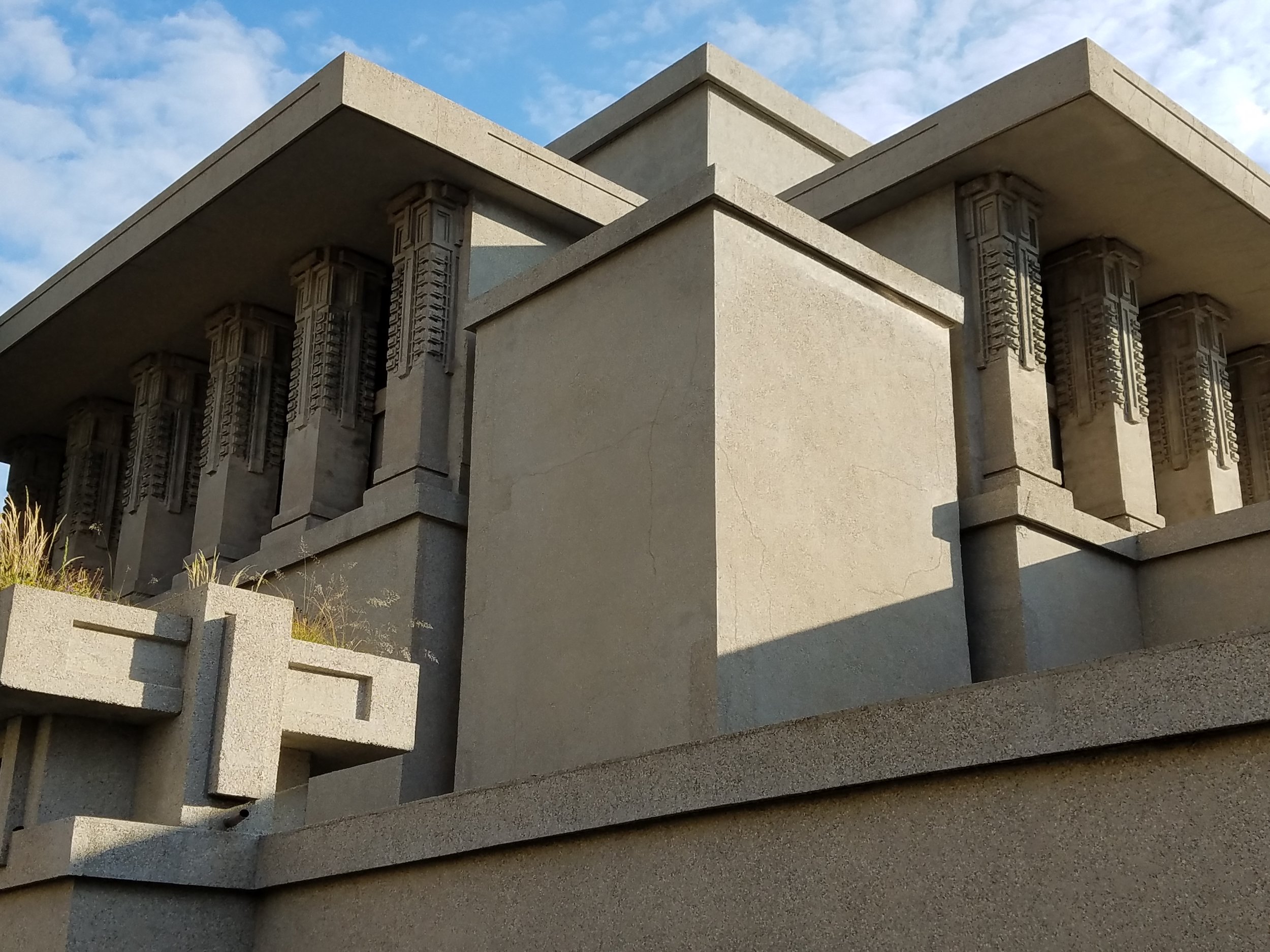
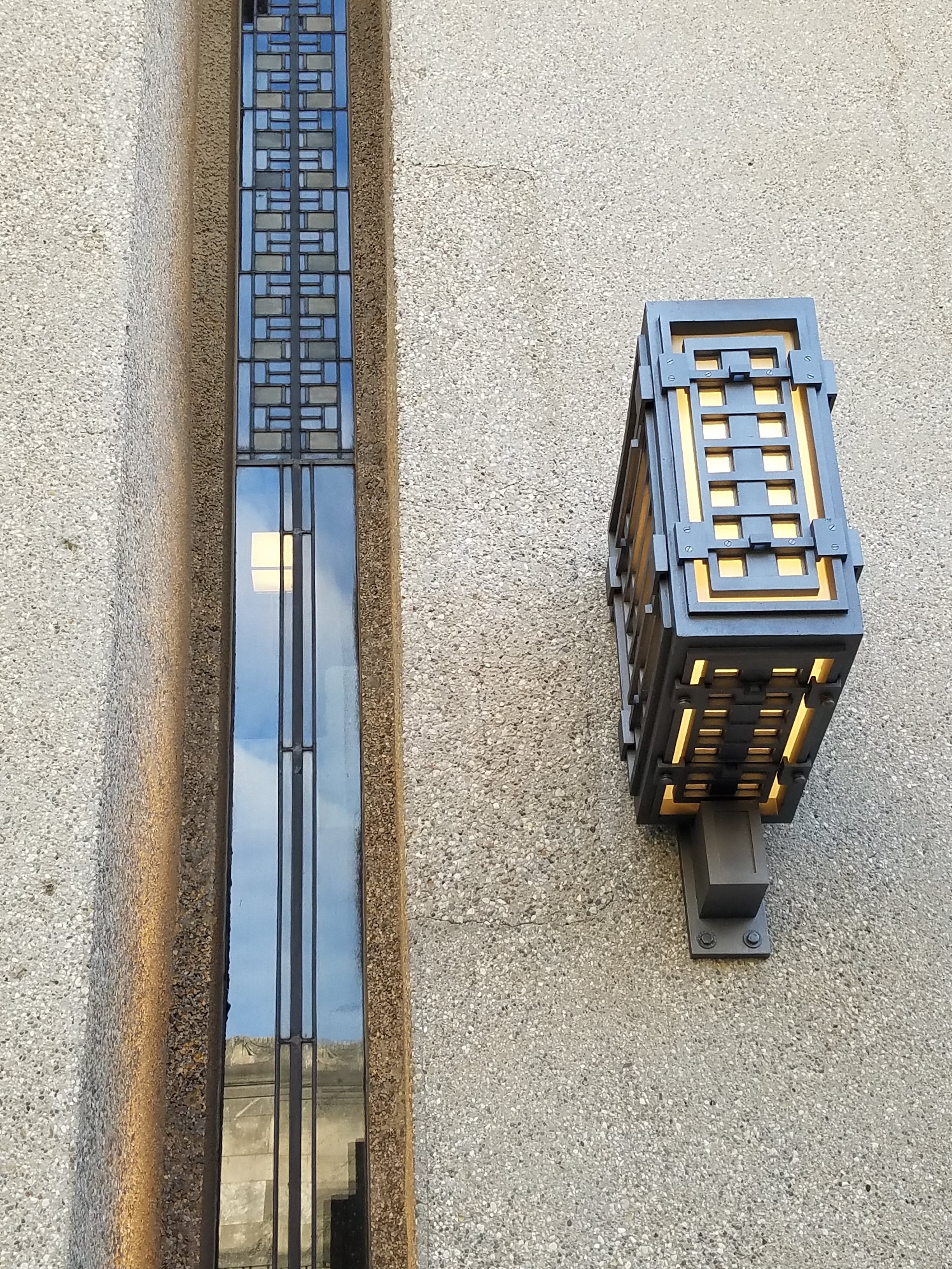
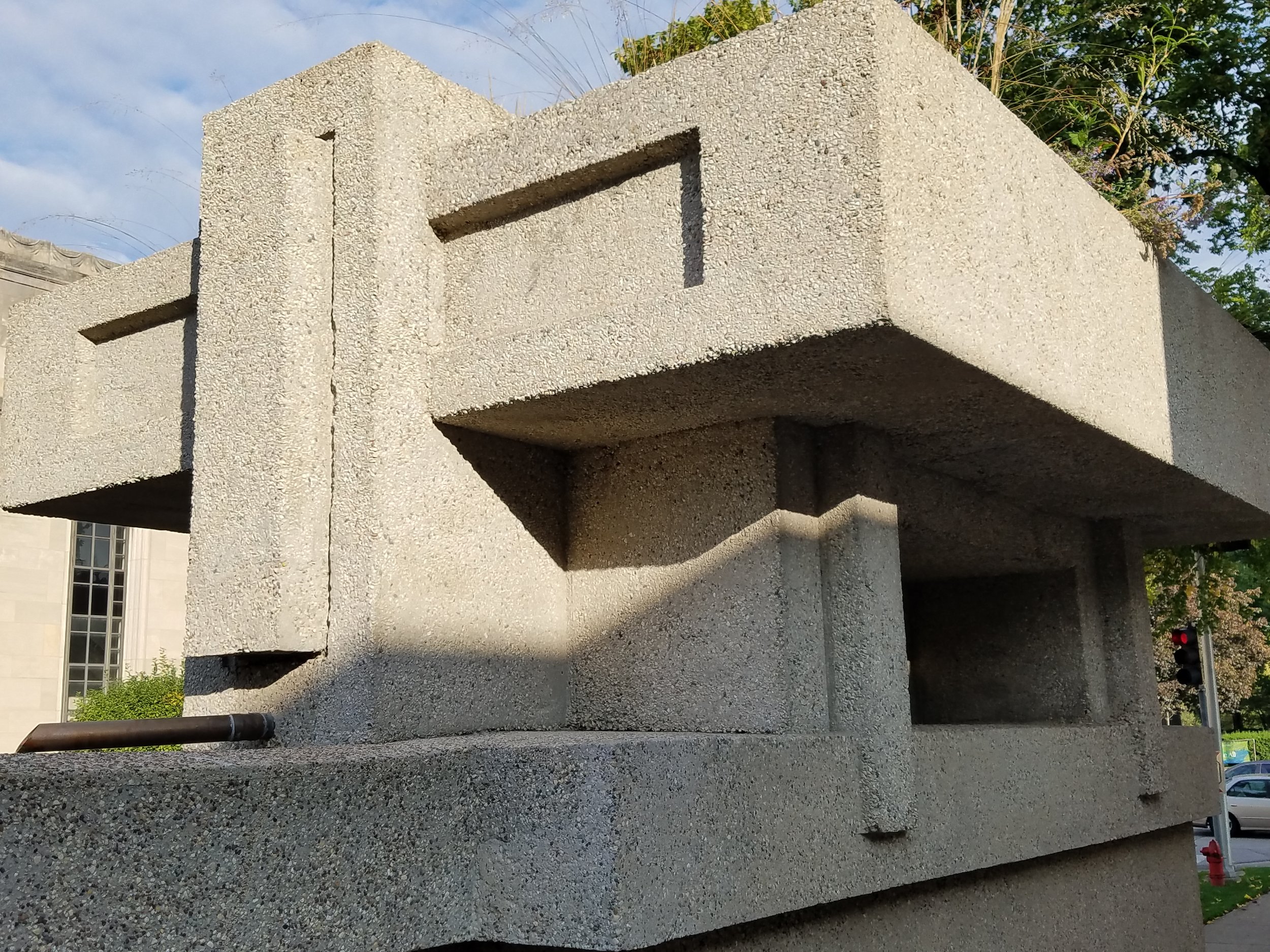
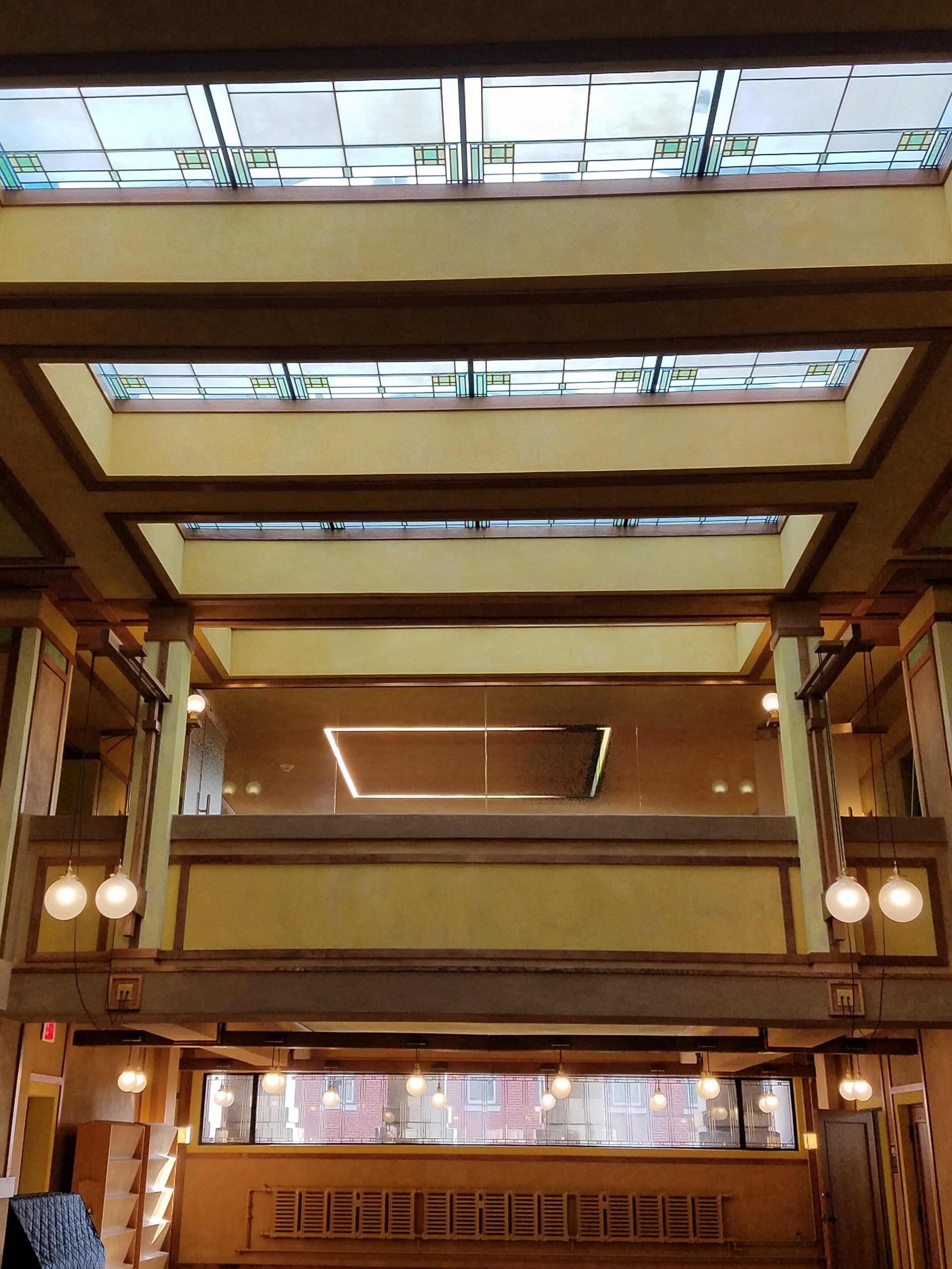
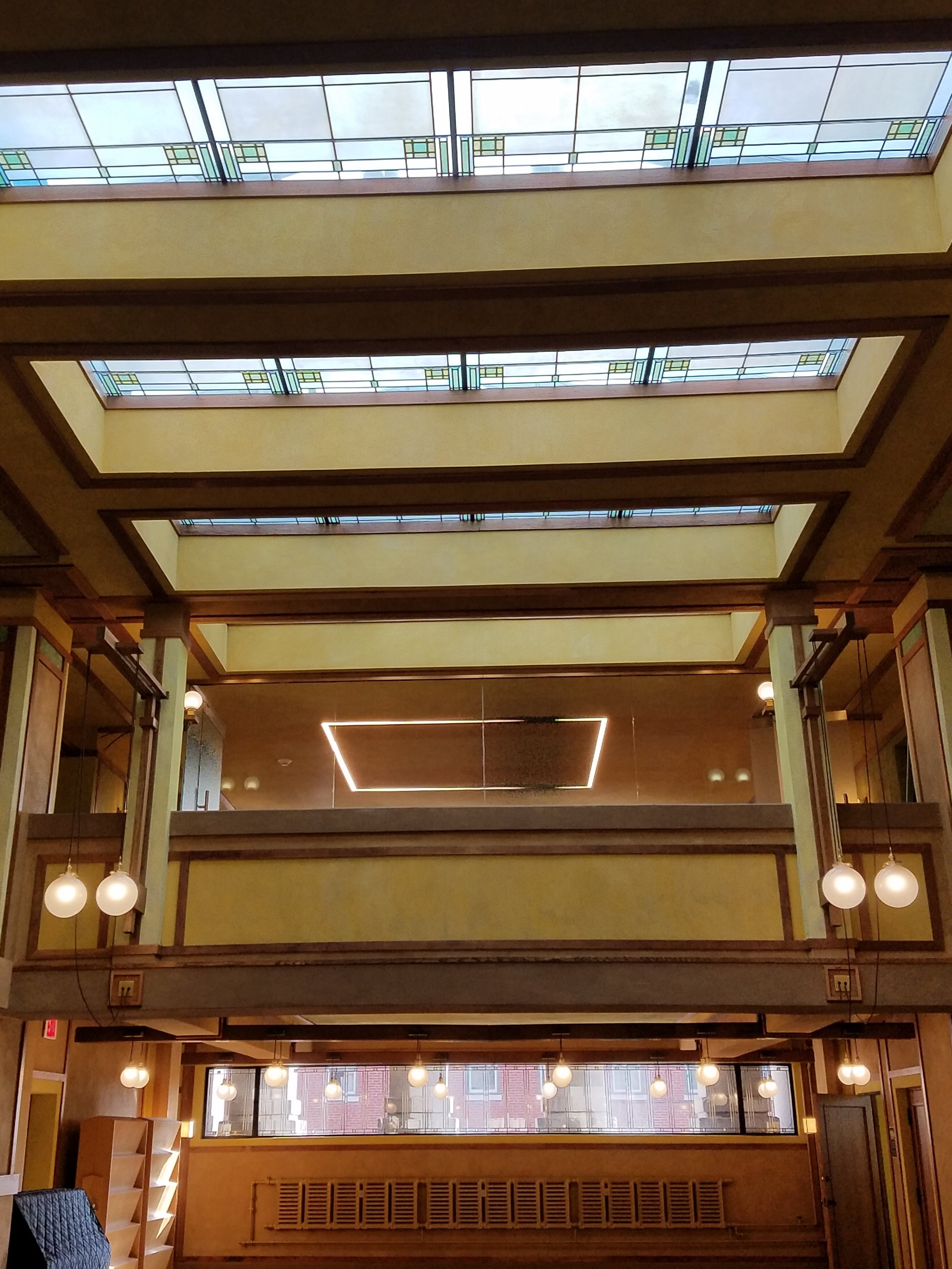
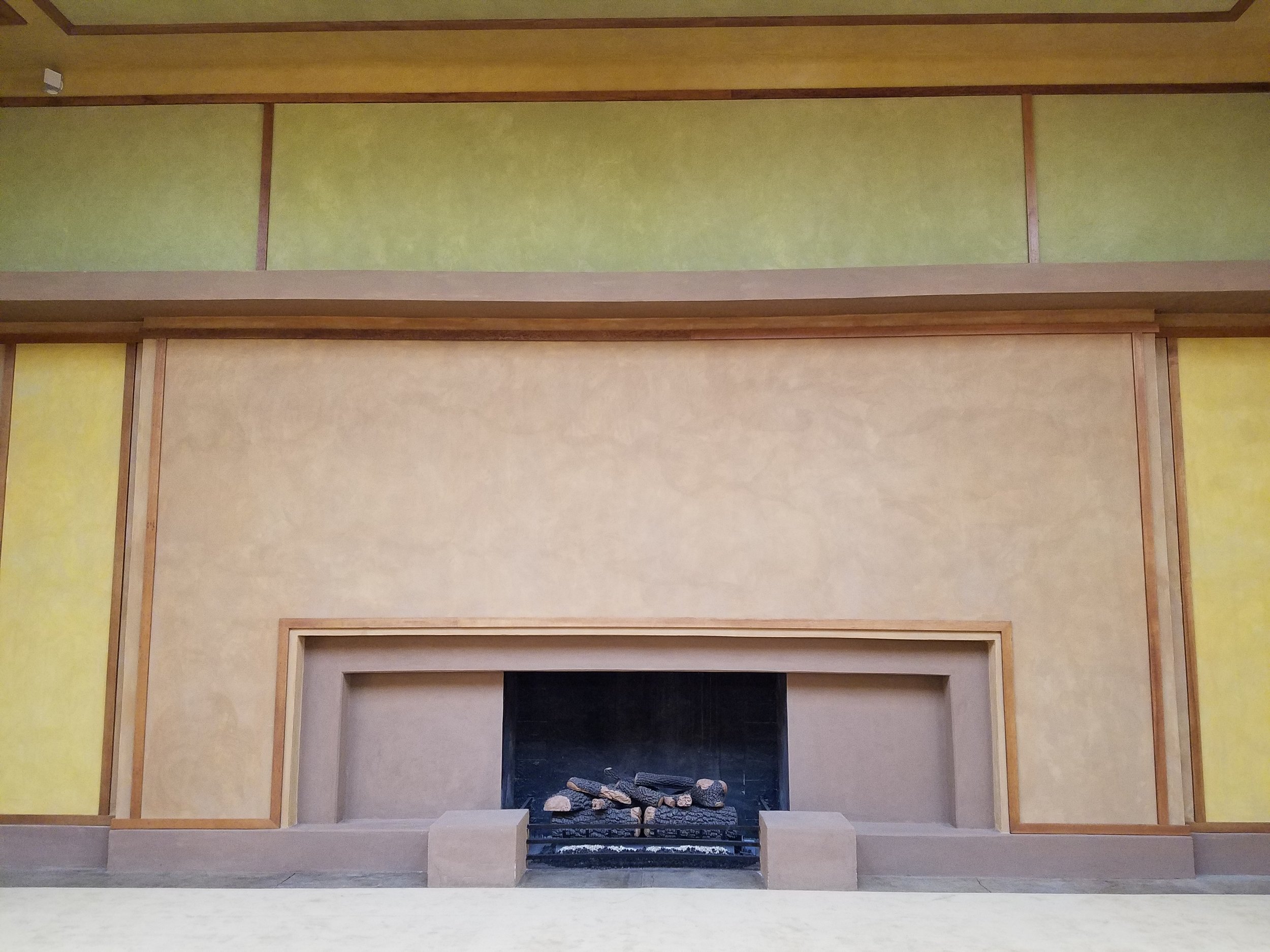
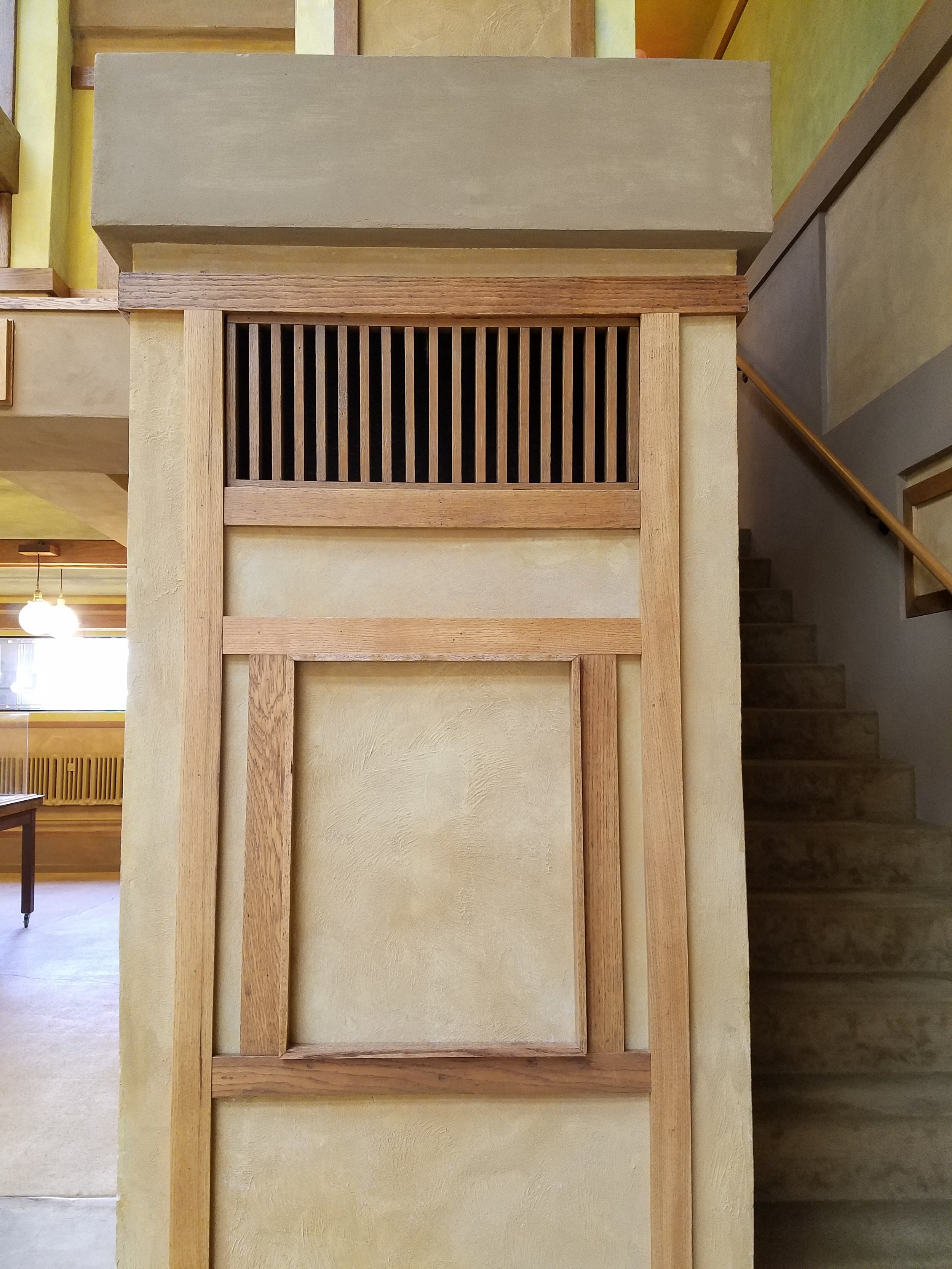
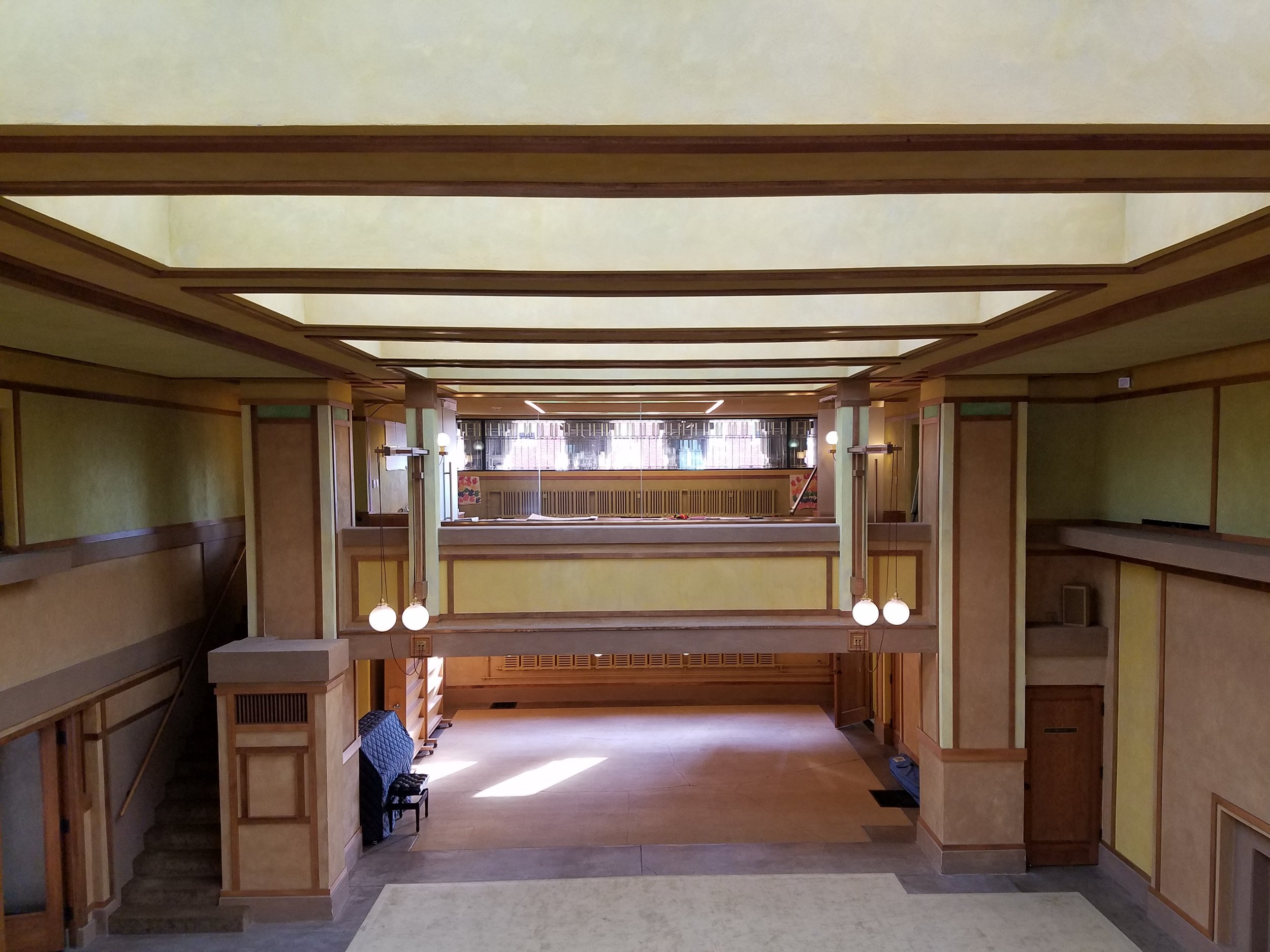
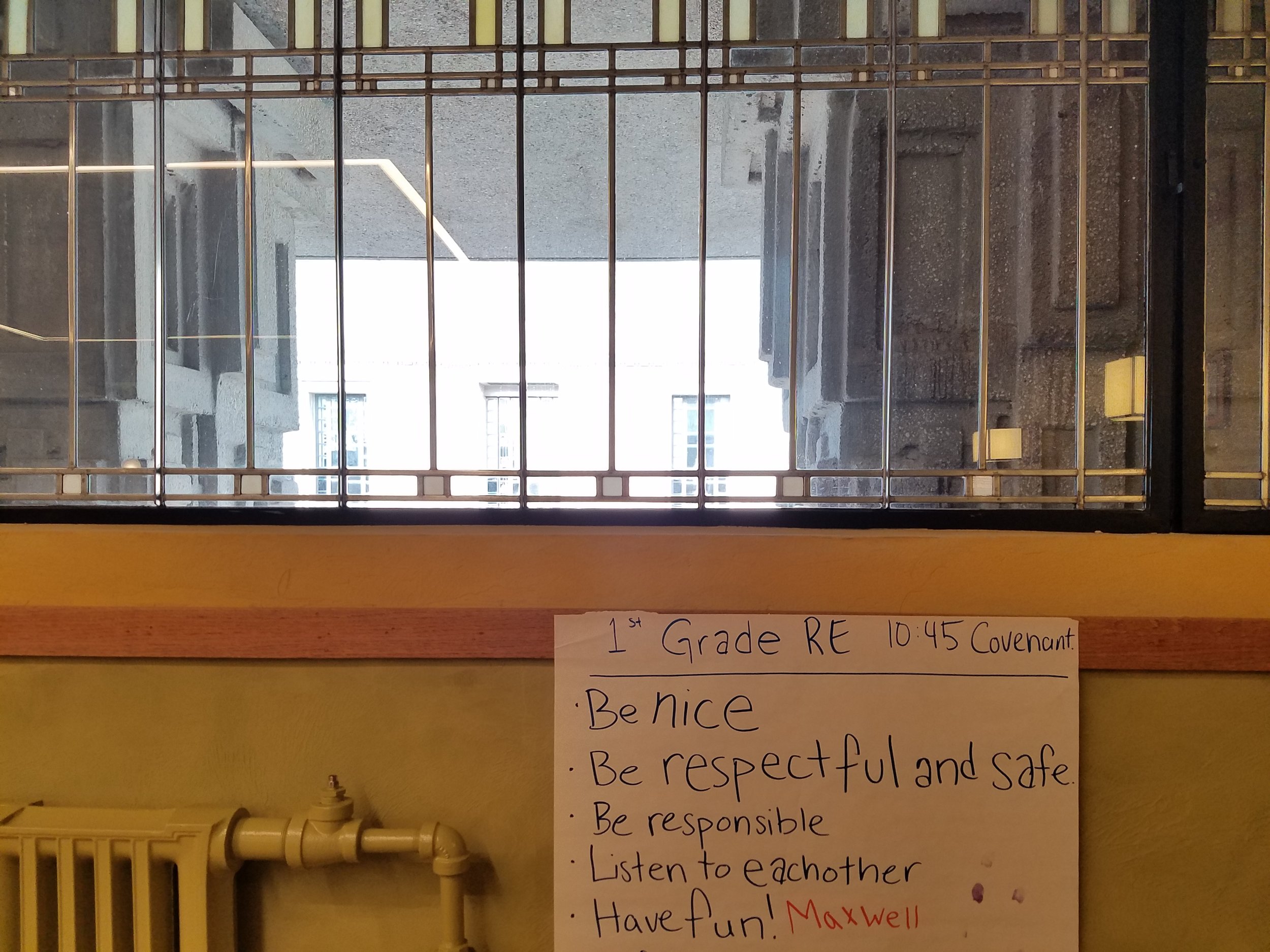
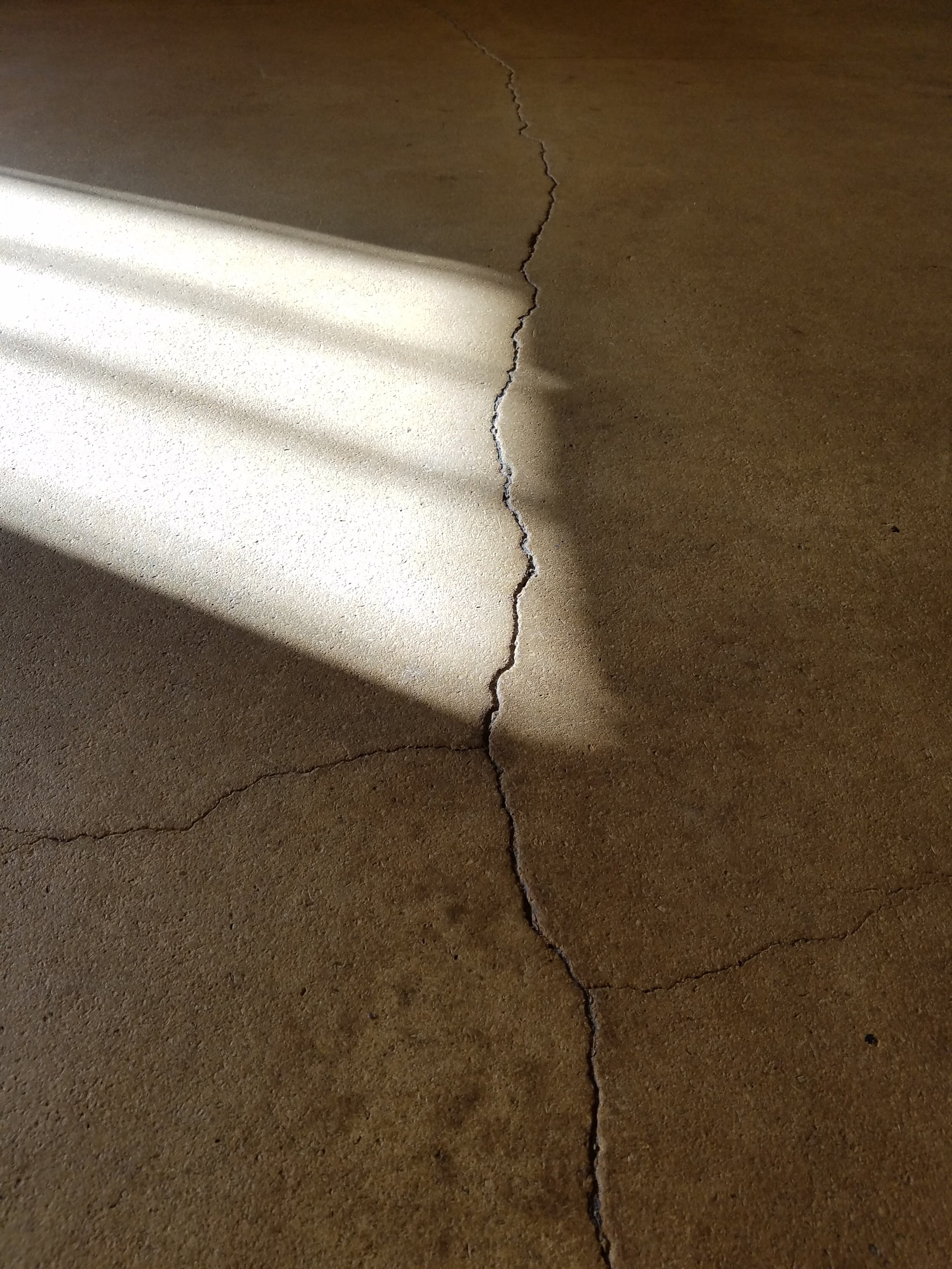
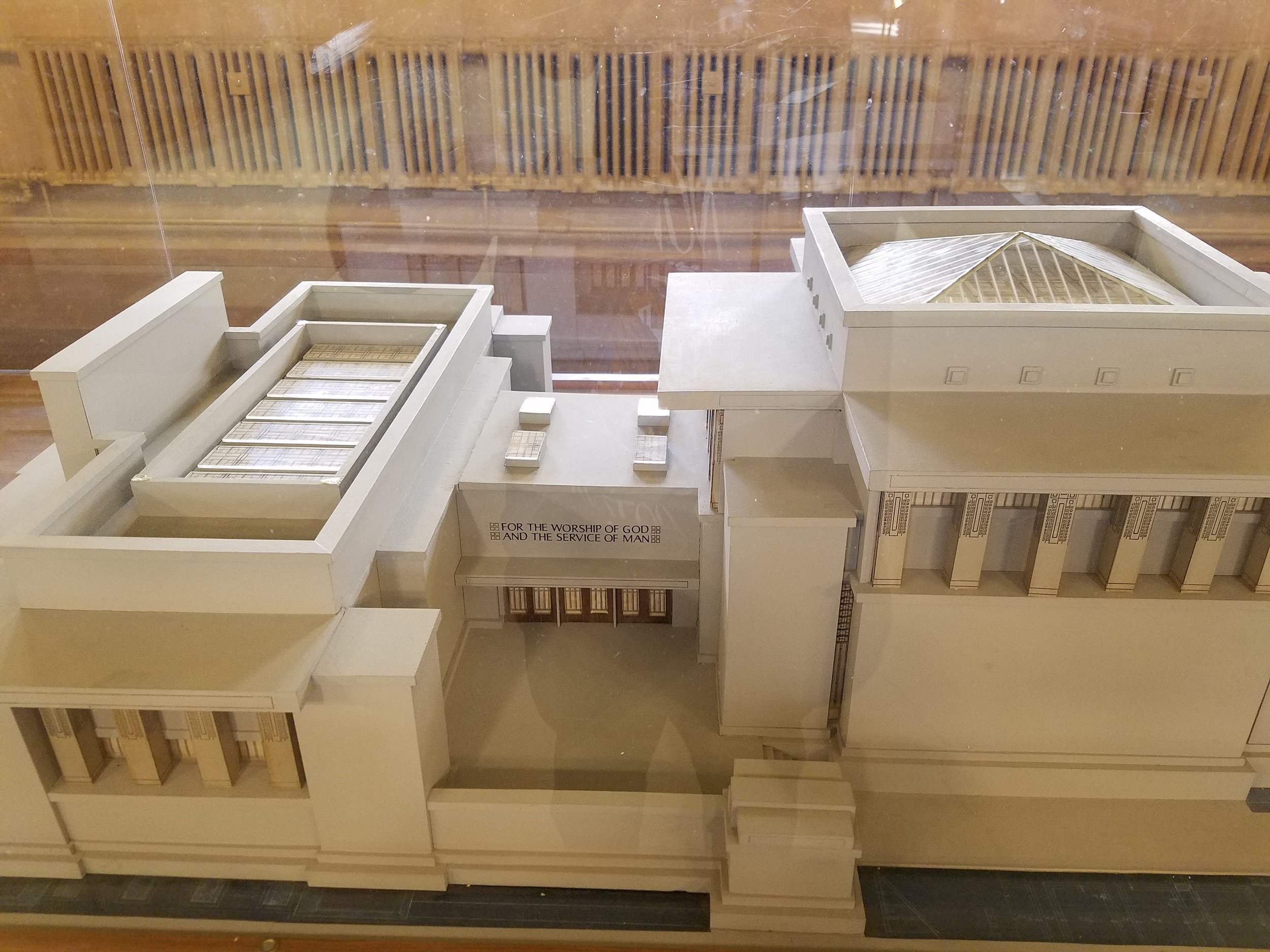
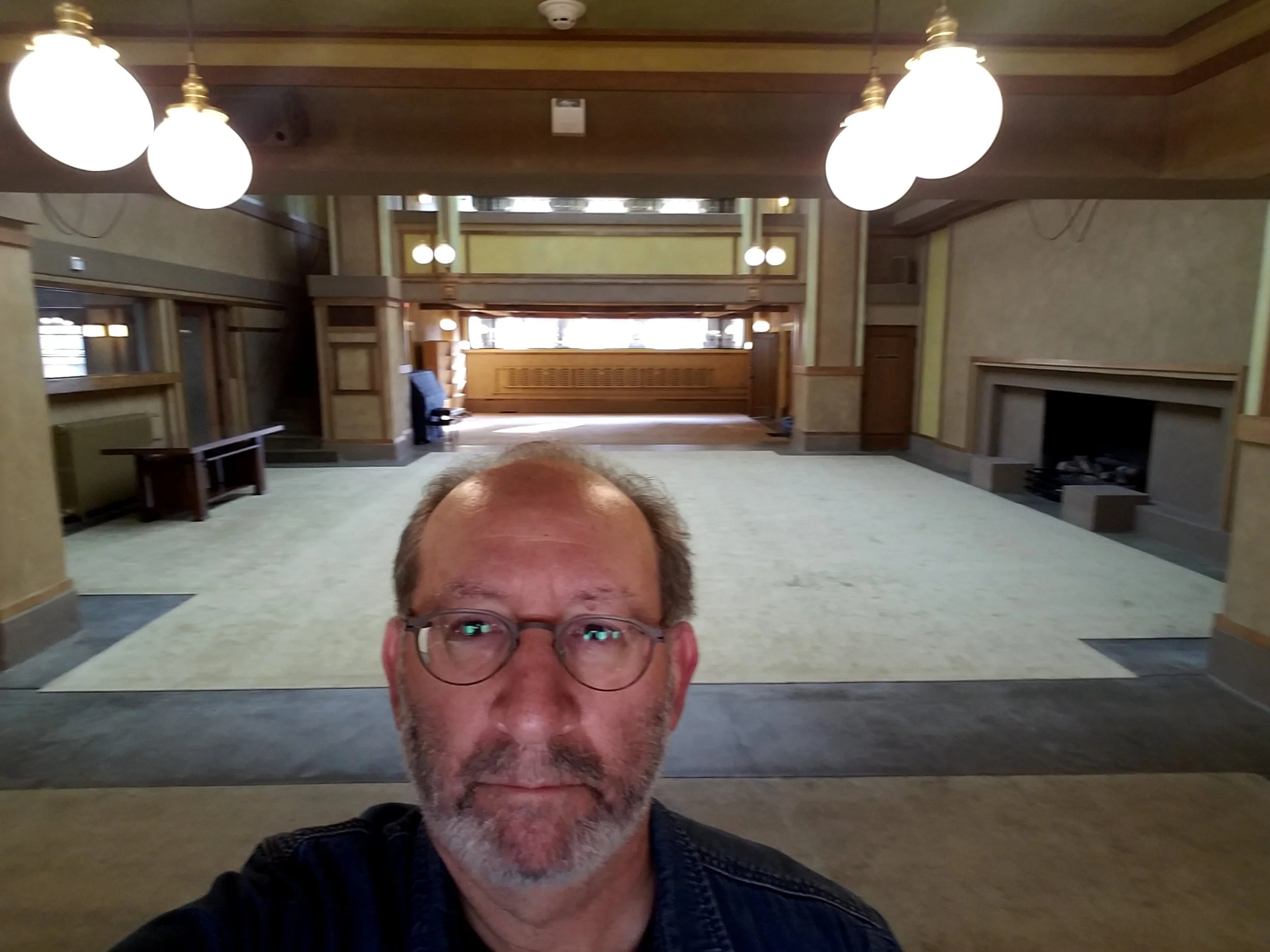
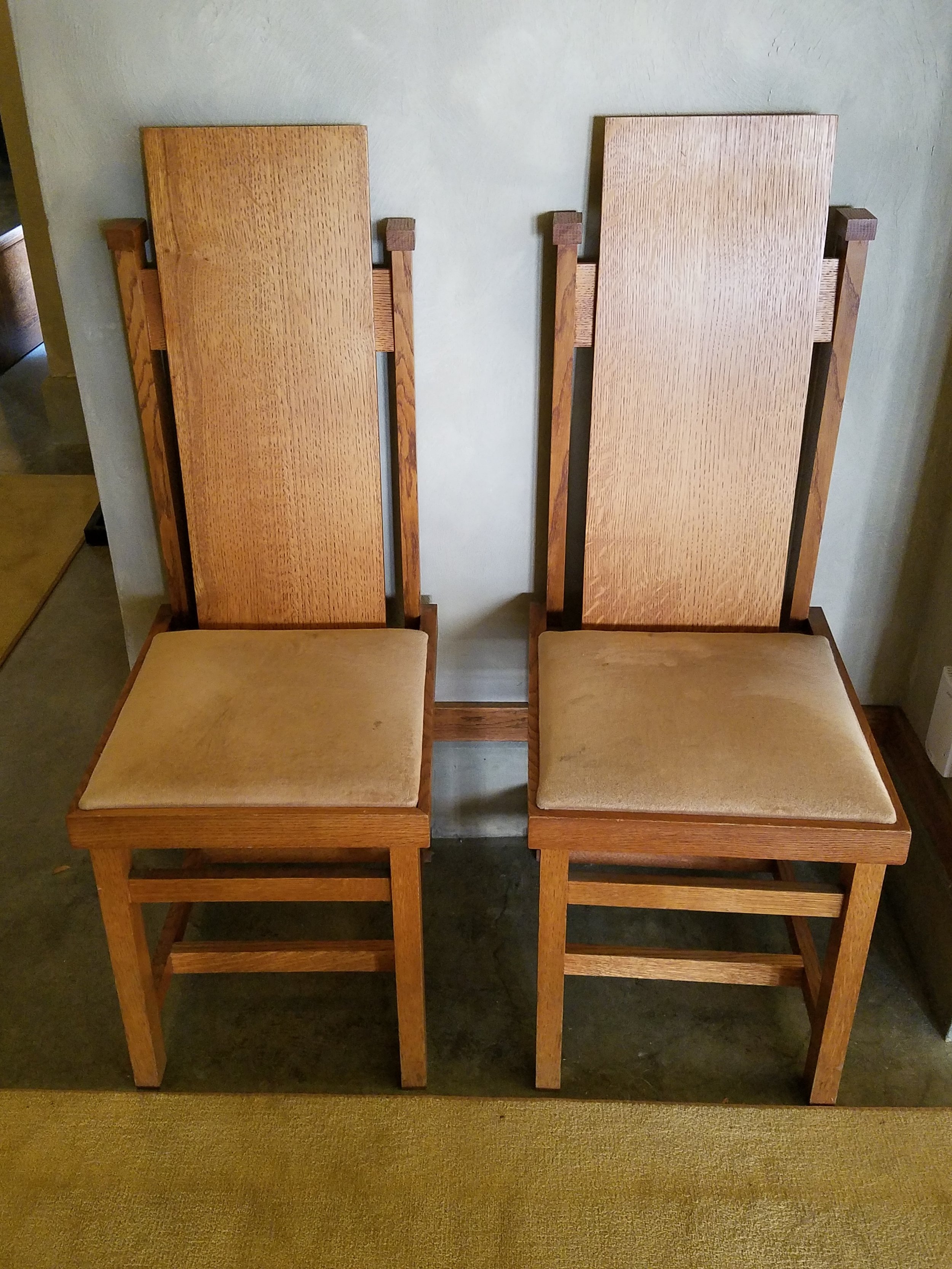
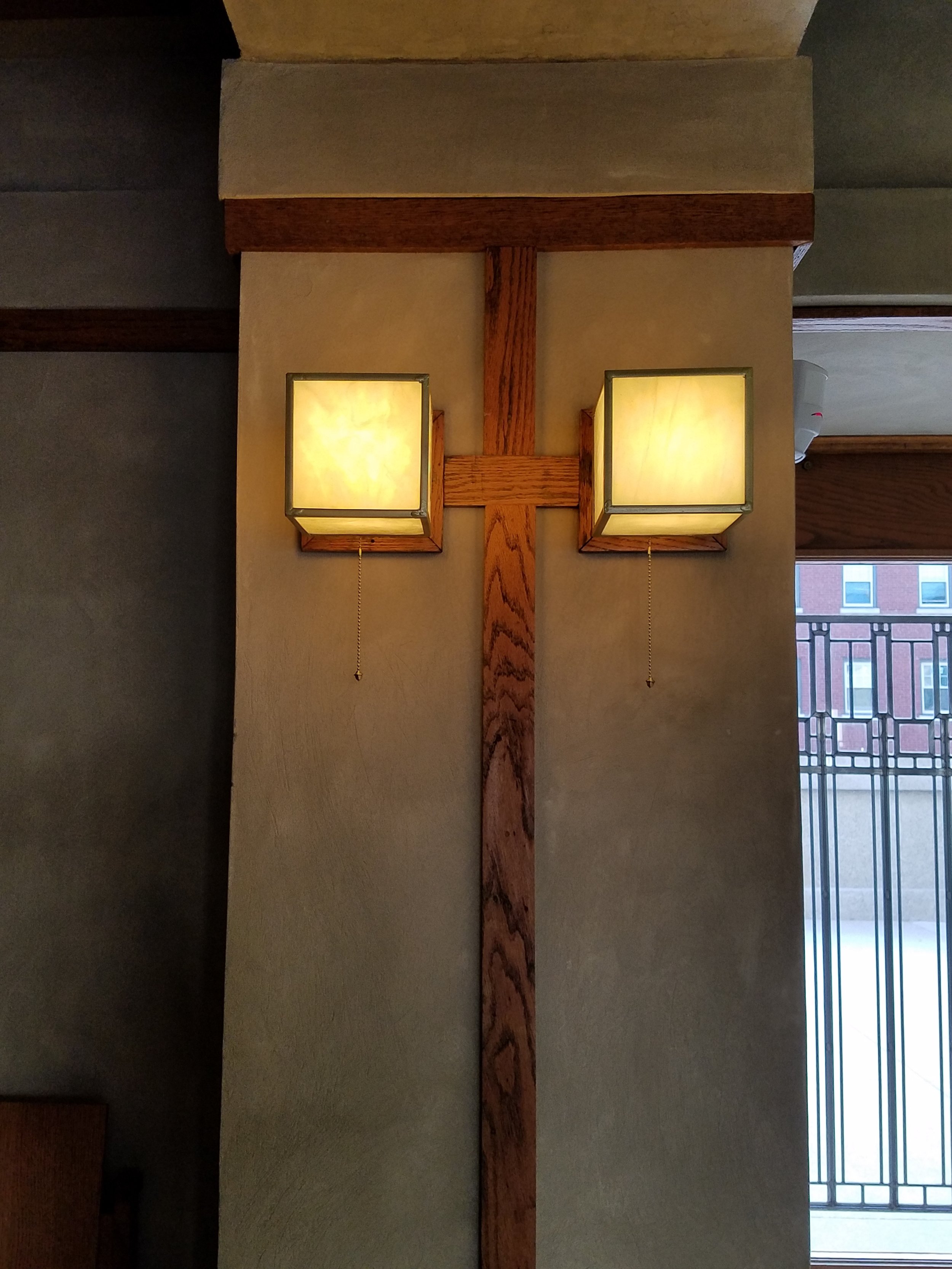
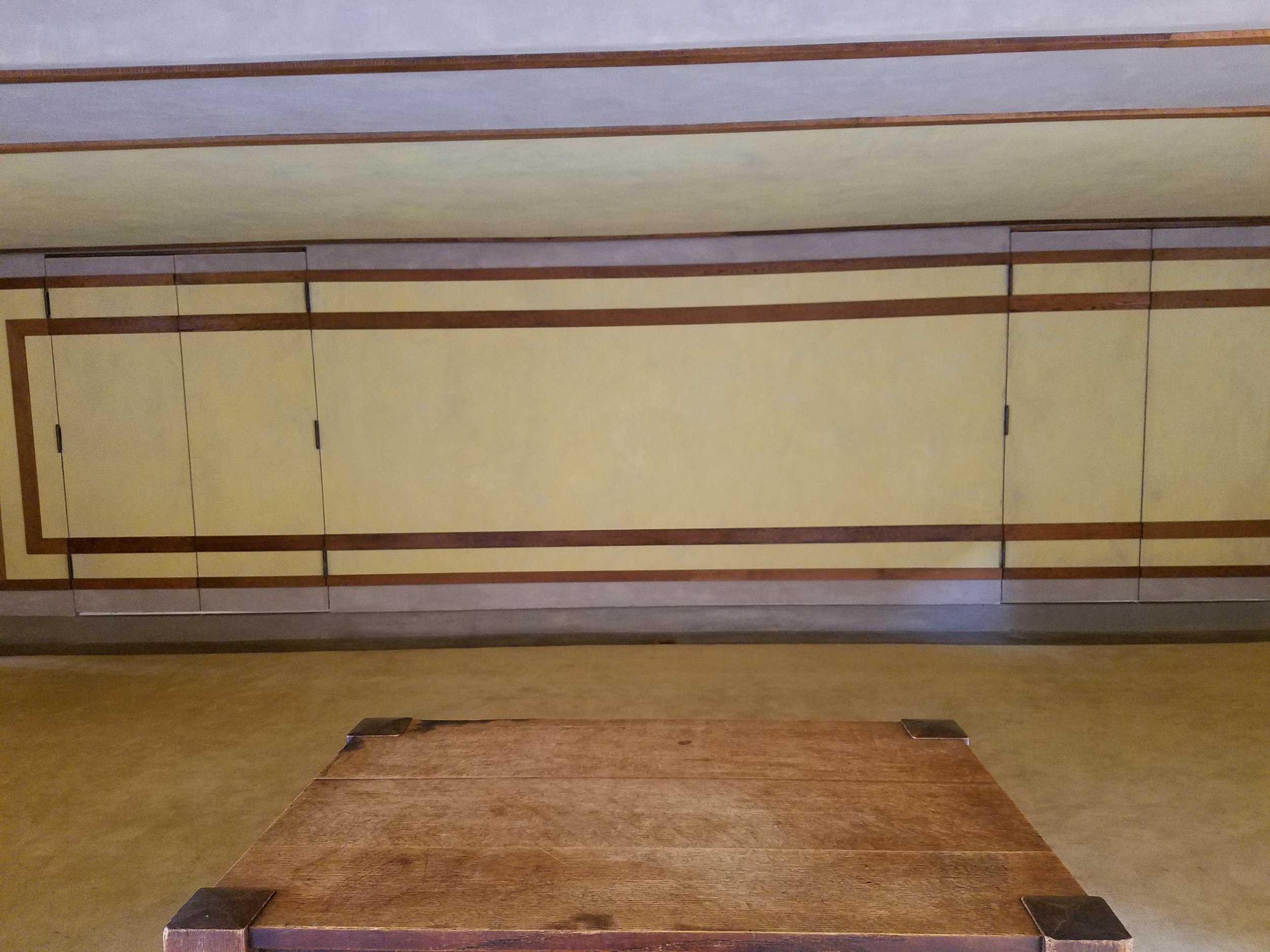
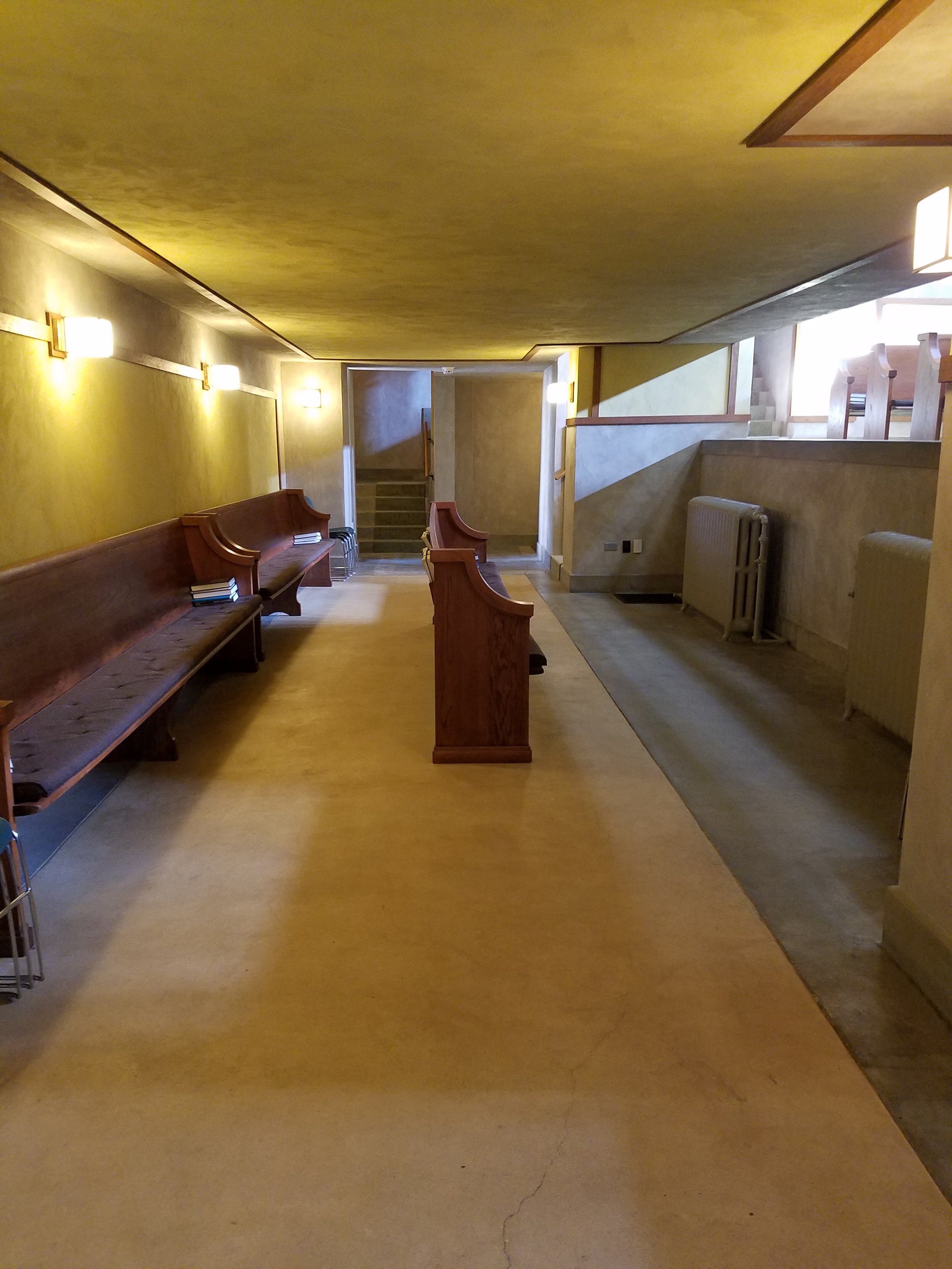
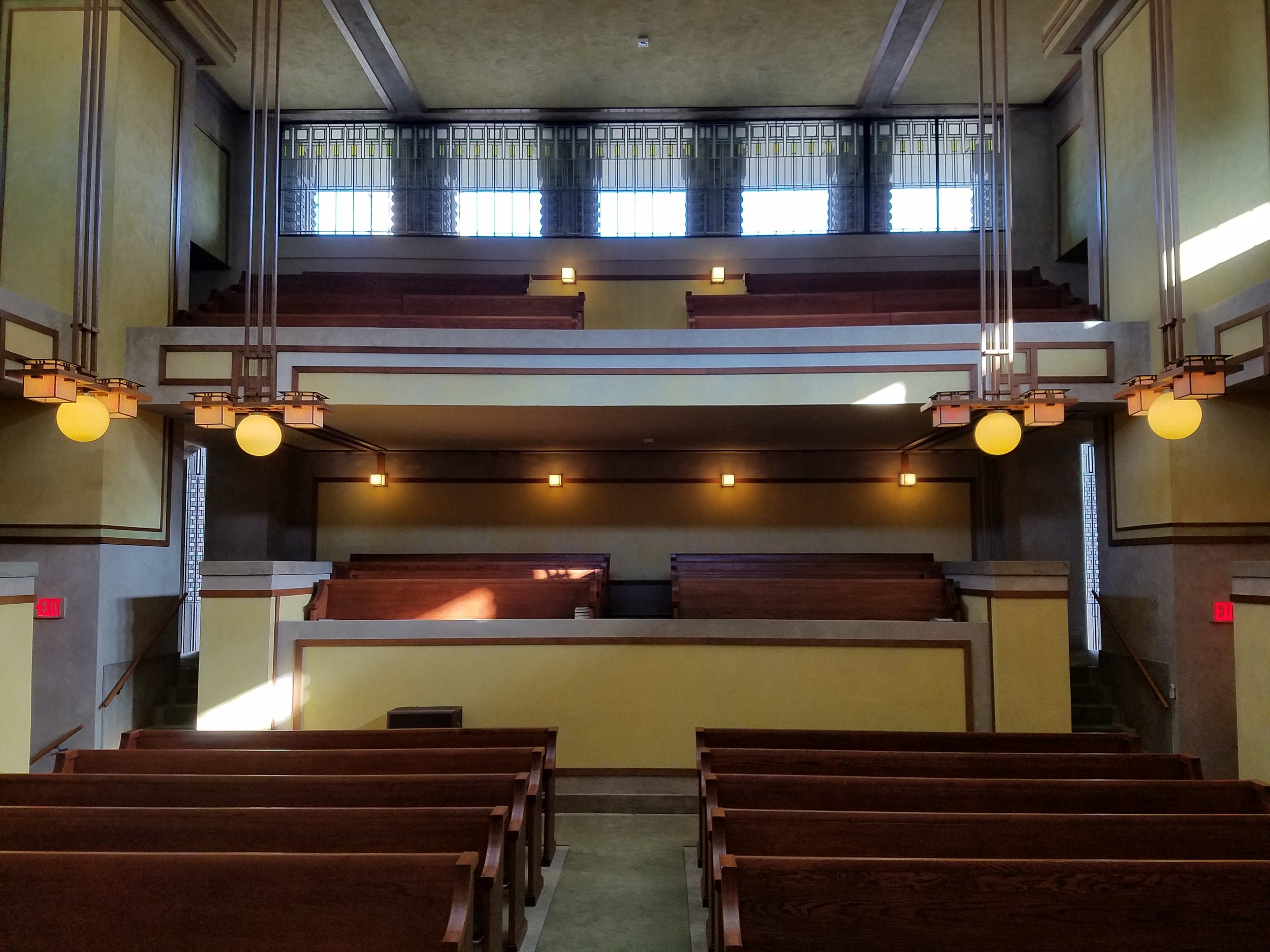
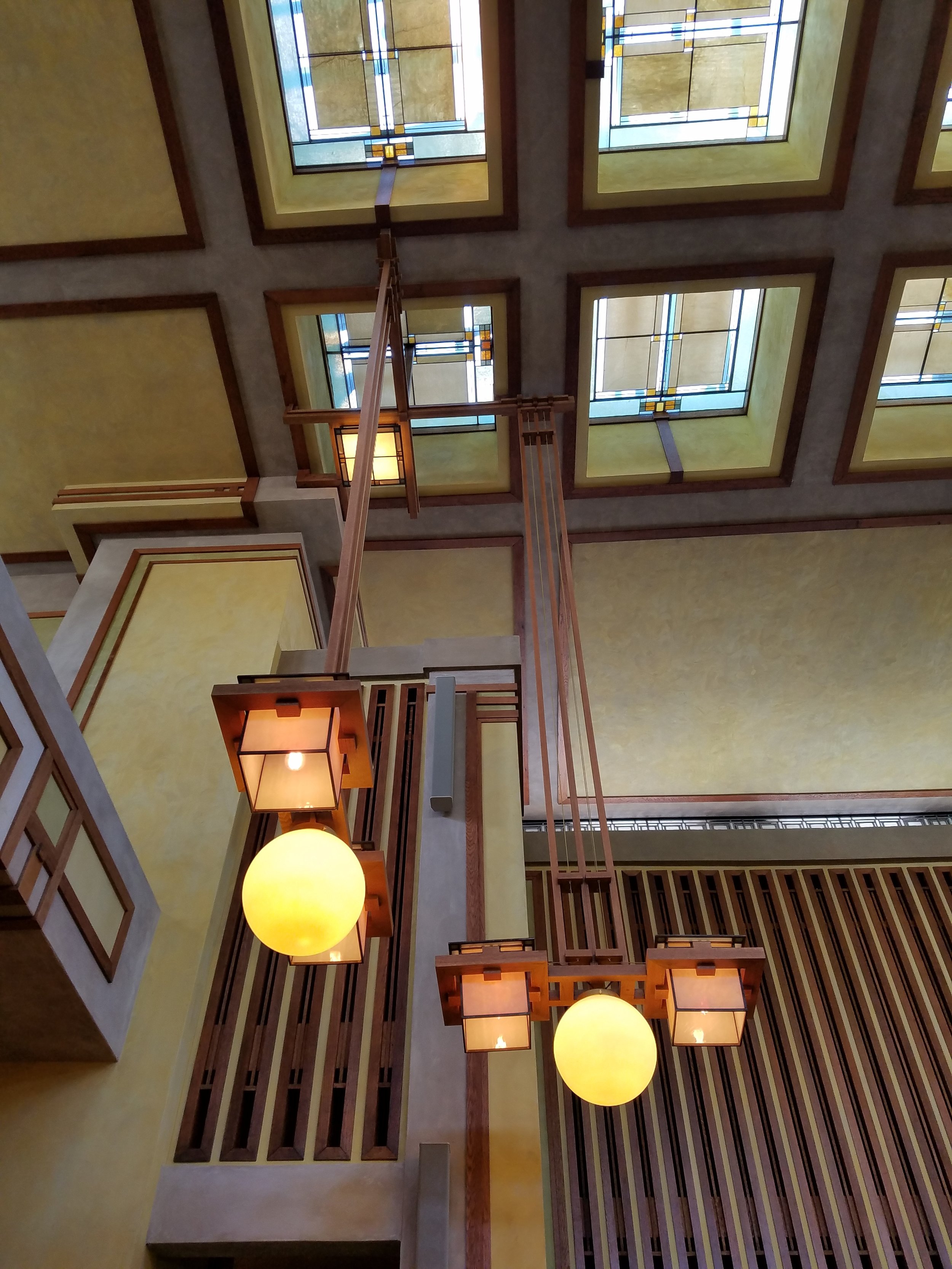
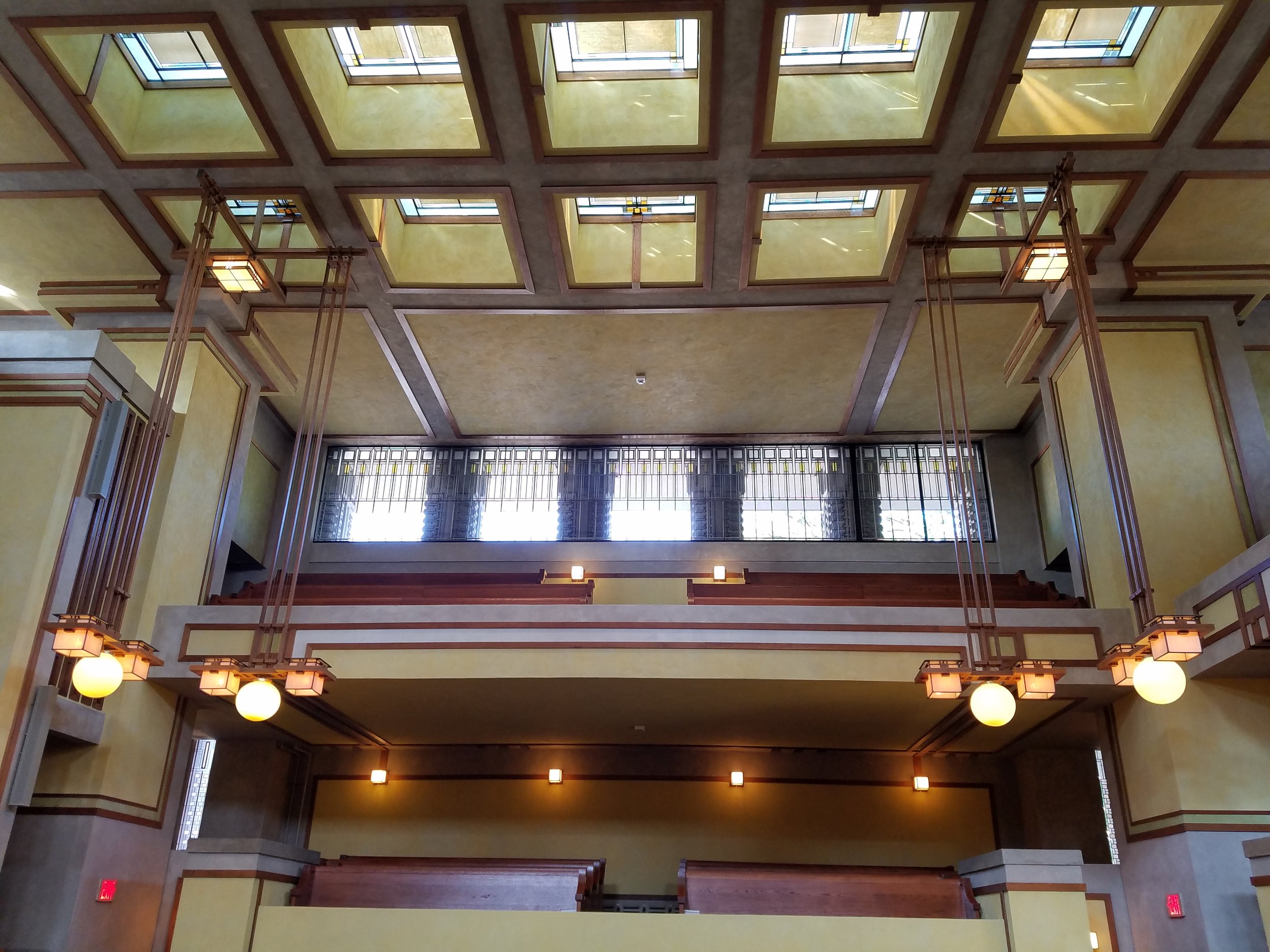
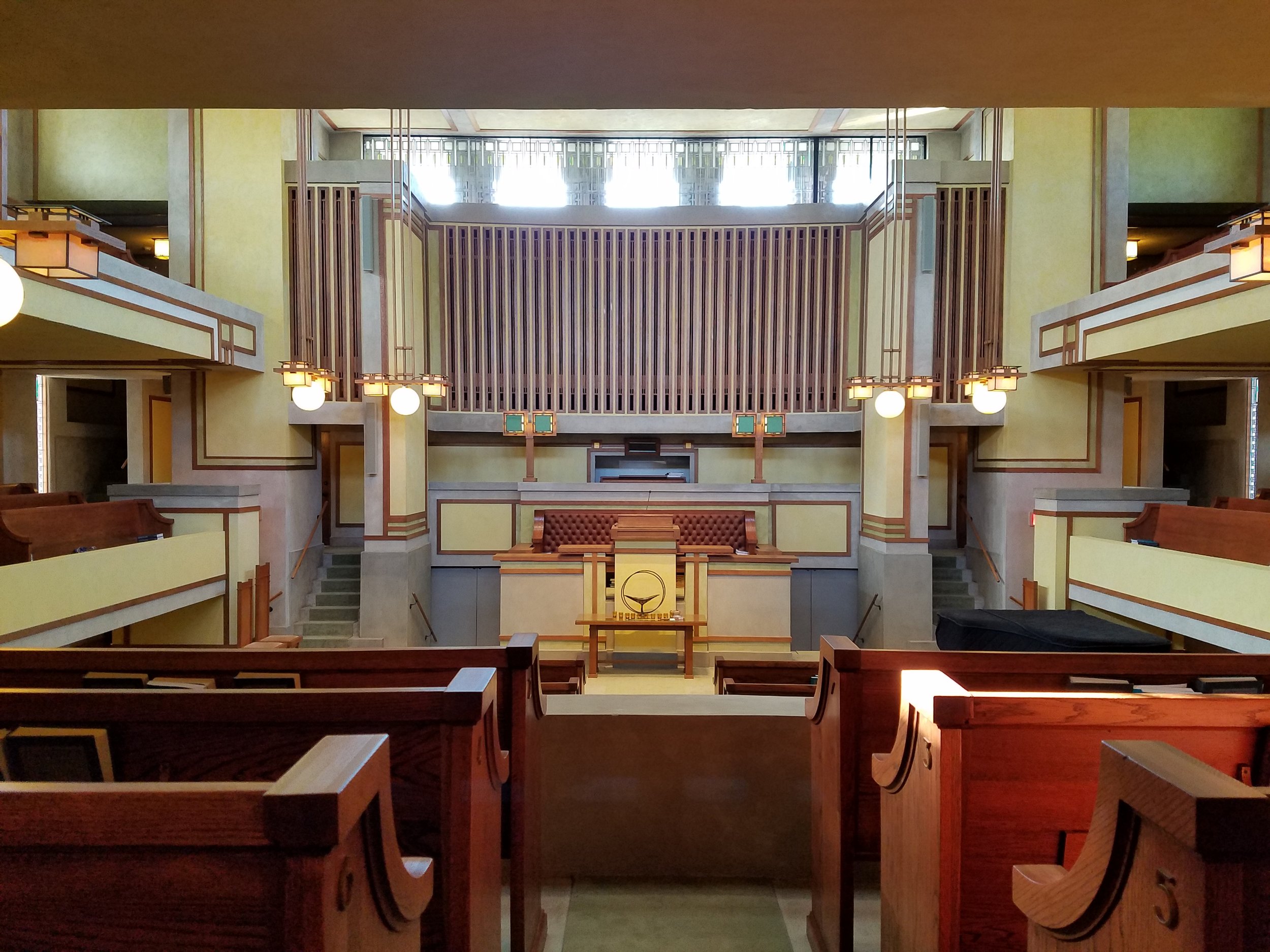
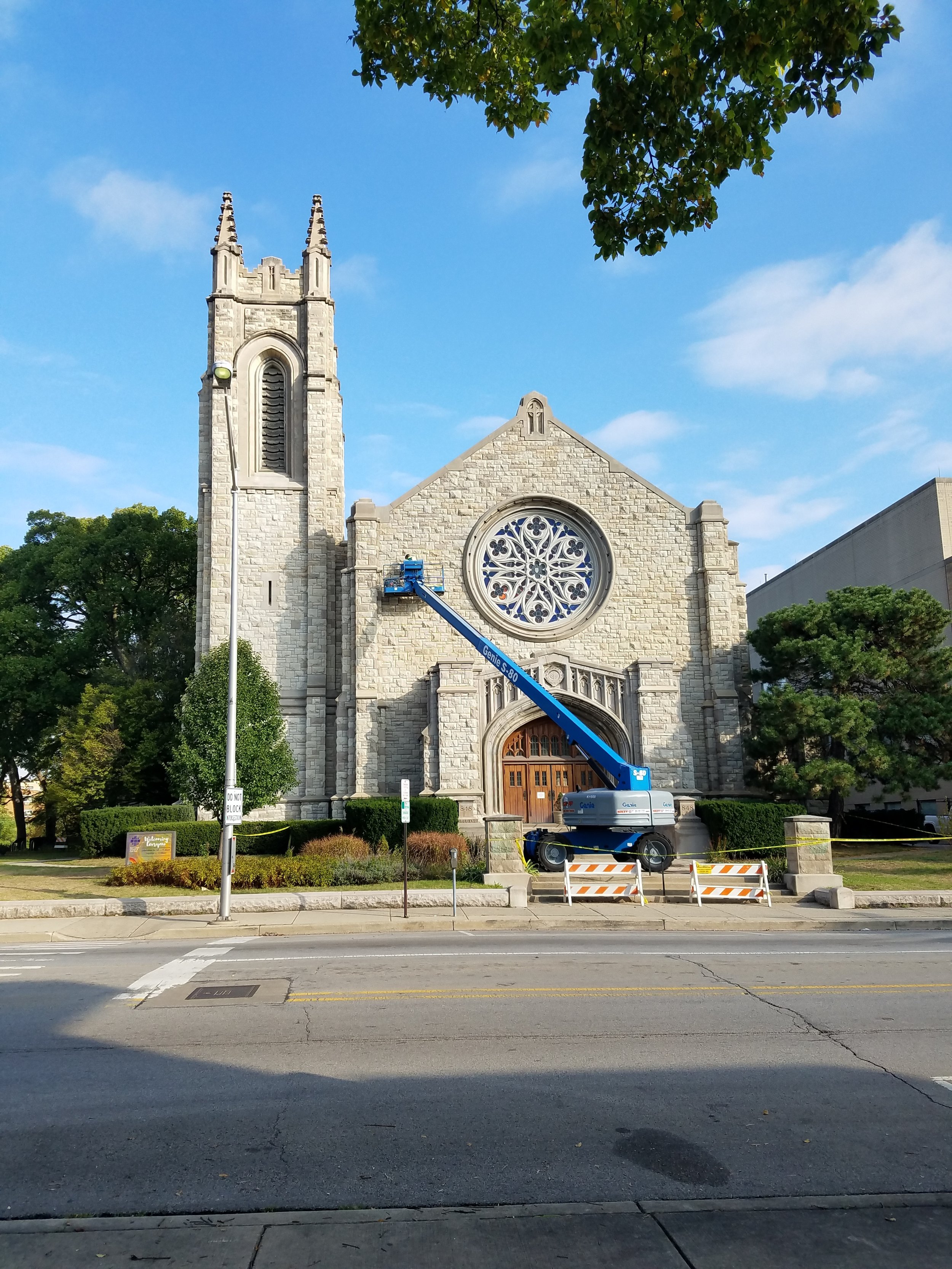
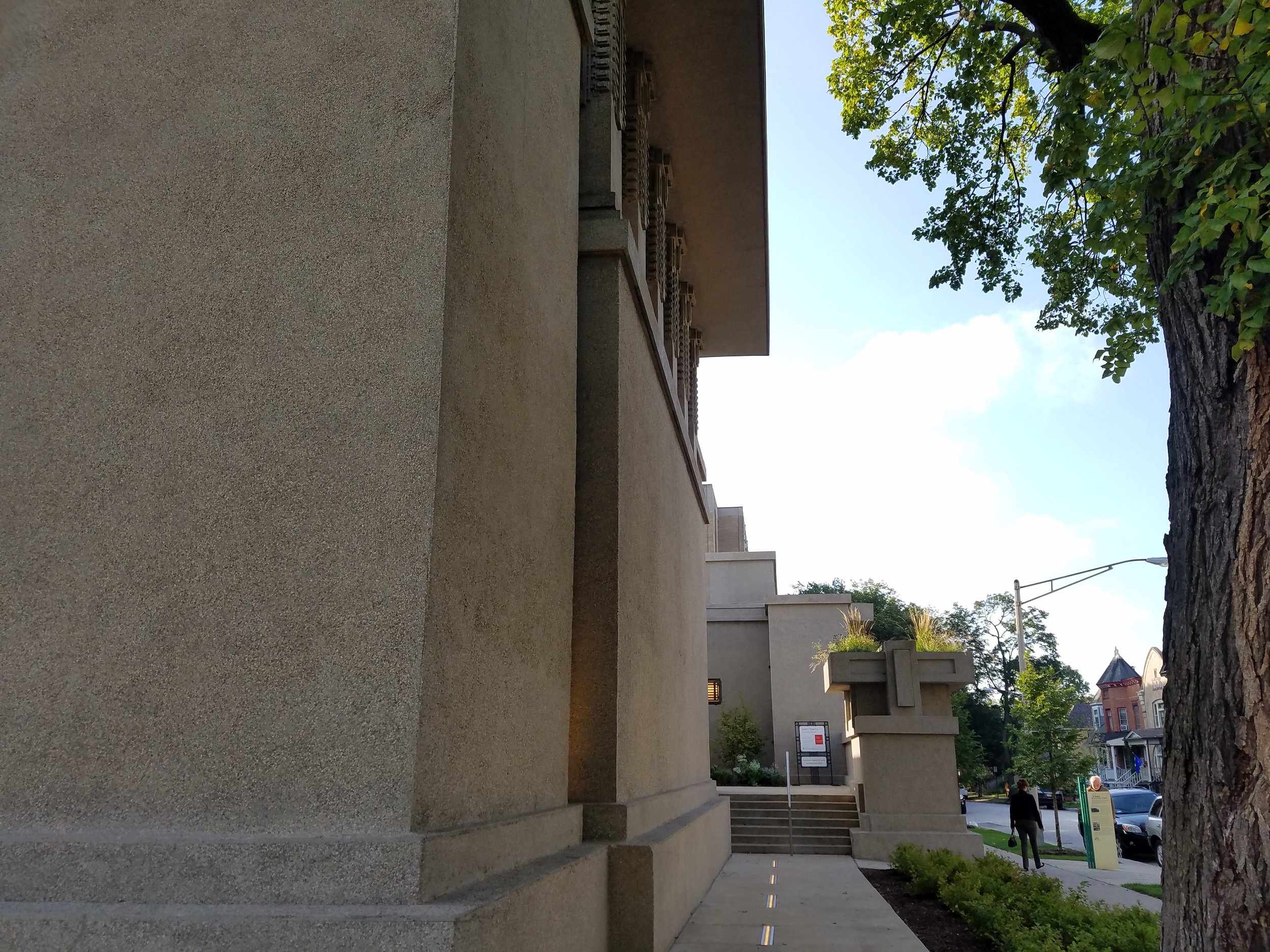
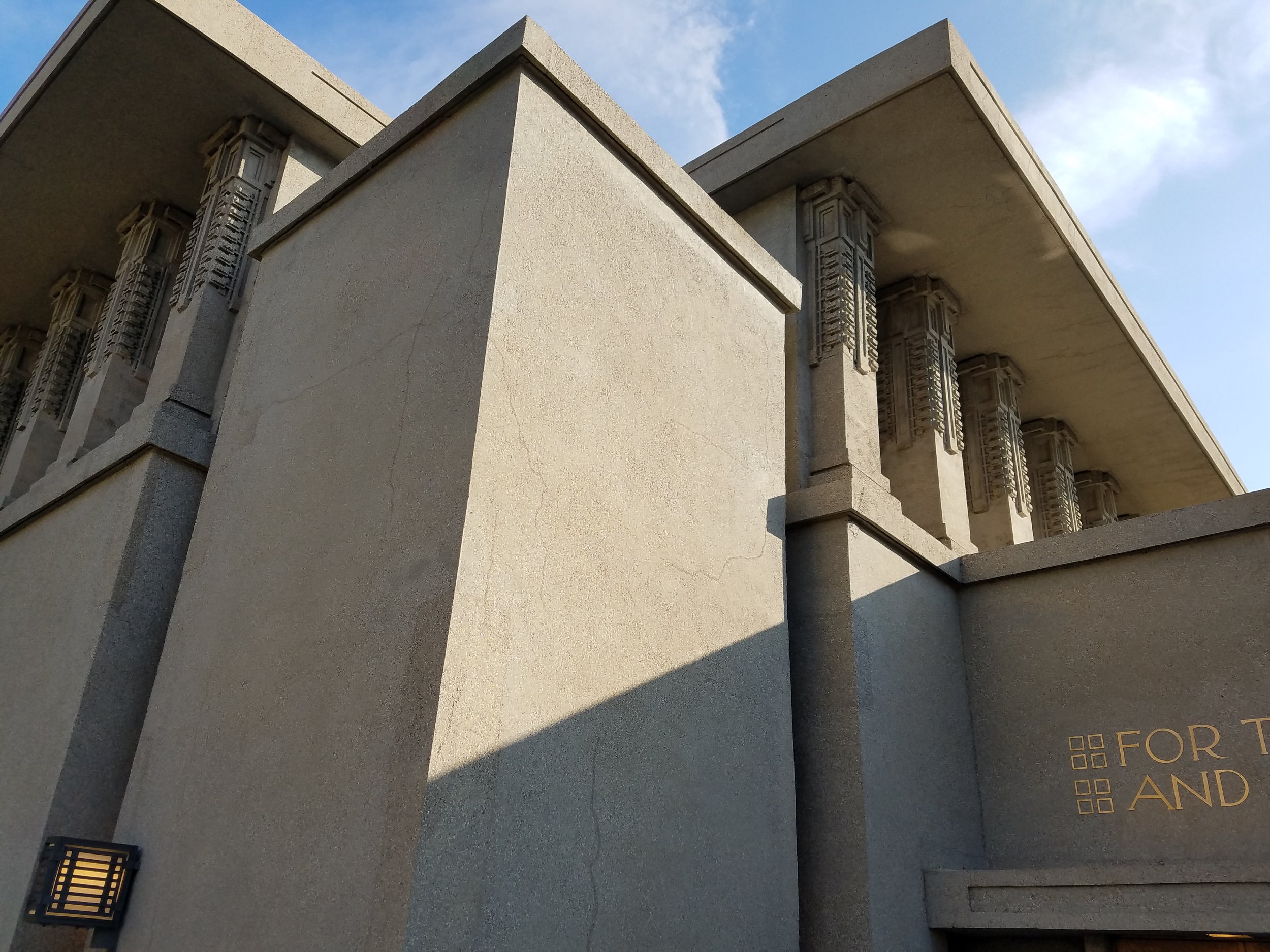
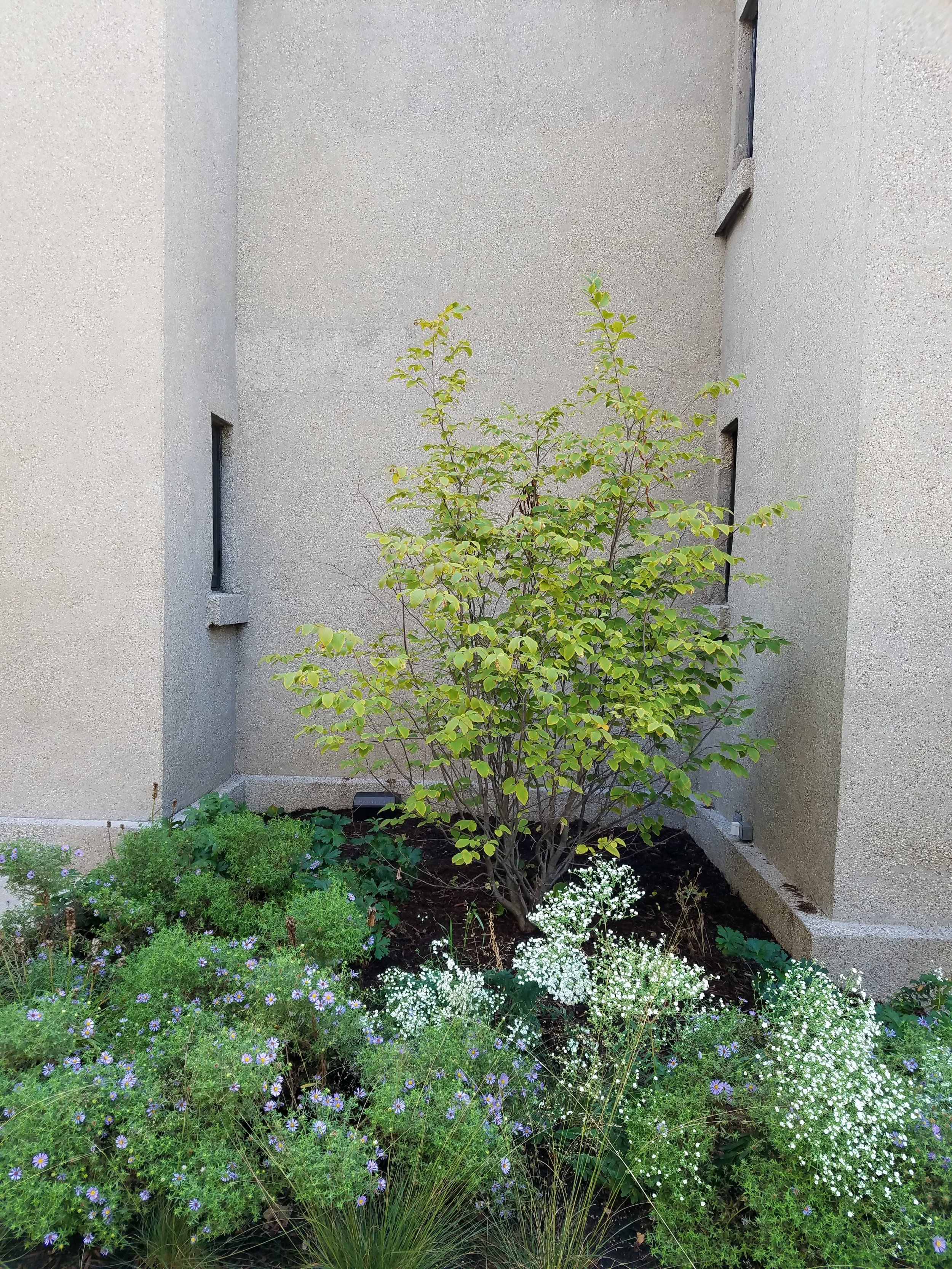
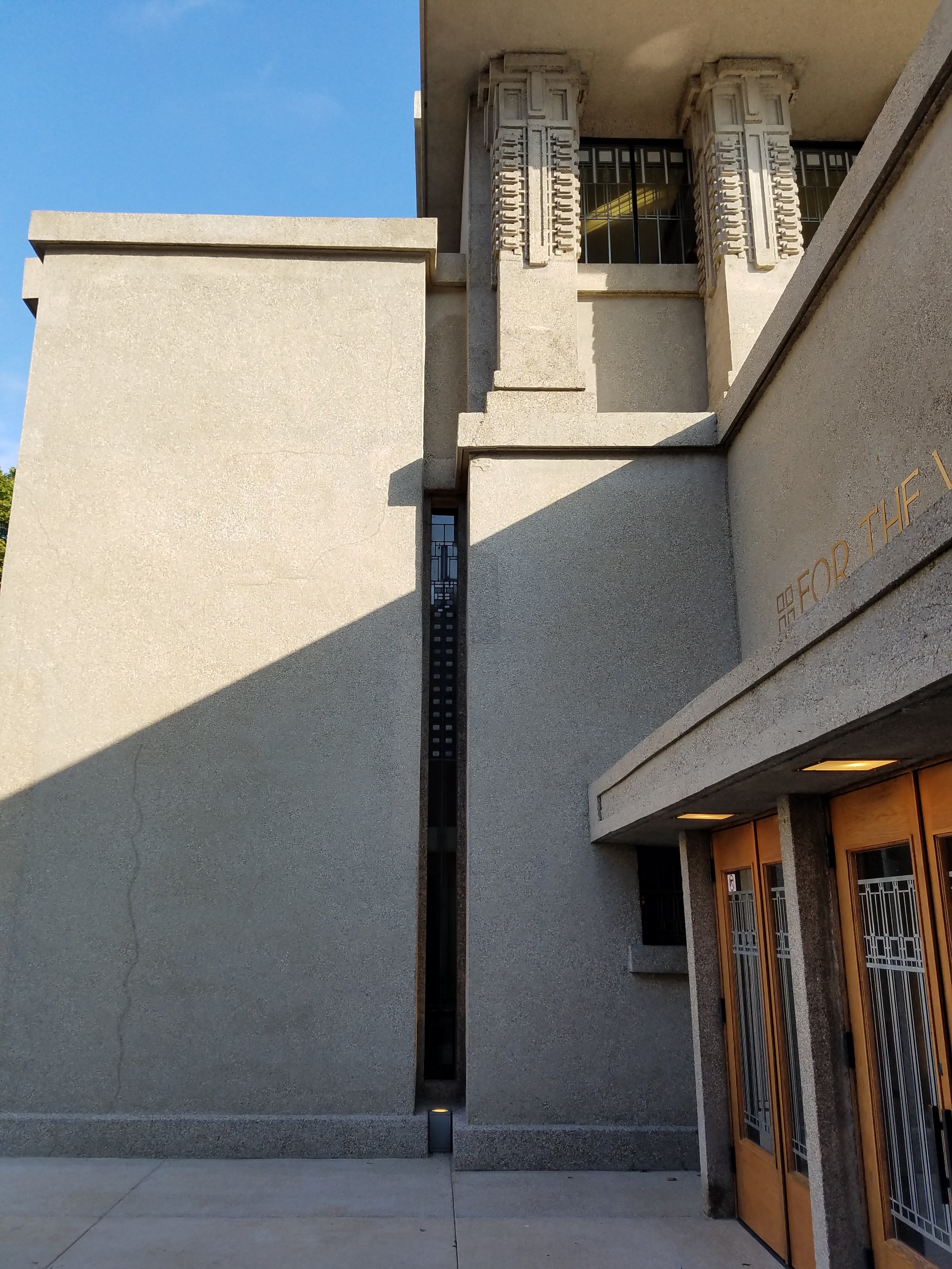
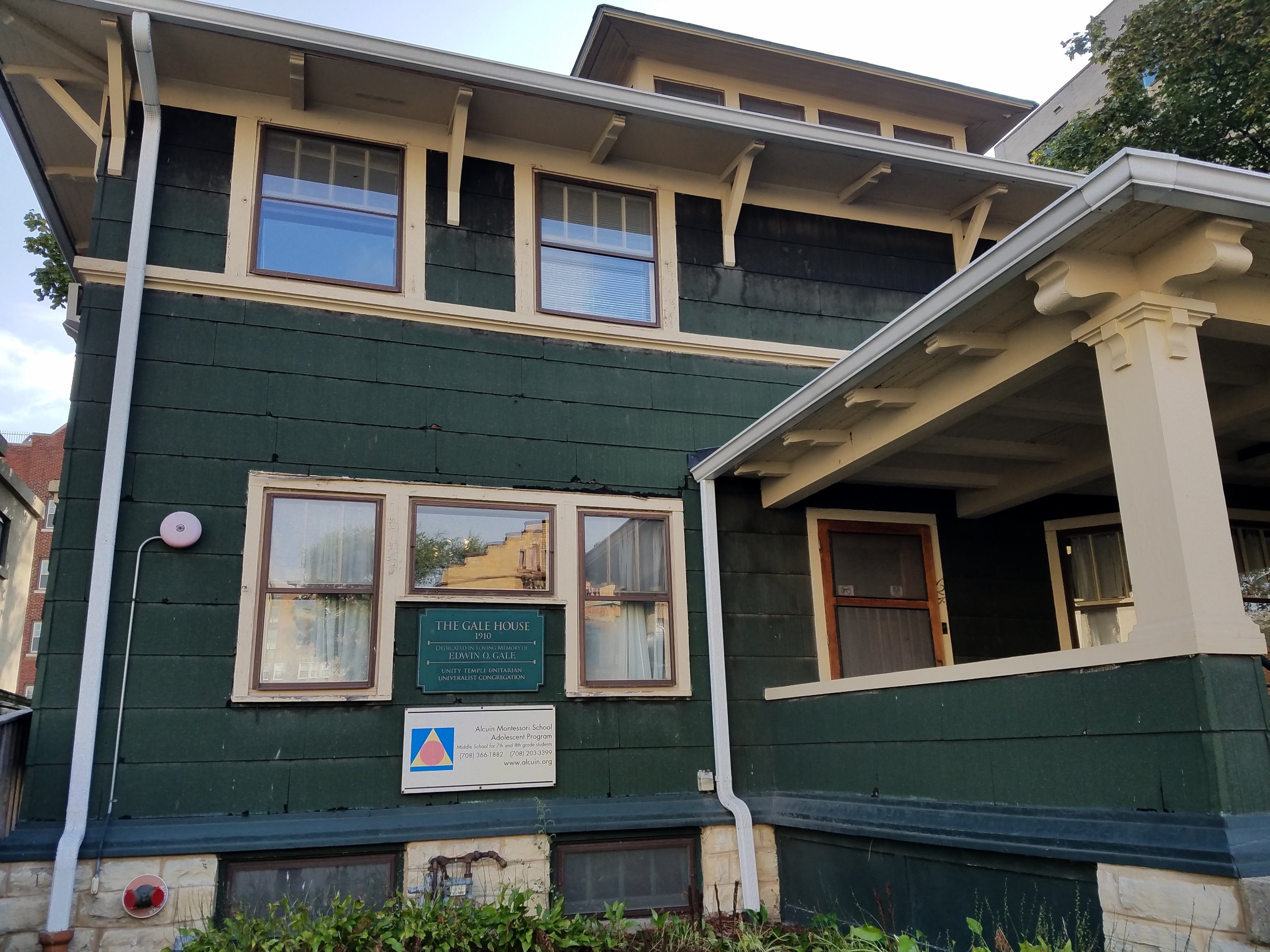
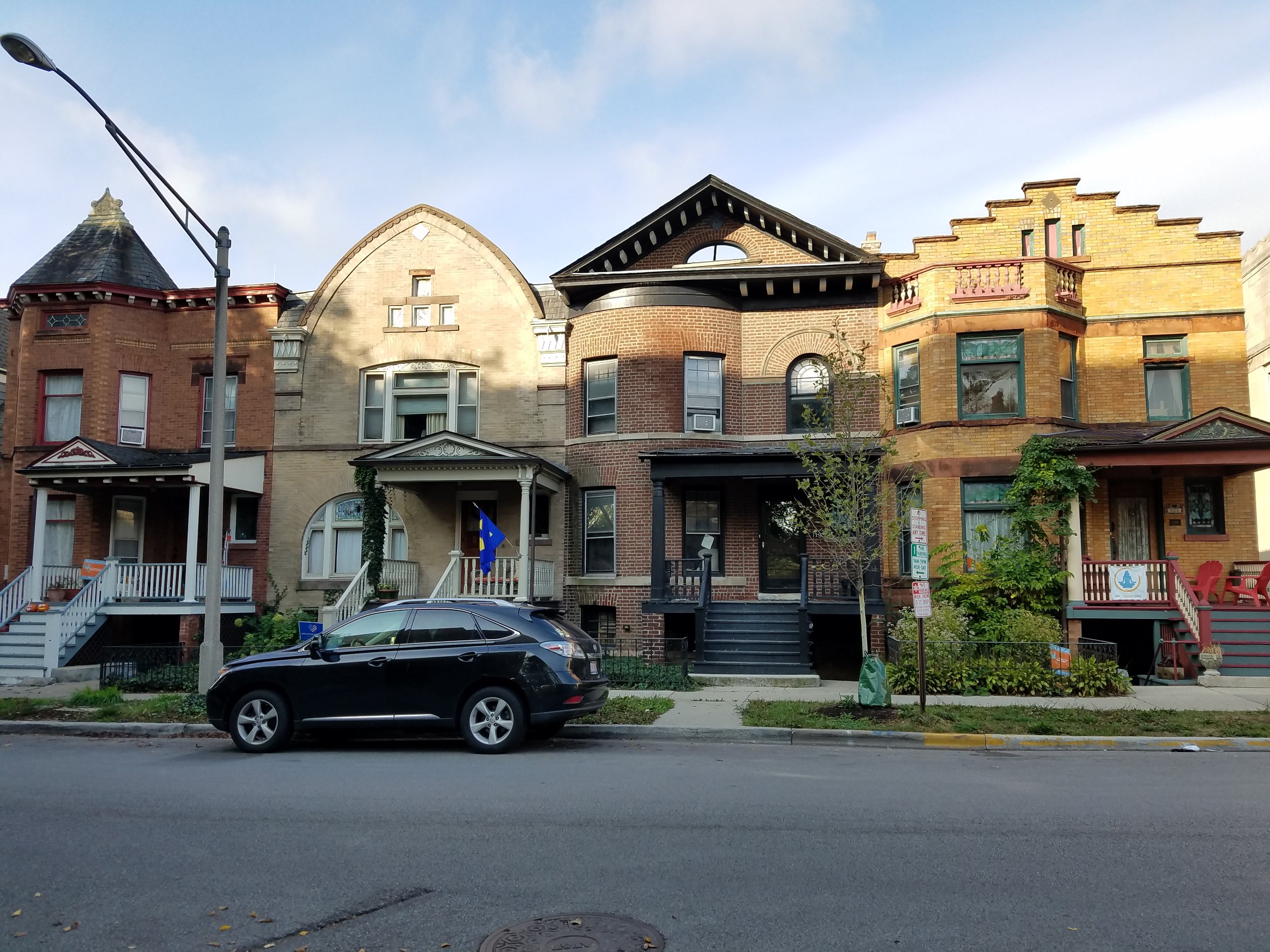
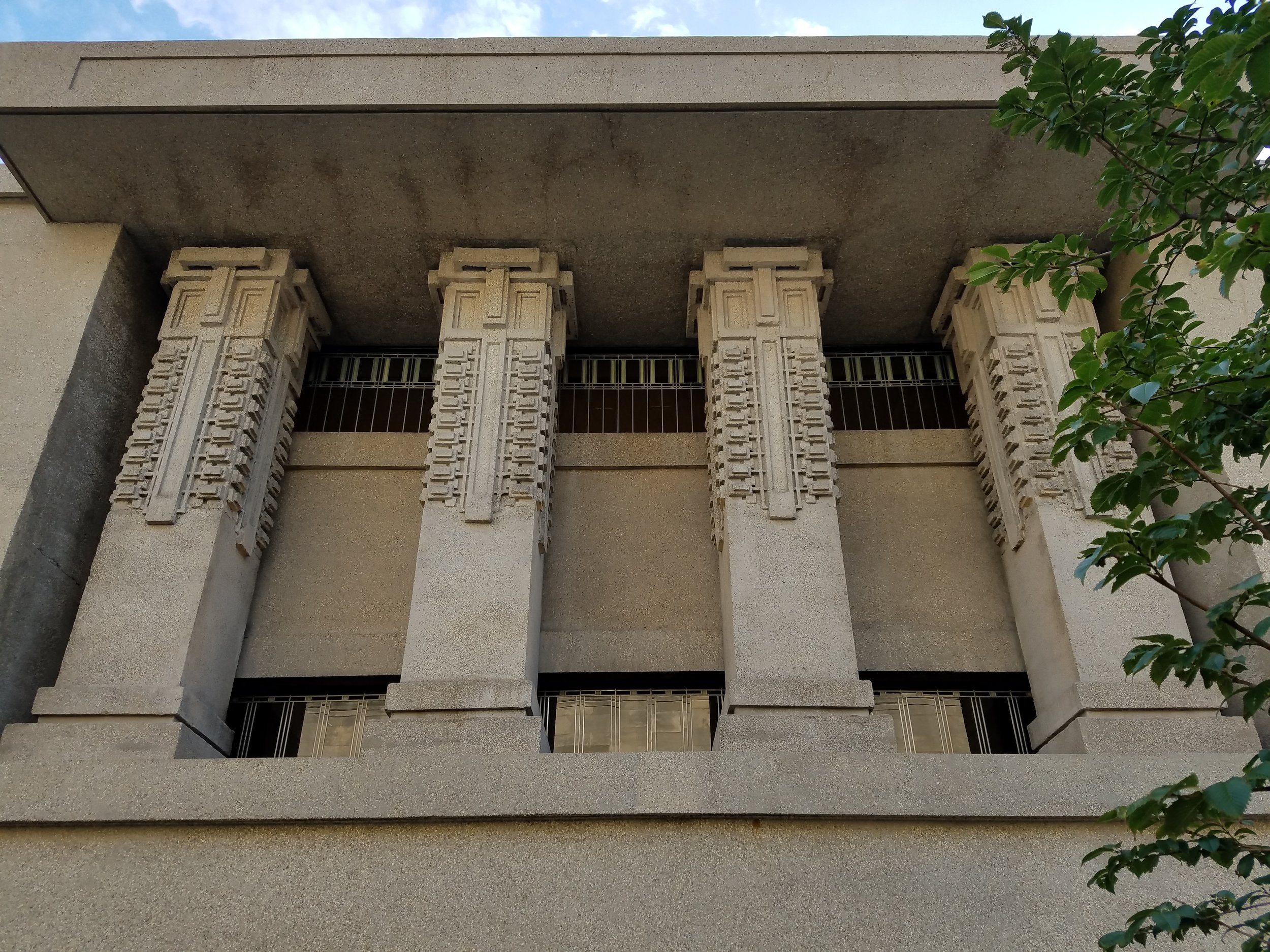
My recent book-tour travels took me to Hemingway's hometown of Oak Park, Ill. But Oak Park is also the home of Frank Lloyd Wright and offers sprawling museum of his work -- his home and studio, of course, numerous houses and this church, Wright's first public building (c. 1908). The Unity Temple near downtown Oak Park was closed for two years and reopened in summer 2017 after a detailed and loving restoration. What a glorious space. Contemplative and quiet, focusing and transporting at the same time. The earth tones, the geometrics, the oak trim, the daylight, the tension and interplay between the concrete-cube exterior and the wide-open, comforting interior. My pictures don't exactly do it justice, but I hope they do give you a sense of a walking tour of the place.
From the Archives: On Bill McKibben and The End of Nature
Environmental activist and writer Bill McKibben is on a speaking tour, and I’m sorry I’ll miss him when he stops in Kansas City, at UMKC, on Oct. 6. (He’s also in Columbia, MO, today, Oct. 4.) McKibben has been a consistent leader in the literature of alarm. I dug out my piece on his landmark book The End of Nature and was a little surprised to realize how current his arguments remain nearly 30 years later. You can recognize the awareness of the climate change debate that continues today, though without the ugly divisiveness we seem to be stuck with. The language is a little outdated (“global warming”) and McKibben can sometimes be precious (as perhaps was I) and predictably pessimistic to the extreme. But I thought it would be interesting to revisit the state of environmental consciousness-raising from the 1980s. This review of The End of Nature first appeared in The Kansas City Star on Oct. 15, 1989.
The end of nature that Bill McKibben addresses in his vitally important and terribly depressing new book is not so much the end of the world, but the end of the human idea of nature as being something bigger than we are – eternal, separate, permanent and immutable.
That perception has come to an end, the end of nature has arrived, McKibben argues in a startling and deeply moving essay, because we have proved as a species that we have the God-like power to alter the Earth on a global scale.
Of course, being both important and depressing will argue against its being widely read, but The End of Nature may be the one essential book published this year.
Even as brooding as it is, the book, as an urgent call to action and a manifesto for humility, should wind up standing shoulder to shoulder with such mind-altering predecessors in natural history and philosophy as Thoreau’s Walden and Rachel Carson’s Silent Spring.
McKibben writes for The New Yoerker, where a long excerpt of the book appeared last month. He is not a scientist, but he makes the science and the scientific uncertainty that underpin his thesis meaningful and accessible.
We have changed the planet – and there’s no turning back, he will make you believe – in our greed and gluttony for more and better. Our utter reliance on fossil fuels and other human endeavors have caused a buildup of carbon dioxide and methane in the atmosphere that is inexorably warming the planet. It has done so in a mere 100 years, an iota on the scale of biological or even human time.
Even if we completely change our habits now, McKibben writes – and what is the likelihood of that? – enough damage has been done and will become evident in the decades to come.
Scientists may, and do vigorously debate whether global warming actually has begun but few doubt the soundness of the theory or the possibility of a grim chain reaction of corollary events that may change the way much of the Earth’s population lives – as sea levels rise, as temperatures stay high, as hurricanes become more forceful. One theory has Dallas experiencing half the year at 90 degrees or higher.
And then, let’s talk about the depletion of ozone in the atmosphere. Or acid rain. Or other forms of global-scale pollution.
“In our minds,” McKibben writes, “nature suffers from a terrible case of acne, or even skin cancer – but our faith in its essential strength remains, for the damage always seems local. But now the basis of that faith is lost. The idea of nature will not survive the new global pollution … By changing the weather, we make every spot on Earth man-made and artificial.”
We can never again see nature as it was, he writes; we are doomed to accept the fact that all of it has our stamp, that nature, in the form of climate and weather and all the biological interactions dependent upon them, does not act independent of us anymore. Even if it cannot be proved that the drought of 1988 was a manifestation of global warming, it also cannot be proved that it wasn’t, and just the thought that we may have brought it about is unsettling. Was that rain? The question will go. Or was it something we did?
McKibben considers the various cures for global warming – nuclear power, planting trees, an umbrella in space – and finds each of them wanting or bringing along their own problems. Plant trees, the environmental president tells us; trouble is, to absorb an adequate level of carbond dioxide we would need to plant an area the size of Europe and by shifting from open field to tree cover we would change the albedo, or the light-reflecting characteristic of the surface, and very likely increase the level of heat absorption.
Such riddles and “feedback loops” face us at every turn, it seems.
McKibben attacks the problems not only from a scientific perspective, but also culturally, philosophically, geopolitically and even theologically: Those who look for God in nature, he suggests, now can find only themselves.
We take nature for granted, but our whole relationship with it has changed.
“One reason we pay so little close attention the separate natural world around us,” he writes, “is that it has always been there and we presumed it always would. As it disappears, its primal importance will be clearer – in the same way that some people think they have put their parents our of their lives and learn differently only when the day comes to bury them.”
If The End of Nature is relentlessly pessimistic, so be it. McKibben offeres a moral antidote to the feel-good, New Age notion of macromanaging the planet, of the technological panaceas – for and profit for all! – made possible in the coming era of genetic engineering.
One (not I) might criticize McKibben for a “tree-hugging,” sentimental attachment to wildness and the mystery of nature – get with the program, Bill! – but one can’t help sharing his profound sense of loss.
There is a danger that a reader may come away from The End of Nature feeling the same kind of existential despair experienced by the young Woody Allen character in “Annie Hall,” the one who tells the psychiatrist he has stopped eating because he just learned that the universe was expanding. What’s the point of going on? the boy concludes. Those susceptible to melancholic reflection are forewarned.
But there is, perhaps a far greater danger in not facing up to the scenario McKibben has devised, to the questions about ourselves he has raised, and in the complacency we so easily embrace. It is time now to pay attention and to do something. The End of Nature is a kick in the head. And it comes none too soon. Read it and weep.
De Gustibus: A 12-Dish Tour in Corvino's Tasting Room
During my kaleidoscopic career in the newspaper business I spent a few years as a restaurant critic. Once a month or every six weeks or so – along with whatever other writing or editing I was doing at the time - I analyzed meals and experiences at Kansas City restaurants. Every now and then I’d write about food experiences during travels elsewhere (Washington, D.C., Seattle, Paris, an American Royal barbecue immersion). I mostly enjoyed chowing down during a period, not so long ago, when Kansas City was increasingly being led forward by a new generation of creative chefs and food-and-beverage professionals. I can’t deny that restaurant writing and the most hedonistic and self-conscious aspects of the scene sometimes resemble a kind of food porn. So be it. Who doesn’t really like a sexy picture of an assemblage of desirable pleasure on a plate?
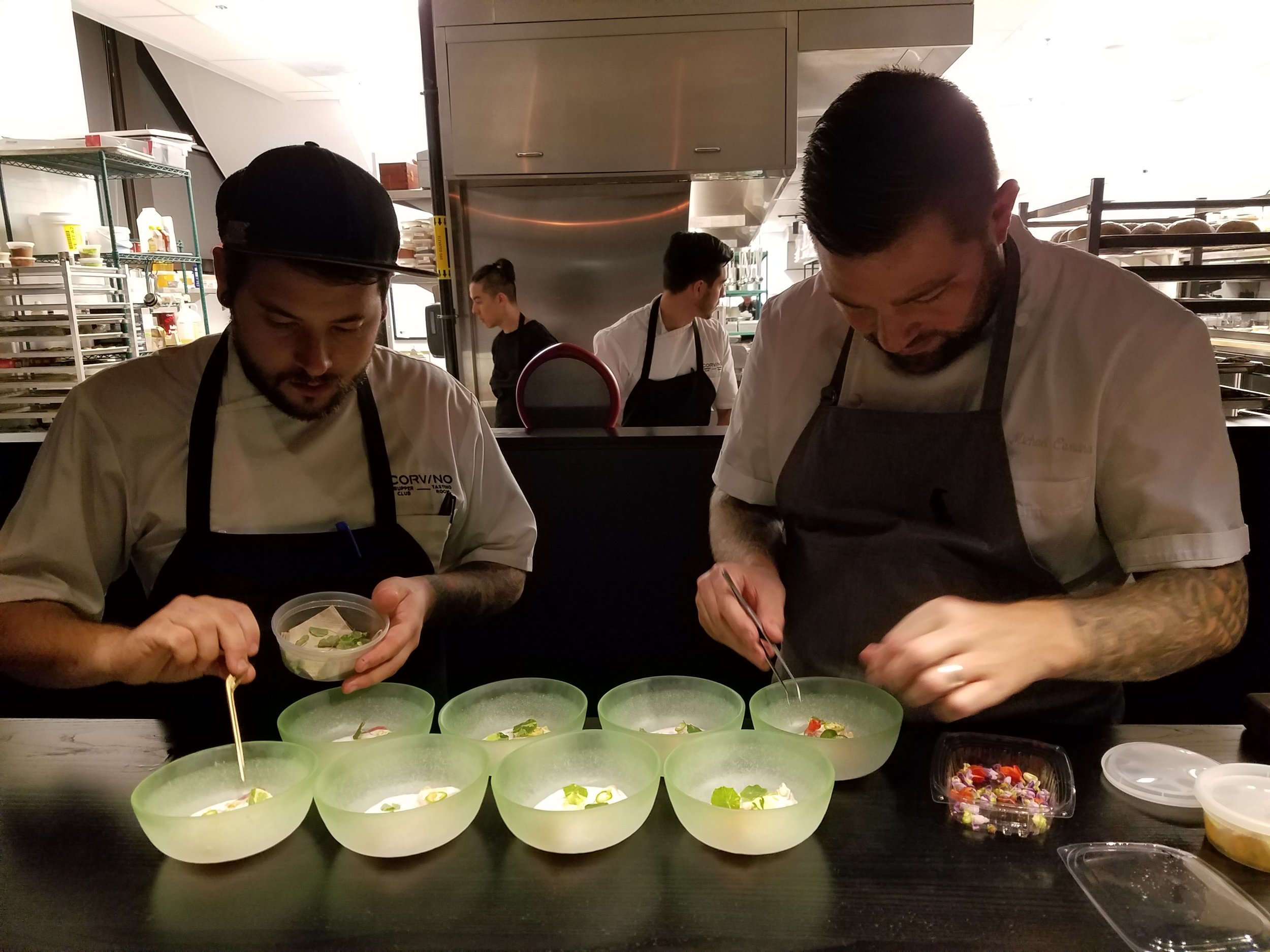
I suppose a similar thought occurred the other night more than once during a three-hour dinner in the Corvino Tasting Room. This is the fixed-price, multi-course menu that unfolds out of the view of the sometimes raucous main dining room, or Supper Club, at Corvino and within whisper distance of the kitchen. (Along with four generously sized four-top tables, two counter stools offer ringside views of cooking and chef-ing in action.)
My experience at Corvino had been limited to a dinner, some drinks and some late-night noshing off the attractive (and attractively priced) menu that kicks in at 10 p.m. Food was always good, or at least interesting. Service was sometimes surprisingly ragged. Some recent staff turnover seems to indicate the place is still finding its way. But with a foundation based on Michael Corvino’s exquisite and exciting approach to food, its future is highly promising.
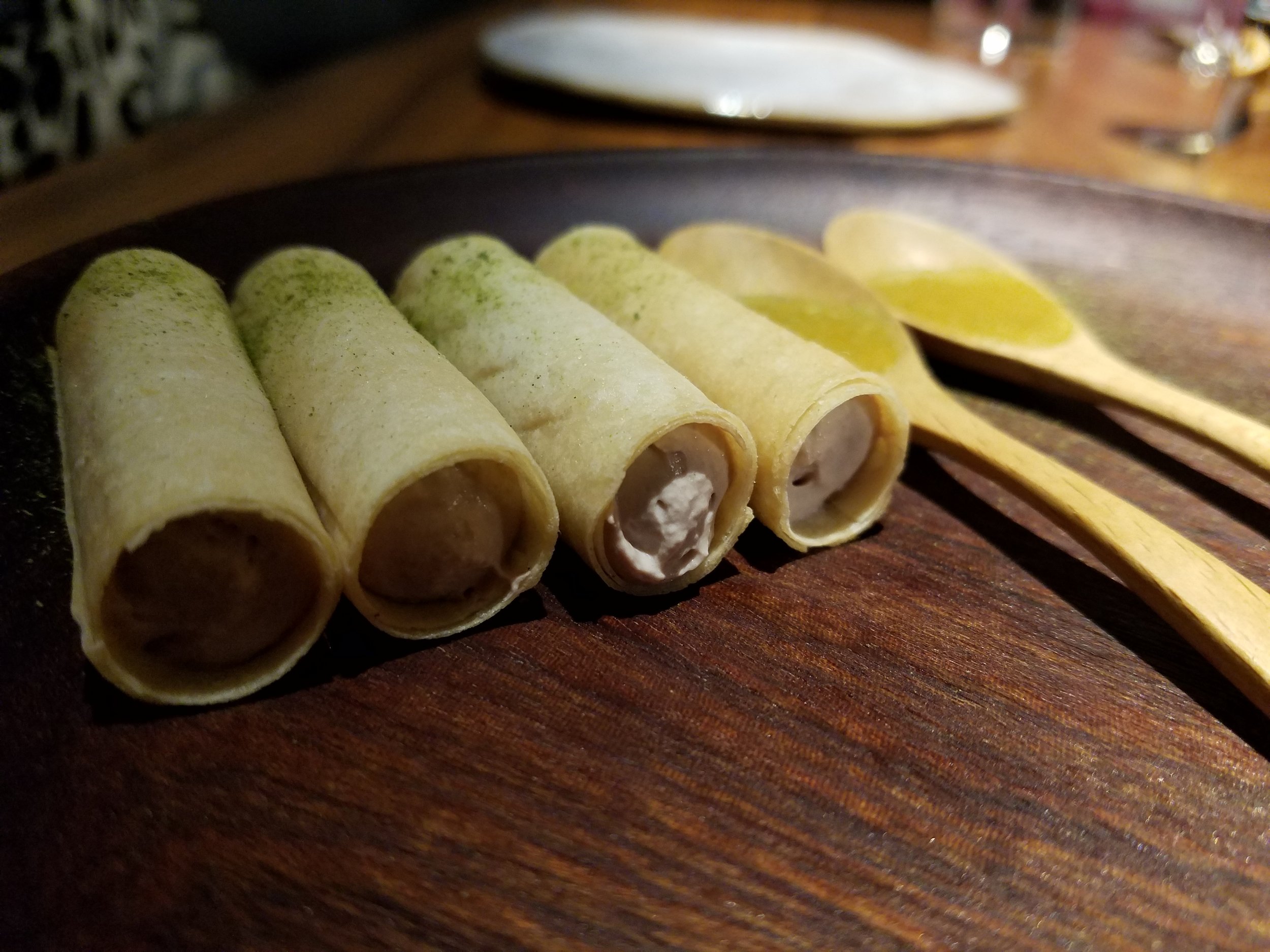
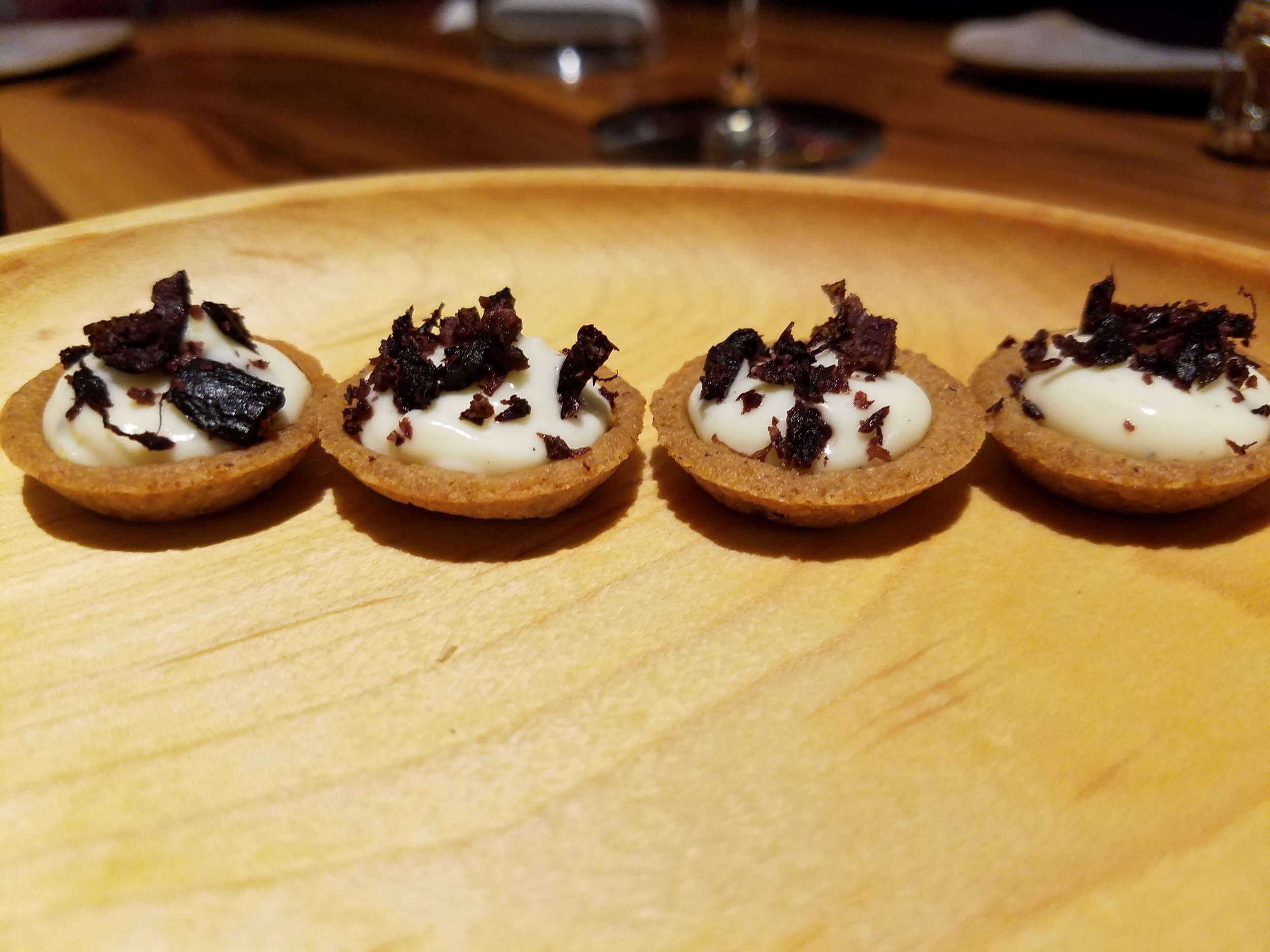
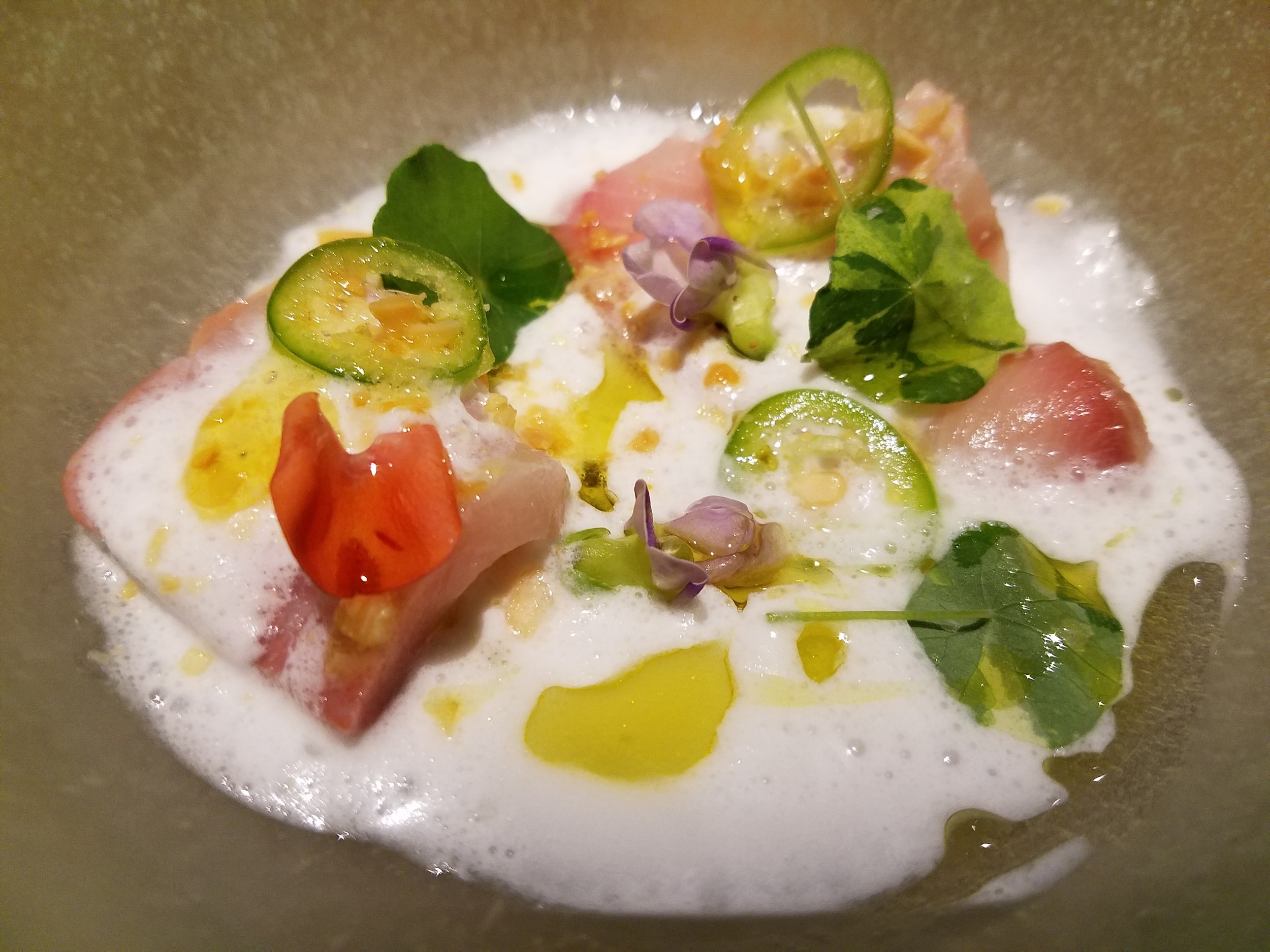
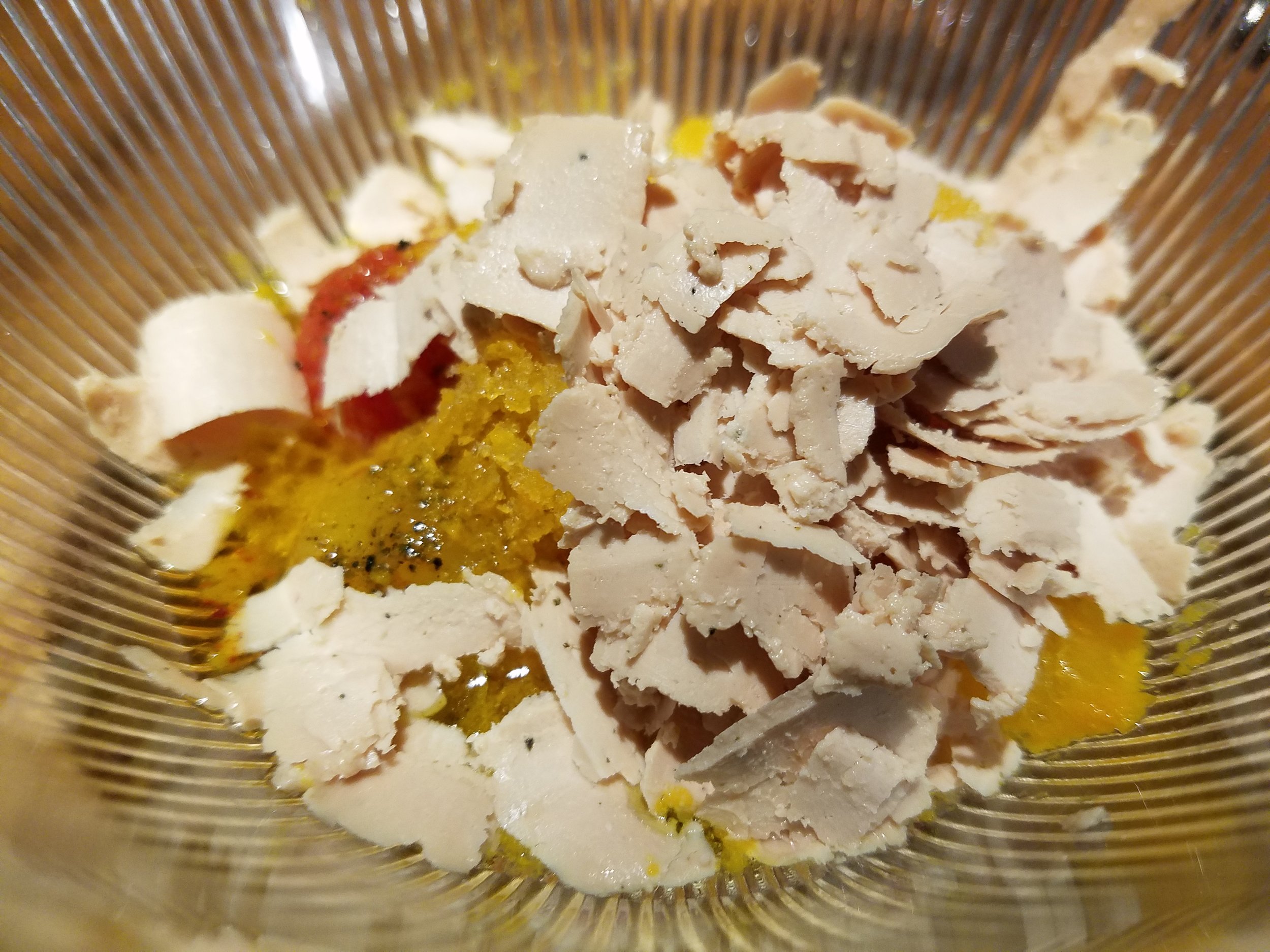
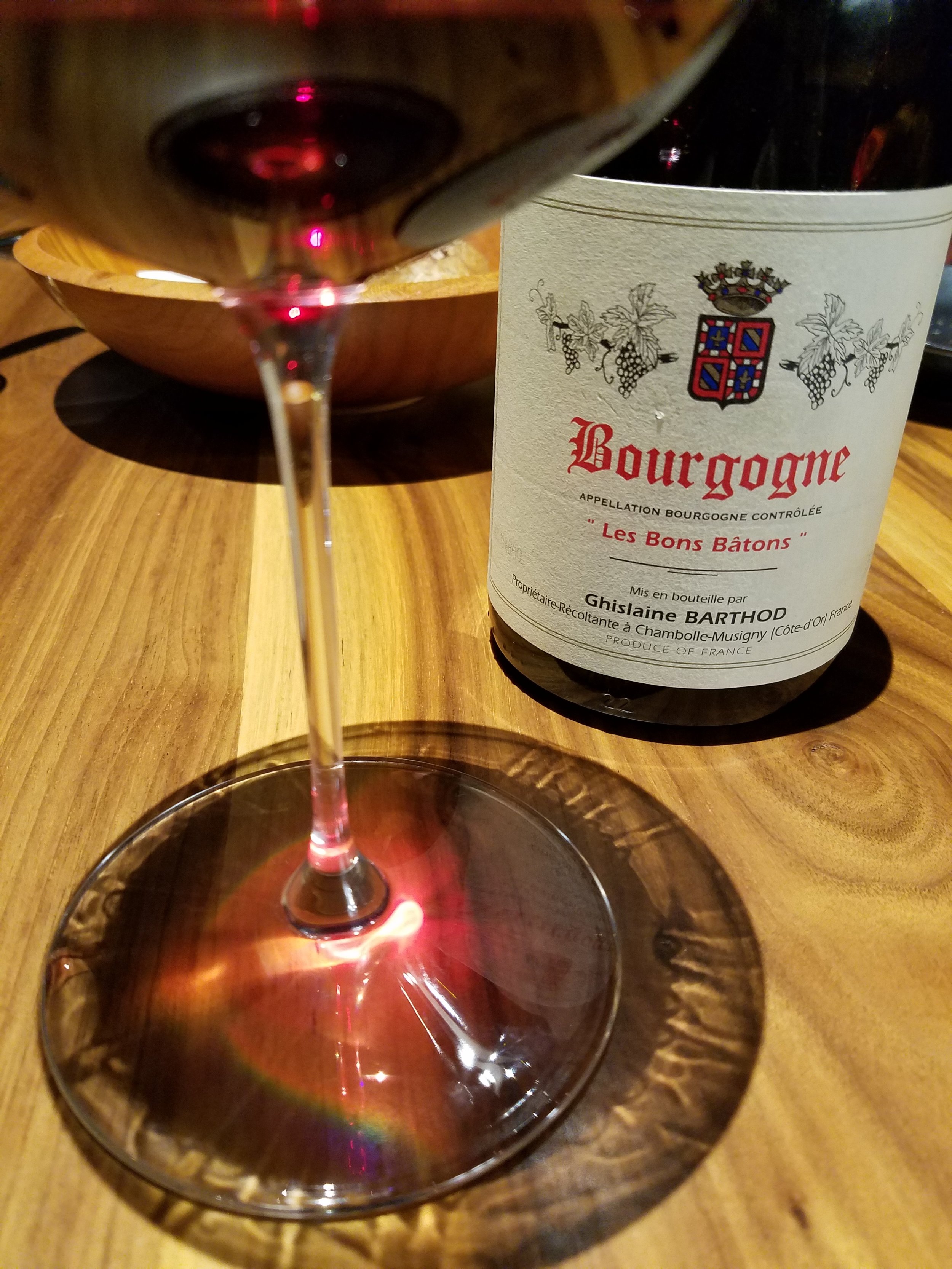
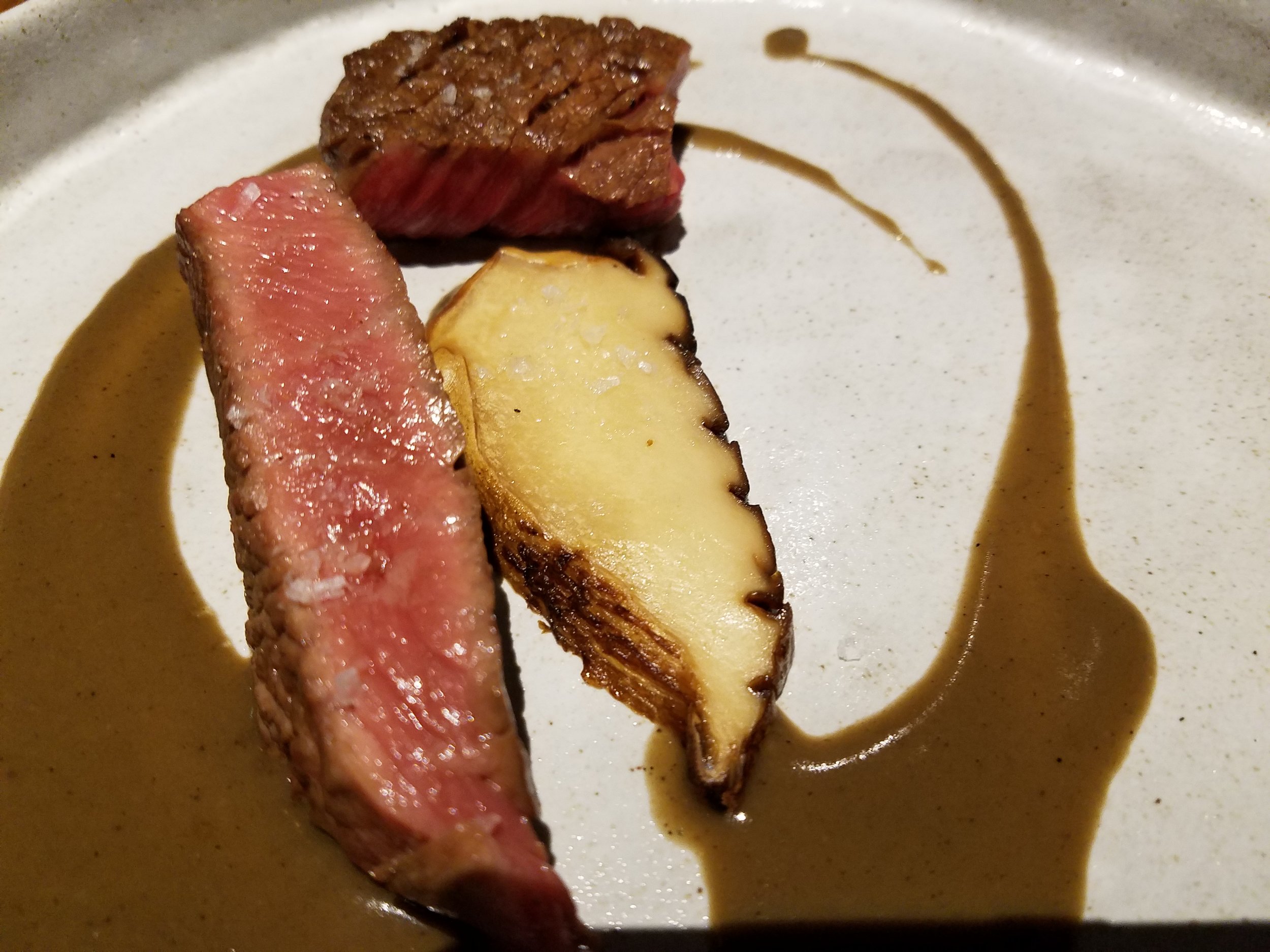
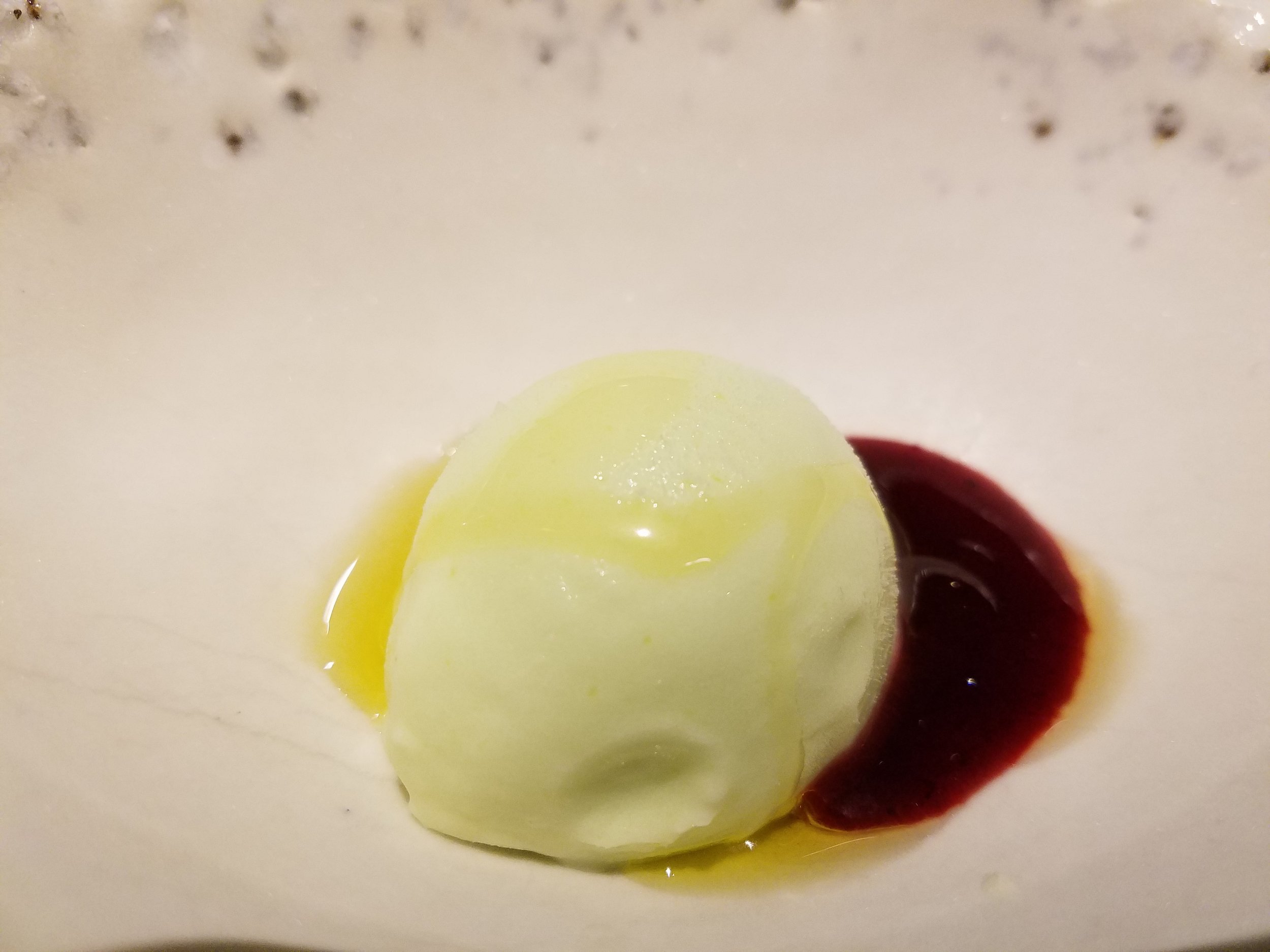
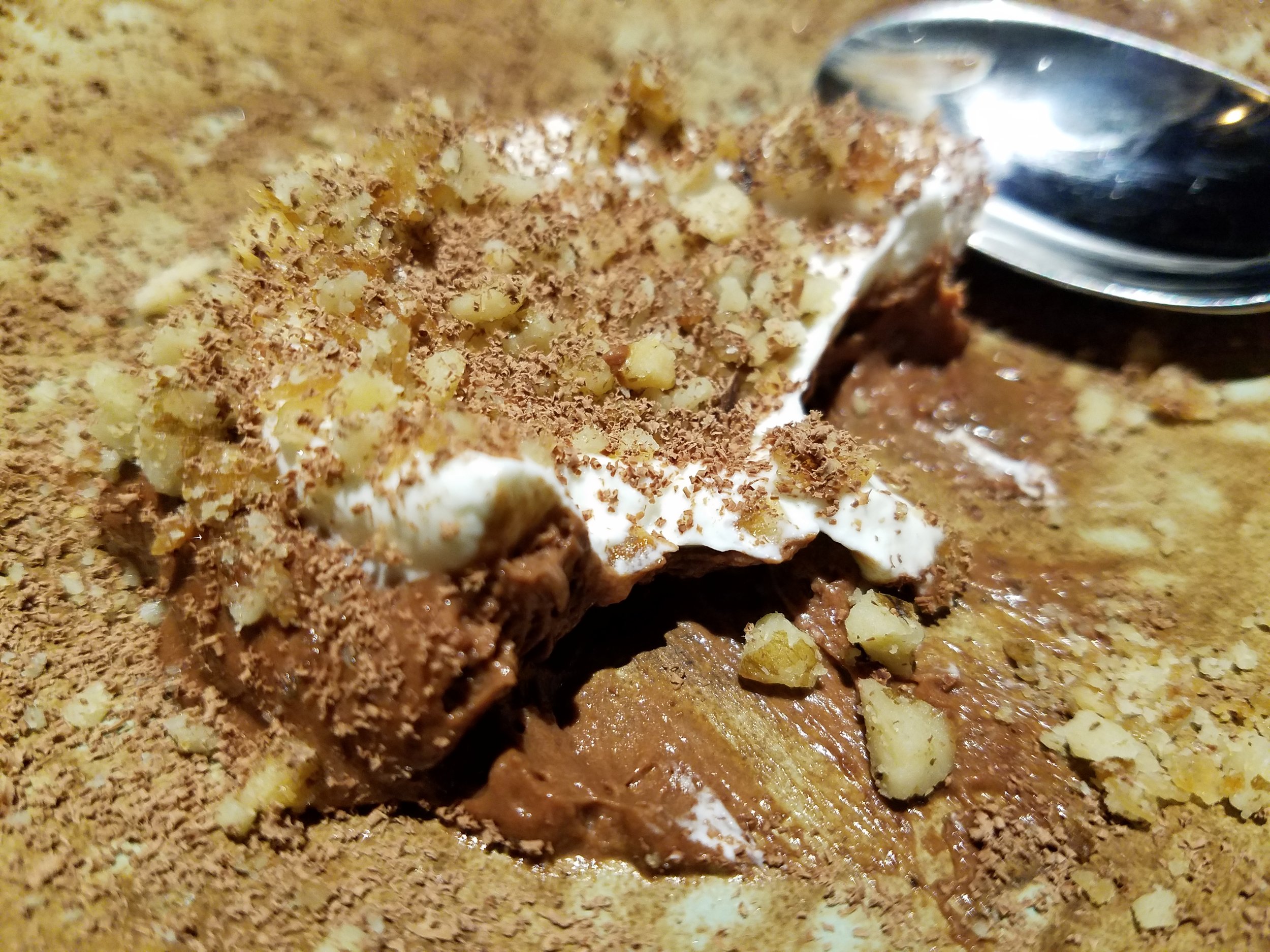
I didn’t intend this post to be a review. But I will say that of the dozen dishes put before us, from the opening amuse bits to the closing sweets, not a single false note occurred. There were rich and tempting notes of chicken liver mousse and foie gras. Sweet and savory danced a pas de deux all night long. An oyster topped with a melon granita and chile, was an early, winning example of the dynamics of texture, color and palate-enlivening sensations that Corvino revels in. I would return to his kitchen if only to savor another bowl of the corn pudding, bedded down with chanterelle mushrooms, trout roe and a dusting of buckwheat. The “main” dishes included a succulent King salmon and a plate with two contrasting cuts of ribeye. After opening with a glass of Champagne (Jacquesson 740), I asked sommelier Ross Jackson to suggest a bottle to carry my table of four through the middles and mains. The Burgundy “Les Bons Batons” (2014), by the female winemaker Ghislaine Barthod, was light, slightly earthy and perfect.
The Tasting Room, to be sure, is not an everyday experience. It’s a special-occasion place, where you should expect to drop a couple of bills per person. Or more. Much more. (We skipped an optional caviar plate and a $50 upcharge for A5 wagyu – the highest rated and rarest version – on the beef plate, though I’m sure there are plenty of big spenders who’d spring for either experience.)
Kansas City’s dining scene continues to expand and excite. With its prominent place in a food-centric vortex of the Crossroads Arts District, Corvino clearly is a trend setter. Its lovely gray-hued main room – the space designed by a top-shelf architecture firm, Hufft Projects –includes a thoughtfully made stage for musicians, a rarity, but a welcome one, for restaurants. Here’s hoping my spheres of food and music friends will continue to happily collide there.
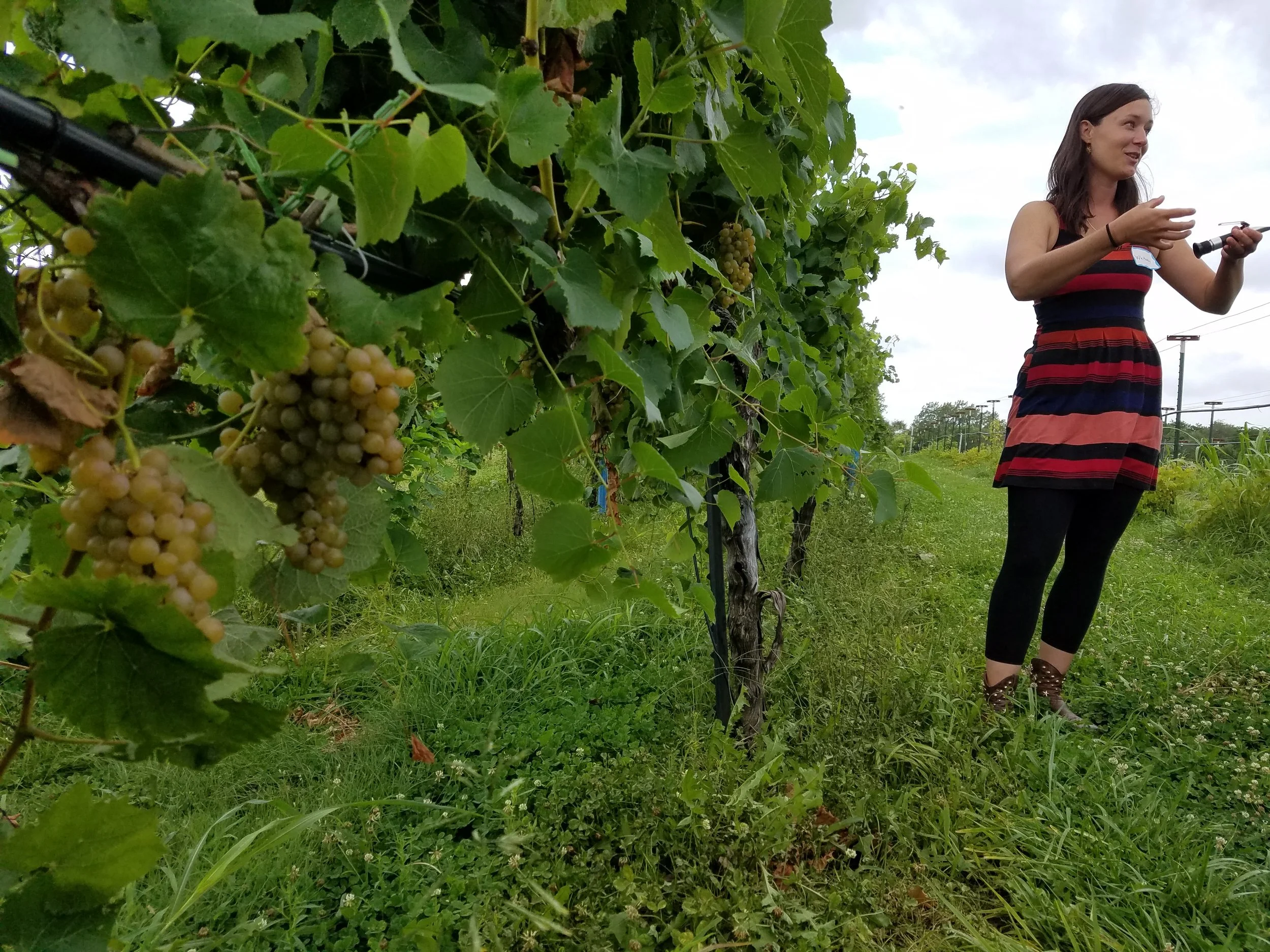
Whitney Ryan, Vox Vineyard's winemaker, leads a tour through the vines on the morning of eclipse day.
Here Comes the Sun . . . Sort of
It’s great that so many people had spiritual experiences on the day of the totality. I can’t say that my eclipse journey was wholly satisfying. We traveled 45 minutes or so out of the city and into the rolling hills of Platte County, where we joined a few dozen other people enjoying the day at the Vox Vineyard and hoping for a midday, school's-out dazzle.
A tour of the tiny winery operation, owned by a longtime friend of mine, and a stroll through some of the vines were enlightening and enjoyable, especially since the weather was relatively cool for an August morning. We even got to taste some of the ripening grapes during winemaker Whitney Ryan’s informative remarks about the small-batch, “American heritage” varietals on which the winery is building its reputation. The white Traminette grapes and two reds (Lenoir and Lomanto) were far enough along to get a sense of their eventual place in a glass. The sun, of course, is essential to the optimum development of grapes on the vine. I keep meaning to pitch in during a fall harvest at the winery, and I’m hoping my schedule in the coming months will allow me to follow through.
We’d set up our chairs, snack bags and cooler on a slope outside the winery buildings. The sun was already high overhead, though more often than not hidden behind cloud cover. The sky’s condition did not bode well, but I felt as if I’d be ready for anything and take whatever nature delivered.
Ninety minutes after we arrived, I heard somewhat shout “it’s starting,” and sure enough, the first sliver of moon began overlapping the sun shortly after 11:50 a.m. Totality was expected about 1:08 our time, so we had more than an hour to watch the show progress. I’d guess that in that hour the clouds opened up enough periodically that we could see a couple of minutes worth of partial eclipse, the last bit almost halfway through the moon’s passage across the bright orb. But by 12:50, the clouds were so dense and stretched so widely that I figured we’d be totally (totalitarily?) out of luck.
As totality receded, we had only clouds to contemplate.
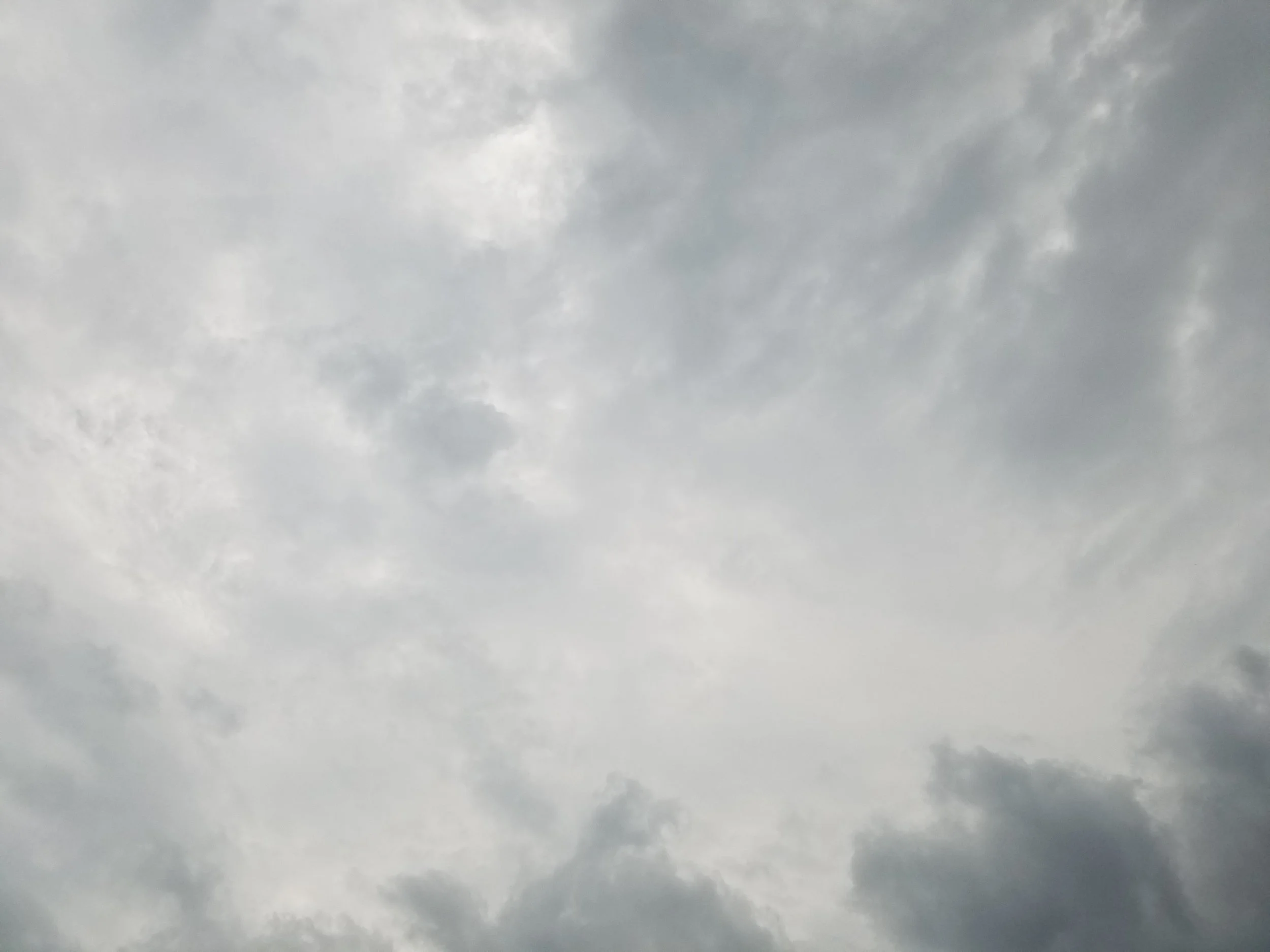
But one of my viewing companions wouldn’t be denied. He saw blue sky in the distance, toward the east, and thought we should hit the road. I was reluctant, but we got into the car just as it started to rain. We motored over the winding country roads, where here and there other groups of people had stopped to look up. We kept going. A four-lane highway, still pointed toward the faint blue in the distance, but we clearly were running out of time. Now I am sure if we had stayed on that vineyard slope we would have deeply appreciated the brief eerie darkness that came with totality’s moment. But I was still driving when the darkness settled over us, so the potential for amazement seemed rather diffuse. I pulled over to stop on the shoulder. The clouds were lightening back up and for the splitest of seconds we got to see the sun’s bright edge begin to emerge again. That was all she wrote. I took a picture of the watercolor gray sky. Totality, my ass.
By the time we got back to the vineyard – of course, wine was being poured – the skies opened up and a drenching rain delayed our departure and threatened to endanger our drive home. Earlier this week I’d read Annie Dillard’s fantastic account of the total eclipse of 1979, a nearly unparalleled piece of writing that I probably hadn’t read since it was published in her collection Teaching a Stone to Talk in 1982. As a touchstone, Dillard’s essay gives me hope and brings me back to a kind of inspiring reality. Even when natural enlightenment and the communal experience of a wondrous celestial event are denied, there is something left in life to contemplate and treasure.
A heavy rain descended on the Vox vines.
Rage and outrage: The neo-Nazi scourge has a long arc
Like everyone else with an ounce of decency, I’ve been disgusted and disturbed by what we witnessed in Charlottesville, Va., over the weekend. But it’s important to keep in mind that the fatal rally of torch-carrying weasels is only the latest and largest eruption by white nationalist, neo-Nazi, klanimals. The current environment seems to have given them permission to crawl out of their ratholes. They’ve been emboldened by a sense that their time has arrived, given the presence of like-minded dark philosophers in the upper reaches of the Executive Branch (looking at you, Steve Bannon, Stephen Miller, Sebastian Gorka, Michael Anton, among the puppet-masters in the White House).
The death of Heather Heyer at the hands of a car-wielding simpleton does not stand alone. Add her to the roll of victims of white-supremacist extremists (“domestic terrorists,” if you will). They include two Garmin engineers in Olathe, Kan., Srinivas Kuchibhotla, who was fatally shot, and Alok Madasani, who was injured, as was a heroic witness, Ian Grillot. They include Reat Underwood, William Corporon and Terry LaManno, gunned down three years ago by a corroded neo-Nazi outside two Jewish institutions in Overland Park, Kan. They include two men stabbed to death last May -- Ricky John Best and Taliesin Myrddin Namkai Meche --by an anti-Muslim ranter on a train in Portland, Ore. The list, of course, goes on. And lately the alarm grows only louder. As Heather Heyer posted on her Facebook page, "If you're not outraged, you're not paying attention."
I’ve had occasion a couple of times recently to dredge up a piece of ancient, though relevant history. I’ve never written directly about my own personal encounter with neo-Nazis, partly because my memoir muscles are not well developed. But, indeed, it was 39 years ago this month, when my path collided with a swastika-wearing dolt. (As I’ve put it from time to time, I’m the only journalist I know who has been arrested in a newsroom for disturbing the peace of a Nazi. I was much younger and tempestuous then.) Many former Star staffers paid tribute just recently to the late Tom Eblen, who, as managing editor at the time, played a supporting role in the brief newsroom fracas I set off. (“Consider this the obligatory wrist-slap,” he told me at the time -- or something much like that-- with his patented smirk.)
The other memory trigger occurred last November. On the day we learned of the death of longtime Star columnist Charles Gusewelle, my friends at KCUR asked me to write something for the station’s website. I’m reposting it here, because it includes Gusewelle’s take on my moment of resistance. There’s more to the story, of course, and some day I’ll get around to writing it. But for now:
This piece first appeared Nov. 16, 2016, at kcur.org.
My last encounter with Charles Gusewelle was early in 2015. He was trying to reach me by phone and I was on a weekend getaway to Key West. But I found his mysterious message — we weren’t fast friends, and I had no idea why he was calling — and returned the call. Of course, he was on deadline — this was a Saturday afternoon when I reached him. And the Sunday column he’d drafted was about me. Really?
I found that column this morning after learning that Gus had died, at 83, early Tuesday.
He had worked for The Kansas City Star since 1955 — more than 60 years. He built a career of reporting, commentary and global witness that should be the envy of any aspiring journalist. For the last 35 years or so he spoke directly and personally to readers as a columnist. His voice was gentle, soothing, compassionate. Many readers adored him for his love of animals and the outdoor life. Others were rewarded by his astute and timely reporting on his travels to Paris, Senegal and the vast territory of the Lena River in Siberia.
In the years that I knew him, he wasn’t so much a newsroom presence — he officed behind high walls or more often at home -- as he was a prolific and elegant writer who set a certain standard. His work defined the atmosphere of The Star. He was exacting in his prose, and woe to the copy editor who thought he or she might know more than he did about the aim of his words or the effect of his punctuation.
Gus had something of Hemingway in him — the travels to Paris and beyond, the hunting and fishing life, the deep concern for global injustice. It is my great regret that I did not have a chance to share with him the Hemingway biography that I’ve had in the works.
We all knew he’d been ailing for quite a while. He stopped writing his regularly weekly column last June. In a farewell column, he reflected the uncommon bond such a writer develops with those on the other end of his words: “This friendship with you, my readers — born out of decades of sharing my loves, losses and adventures — has been an immeasurable gift. This type of friendship is rare.”
Gus developed that column involving me in response to the horrendous massacre of the Charlie Hebdo satirists in his beloved Paris. He was moved to recall more civil encounters in his newsroom career, but then there was this:
“It was midafternoon in the newsroom of The Star. An editor had just returned from the coffee bar with a steaming mug of fresh java and sat to resume working at his desk when from the elevator and through the newsroom door came two men, their boots thumping on the uncarpeted floor.
“The larger of the two wore a brown shirt and an armband that flaunted the emblem of Hitler’s legions — a swastika in scarlet, black and white.”
Gusewelle did not use my name, but he described some of what followed on that summer day in 1978. It “was not a considered act,” he wrote. “It was simply an immediate reaction to those men and that hateful insignia.”
Yes, I doused that damned Nazi with a cup of hot coffee.
“Nazis do not take affronts lightly,” Gusewelle wrote. “Herr What’s-his-name got interviewed after all. He also called the police, and the editor — cited for disturbing the peace — paid a $25 fine.
“Rather preposterous, I’d say, considering the amount of peace disturbance done by Nazis in their time.”
Gusewelle was not immune to hyperbole, given his conclusion: “I recall the event as one of the fine moments in American journalism.” He tempered that, however, with another lament for what we have lost over the years: “But this is a different day, and today our entryways are guarded and secured.”
I remain grateful for Gusewelle’s words, and for what he gave all of us. He saw stories all around him and he knew how to tell them.
A memorial for Heather Heyer in Charlottesville, Va. (CNN)
Discovering Hemingway's Legacy at 1729 Grand
I wrote this piece originally for an Associated Press blog published daily by former Kansas City bureau chief Paul Stevens, he of the near mirror-image name.
In my earliest days at The Kansas City Star, the AP officed on the third floor in the temple of journalism that William Rockhill Nelson built, and Ernest Hemingway's ghost was hardly around.
Hemingway had been dead for a decade, and, to me, he was just someone whose work I'd read in school. I don't recall any substantial discussions about him in the building, nor was I impressed that his name appeared in bronze on a plaque that listed Star staffers who served in the first world war. It would be years before I began to appreciate not only his place in American literature but also his legacy as a cub reporter in the very newsroom where I spent more than 40 years as a writer and editor.
A WWI service plaque in the historic Kansas City Star building keeps the Hemingway link alive. I'll be curious to know where the plaque will go when a new owner takes over the building..
By 1999, the centennial year of Hemingway's birth, I had leapt into his world with abandon as I prepared a special-section tribute for The Star, "Hemingway at 100." I read deep into Hemingway's work, met many literary scholars at conferences, and began researching his life and work, especially his Kansas City period of 1917-18.
It seemed like such a folly, expecting to find morsels that hadn't already turned up in the many Hemingway biographies and scholarly works published even then. But I trudged on periodically, examining Hemingway's papers at the John F. Kennedy Library in Boston and elsewhere, inching through The Star on microfilm, and traveling to places that shaped the outsized talent, who possessed an indelible sense for the art of the word along with a knack for bombast and bad behavior.
When I chose to retire from the newspaper in March 2016, it was full-steam ahead on the biography that I'd been scratching at for too many years. A couple of months into the new round of work, an important insight emerged. For all those years I thought I'd been working on "Hemingway in Kansas City." But who would care about that? I finally realized. The morning that I reshaped my project as "Hemingway at Eighteen" turned out to be critical. Long story short, I refashioned a formal proposal that I'd been floating and within two weeks sold the book to an editor at the Chicago Review Press. The expanded time frame allowed me to take Hemingway from Kansas City to the ambulance service in Italy, where, two weeks before his 19th birthday, he suffered a near-death wounding on the war front along the Piave River.
Those two peak, teen-age experiences now form the bulk of my book.
At a conference last spring, I learned that slice-of-life biographies had taken the publishing world by storm. Sure, full-life biographies remain the ultimate standard for many authors and readers. But the kind of closely focused books expertly cast and popularized by my friend Candice Millard (on Teddy Roosevelt, President John Garfield and Winston Churchill) have blossomed. Ever since, I've been saying that of the dozen or more Hemingway books appearing in 2017 alone, mine, I'm sure, is the sliciest.

The book, subtitled The Pivotal Year That Launched an American Legend, begins with the recent high school graduate unsure of what to do with his life as he worked his family's vacation farm fields in Michigan and fished for trout. College was out of the question for a while, and Kansas City became the default when Hemingway ultimately determined the Chicago newspapers weren't hiring but an uncle could get him a job at The Star. Kansas City's lively, gritty and sometimes mean streets, along with the newspaper's colorfully intense daily grind, served as something like a college education for Hemingway. The book details some of his more notable pieces for the paper, presents some little-known background about The Star and the city, and delivers some previously unheard contemporary voices about Hemingway, the budding writer. For the world of journalism, it also raises new questions prompted by a surprising piece of history I was finally able to confirm after many years of trying - the time that Hemingway was called to testify before a federal grand jury.
Hemingway at Eighteen comes out in October, 100 years after Hemingway's arrival in Kansas City. And 100 years after the very beginning of his self-invented life as a writer.
Terry Tempest Williams personalizes a copy of her latest book, The Hour of Land after her talk at the Woodneath Library in Kansas City.
"Hold the Ground": An Evening With Terry Tempest Williams
It has been way too long since I’ve given myself the gift of a quality road trip out West. Yellowstone. Colorado. New Mexico. Big Bend. Those wide open, mysterious and treasured landscapes have framed indelible encounters with earth and sky over the last four decades or so.
Fourteen years ago, I led an odd post-modern trek along the Lewis and Clark Trail. After a rough-water encounter in the middle of the Missouri River in Montana, I lived to tell about it in a newspaper series. That two-week journey went from Missouri to the Oregon coast and back. On the trip home, I convinced my traveling companions to go along on a brief detour so I could take a look at the Bear River Migratory Bird Refuge in Utah. For me it was a pilgrimage, paying a debt I owed. Terry Tempest Williams first introduced me to Bear River by way of the written word. The refuge plays a prominent role in her deeply moving and provocative memoir Refuge: An Unnatural History of Family and Place (1991). In the book, Terry wove together three threads – an intimate account of her mother’s death by cancer; the troubling parallel story of the rising waters of the Great Salt Lake and the precarious fate of the Bear River refuge and the millions of birds that rely on its place along their seasonal flyways; and, third, the disturbing theme that questioned how American nuclear bomb tests in the desert in the 1950s very likely affected the health and lives of downwinders, especially of women in her devoutly Mormon extended family. There’s the chilling moment when she learns that one of those enormous flashes went off as her father drove in the desert and her mother sat in the passenger seat pregnant with the future writer and activist.
I heard Terry read that aching essay, fresh out of the typewriter, in 1989 at a writer’s workshopin Ranchos de Taos, N.M. Later, I reviewed her book, and followed her travels and her work over the next quarter of a century. Whenever my own travels take me to wilderness, to natural landscapes, or even when I’m only a spectator flying over those brown and rolling deserts of the west, I always feel I am carrying Terry’s spirit of openness, awe, and love for the wild. A sense of native identity and energy also imbues her regard for those lands, as well it should.
In recent years I’m mostly the armchair schlub who reads about wilderness more than he enters it. From time to time I make a winter excursion into the desert of New Mexico, to the Jemez Pueblo, where the annual Three King’s feast day Buffalo Dance undulates for hours in a ritual of patterned motion and spirit sounds. The dance and its continual drumming amount to an expression of identity as authentically American as anything one could think of. (See my column of football, healing and the Buffalo Dance.)
Well, the point of all this is that Terry came to Kansas City last week for a library talk about the making of her most recent book, The Hour of Land: A Personal Topography of America’s National Parks. Originally imagined as a “love letter” to our wild lands on the 100th anniversary (in 2016) of the National Park Service, the project became far more challenging, she confessed. At first it seemed somewhat beyond her grasp. She had to figure out which of the 59 parks to write about and then how to do it. In the end, Terry being Terry, the book she turned in was far more political than her editors had expected. As she hikes the contours of, say, the Theodore Roosevelt National Park in North Dakota or Acadia in Maine, she is never far away from vital and threatening issues such as fracking, land use, and encroaching development. She confronts controversy head on, including a scandal a few years ago over construction and desecration at the Effigy Mounds National Monument in northeast Iowa, which prompted a period of distrust among numerous tribes.
Also that night at the Woodneath Library Center she expressed the deep disappointment brought about by the fossil-fuel priorities of the current administration. Currently under way is a plan to erase or severely diminish the Bears Ears National Monument in her native Utah. The 1.3-million-acre expanse had gained federal protection in the last months of the Obama administration, and, like almost everything passed by the 44th president, it swiftly became a candidate for repeal. Terry had been a vocal advocate for the Bears Ears designation, siding with the five Indian tribes – Navajo, Hopi, Zuni, Ute Mountain Ute and Ute Indian – who sought to forestall looming energy production on what they consider to be sacred space. In the long debate over Bears Ears, Terry said, Utah Sen. Orrin Hatch, the crusty Republican, once declared the indigenous people did not know what they were talking about. “That’s not patronizing,” she told the 100 or so people in the audience. “It’s racism.”
She also brought us up to date on the oddly ironic legal case the federal government brought against her and her husband, because they had the audacity to purchase two oil and gas leases covering about 1,000 acres in Utah without any intention of drilling. The Bureau of Land Management rejected the purchase, and their appeal is pending.
Terry mission is to be a storyteller, and she closed the evening with two compelling anecdotes. One, which she recounts in the book, involved a harrowing afternoon at Glacier National Park when three forest fires converged and blew past the inn where she and three dozen others huddled inside. The other was a sight she witnessed with her husband, Brooke, at Yellowstone. Coyotes were feeding on a bison carcass in the near distance. A white wolf emerged from the trees and took control of the blood-soaked remains. Soon, after the wolf left, a procession of bison lumbered into view and encircled the fallen creature in what felt like a miraculous ritual of animal spirit. “We are not,” she said, “the only species that loves and grieves.” To Terry Tempest Williams, the large-hearted naturalist, evocative writer and fiercely active defender of nature, the spirits were sending a message: “Hold the ground. Hold the ground. Hold the ground.”
Billy Bragg on the American roots of British music
It was great to hear Billy Bragg on Fresh Air this week. Some of us in Kansas City were lucky to hear much of this story earlier this year when he spent a few days at the Folk Alliance International conference. In one appearance he talked about the pivot point in the mid-1950s when a skiffle player named Lonnie Donergan began covering Lead Belly's "Rock Island Line." Without that, Bragg said, there'd be no Beatles, no Led Zeppelin, etc. Bragg elaborates on all this in a new book, which he told me about back then at a reception. I was excited to hear about it, and now that the book, Roots, Radicals, and Rockers, has just been published, I hope to get to it soon.
Here's a link to that the Fresh Air interview: http://www.npr.org/2017/07/19/538079082/billy-bragg-on-skiffle-the-movement-that-brought-guitar-to-british-radio
And here's a video I shot at Folk Aliiance of Bragg playing one of his better known tunes: https://www.youtube.com/watch?v=ZCnGcsS3BU4
What's that wine in your glass?
Doug Frost is a bona fide treasure in the wine world. As a Master of Wine and a Master Sommelier -- that's an extremely rare combination of achievements -- he's got highly developed senses and a brilliant way of teaching the intricacies and boosting the pleasures of this life-affirming liquid. On Monday he joined the Gang of Pour group of Kansas City somms and restaurateurs (and somewhat educated observer-participants such as me) for a session on blind tasting. In blind tastings, of course, wine bottles remain in brown paper bags or otherwise hidden and tasters try to figure out what's in the glass. It ain't easy, but Doug has a way of making it logical and breaking it down to the elements that help you learn your way.
The Gang of Pour sessions now meet every two weeks at the lovely Ca Va bubbles spot in Westport and are open to KC bar professionals. This one was illuminating, exhilarating and rather difficult. Future sessions, led by a variety of wine pros, promise to be equally enjoyable.
Doug follows a consistent procedure, tied to the grid sheets used in sommelier certification exams. So we go through a fairly specific list of wine characteristics (color, hue, intensity, aromas, tastes, structural qualities) in order to get to a logical place in identifying each wine. Describe the floral and vegetal notes. Is this a warm climate wine or a cool climate wine? And why? How do you describe the levels of acid, tannin, and alcohol -- low, moderate, moderate-plus or high?
Doug spent a good part of the first hour of the session walking through each incremental step as it applied to a certain white wine. Then my classmates (about 20 of us) and I blasted through five more wines -- a second white and four reds -- having about four minutes each to make our IDs. For the record, I was mostly humbled, though I felt fairly good about some of my sensory responses, especially in analyzing structure. In the end, I did nail two of the six wines: an Australian Shiraz and a New World Pinot Noir (it was from New Zealand, but I couldn't get past New World, though probably would have landed on Oregon instead).
I've been learning from Doug for more than 20 years. He is not only incredibly on top of everything, he's got a great sense of humor, he's brutally frank, and he's totally committed to making wine drinking both fun and rewarding.
Sunday Morning Mind Expansion
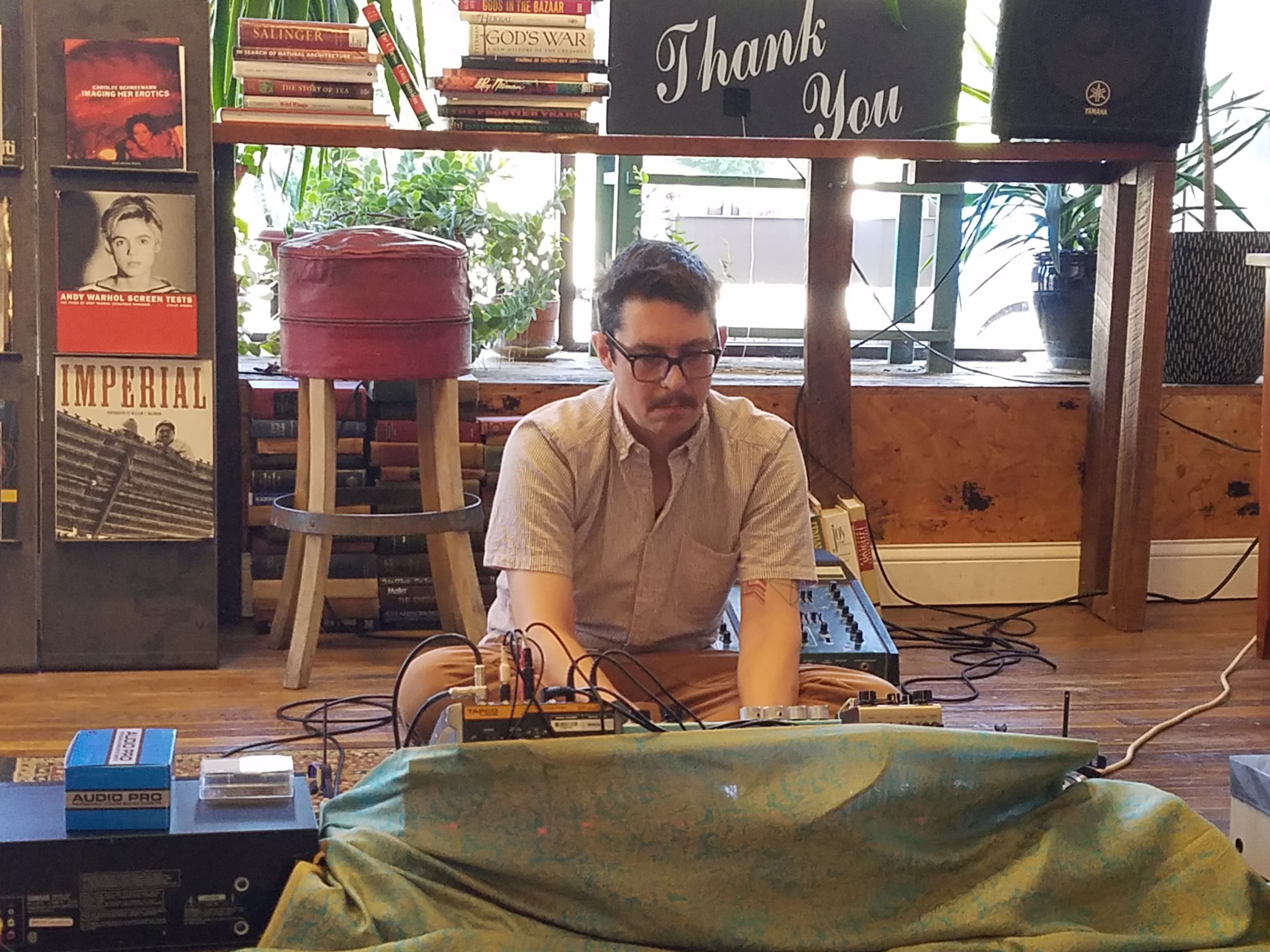
Night Blooms Darkroom & Bookstore is the kind of little place that I would run if I ever went insane again and owned a bookstore, as I did two decades ago. This morning, Shawn E. Hansen (above) settled into the front of the shop for the second of five sessions to present an hour of mesmerizing music on an electronic keyboard in the guise of a hipster pipe organ. The music came in two halves: "Drones," which amounts to a steady rumble of trancelike atmosphere, and "Tapestries," which is an evolving, multi-layered piece with lyrical phrases, waves of celestial propulsion and loops of churning but wholly accessible textures. The latter half especially is very much in the mold of Philip Glass, an influence that Shawn readily acknowledges.
As it happens I sat at a table, browsing books, as he played and landed on a collection of poetry by Jorge Luis Borges. It was perfect text for the music, especially this: "I am the one who never has unraveled// the labyrinth of time, singular, plural,// grueling, strange, one's one and everyone's" (from "I Am," or "Soy" in the original Spanish, which I also read to enhance my recent exercises in the language).
To add to the experience, Shawn is dubbing audio cassettes to preserve the compositions (10 limited edition dubs per Sunday morning piece for $5 each). He'll be back for three more Sunday mornings in July, promptly at 10 a.m. To which I echo the photo: "Thank You." I plan to return.
Fidel's Tomb
Not many American travelers to Cuba make it to Santiago de Cuba, on the southeastern coast. But the 500-year-old city has many attractions, including loads of music; the oldest extant colonial house on the island (c. 1540s), the Sierra Maestra range, out of which the Cuban revolutionary forces emerged; and the final resting place of El Jefe himself, Fidel Castro. His tomb at the Santa Ifigenia Cemetery in Santiago is a huge boulder shaped like a kernel of corn in homage to Jose Marti, the poet hero of Cuba whose domed monument stands nearby. June 19, 2017.
And now a word from POTUS 2
On a recent visit to the Massachusetts Historical Society, an archivist brought out numerous items for inspection. One highlight was this letter from President John Adams to his wife, Abigail, in 1800, after a few days of living in the White House. Many people know its famous contents, because an excerpt has long appeared on the White House dining room mantel. It goes like this: “I pray Heaven to bestow the best of blessings on this House, and all that shall hereafter inhabit it. May none but honest and wise men rule under this roof.” If only he knew. — in Boston, Massachusetts.