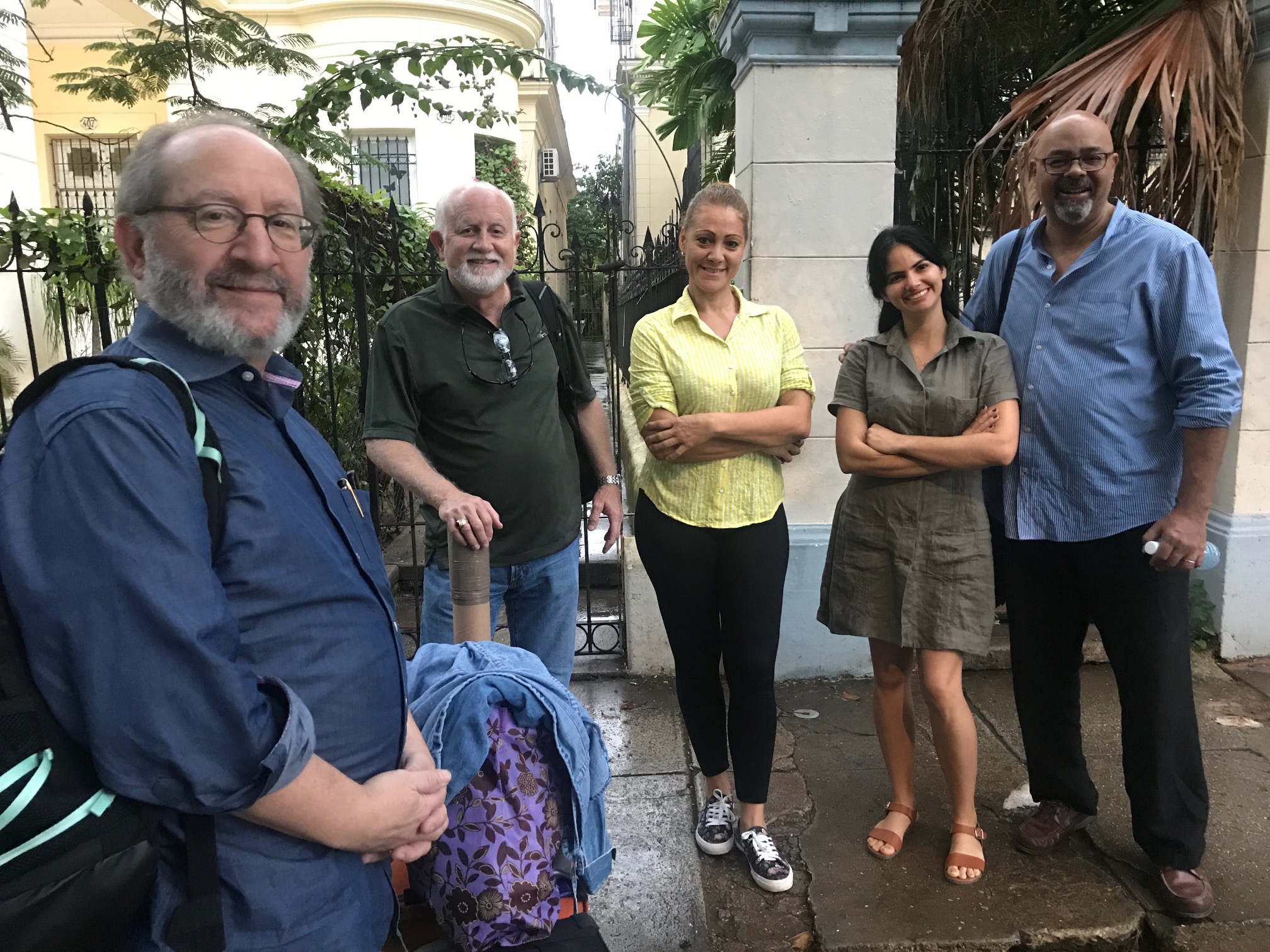
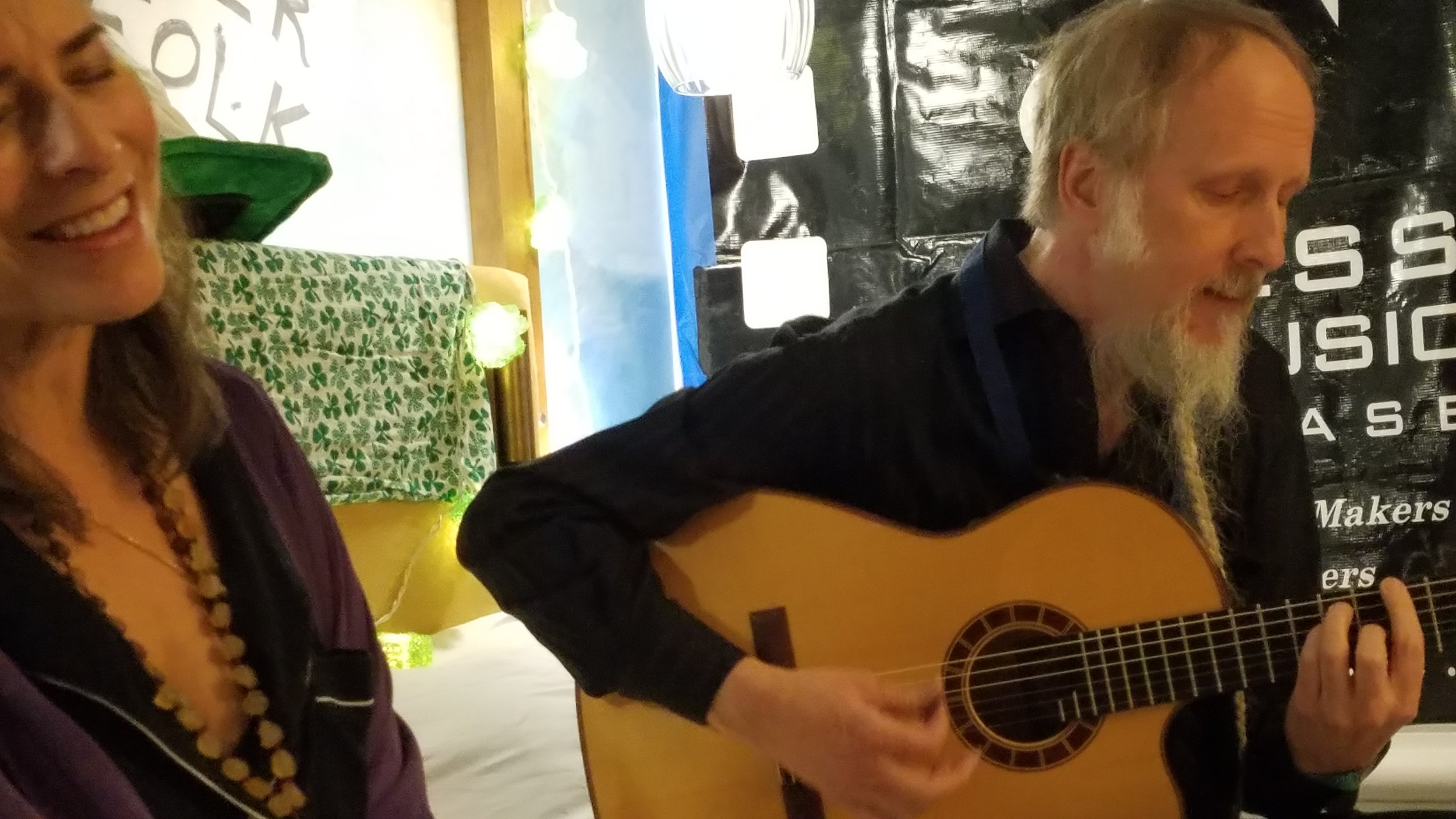
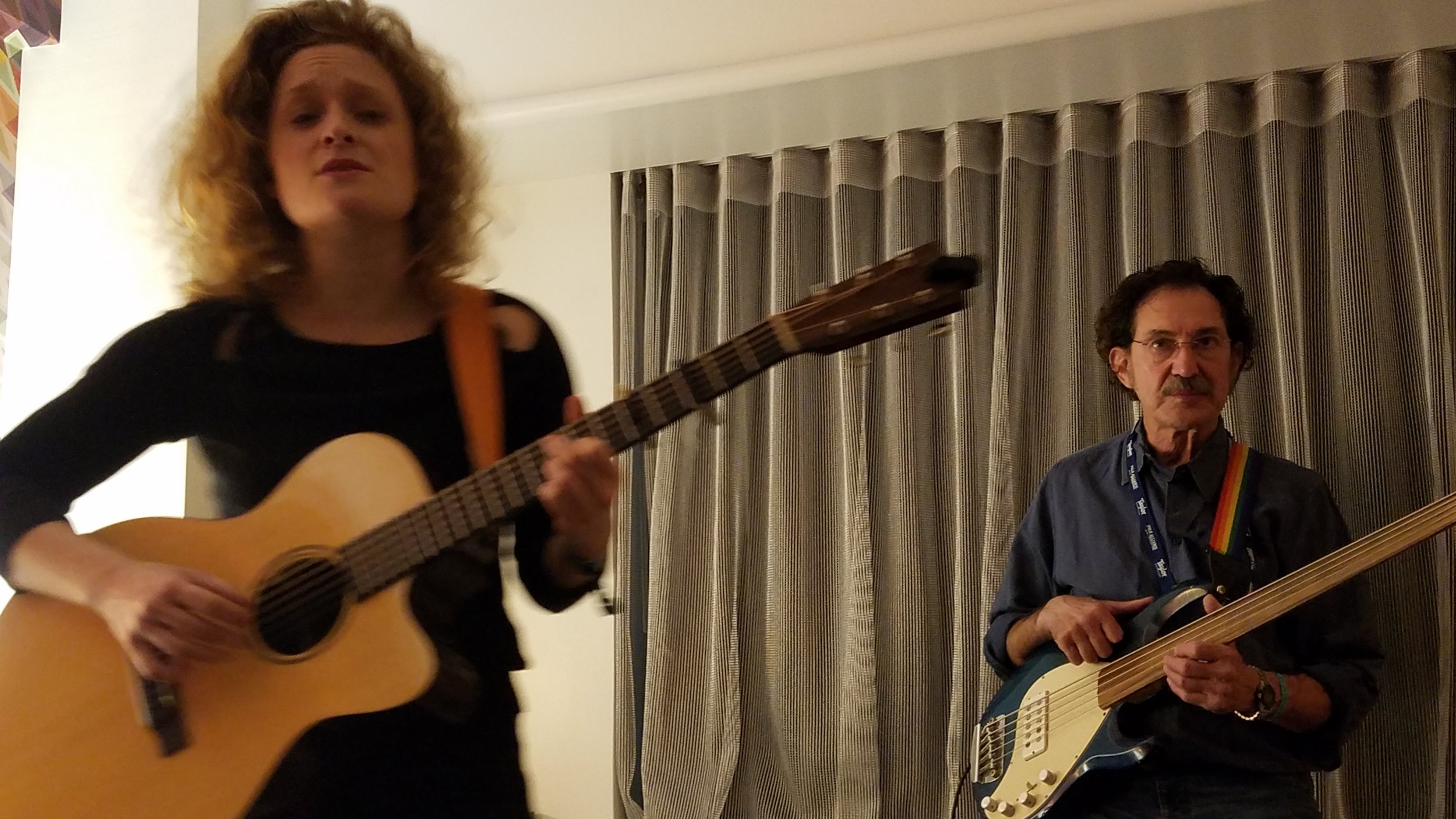
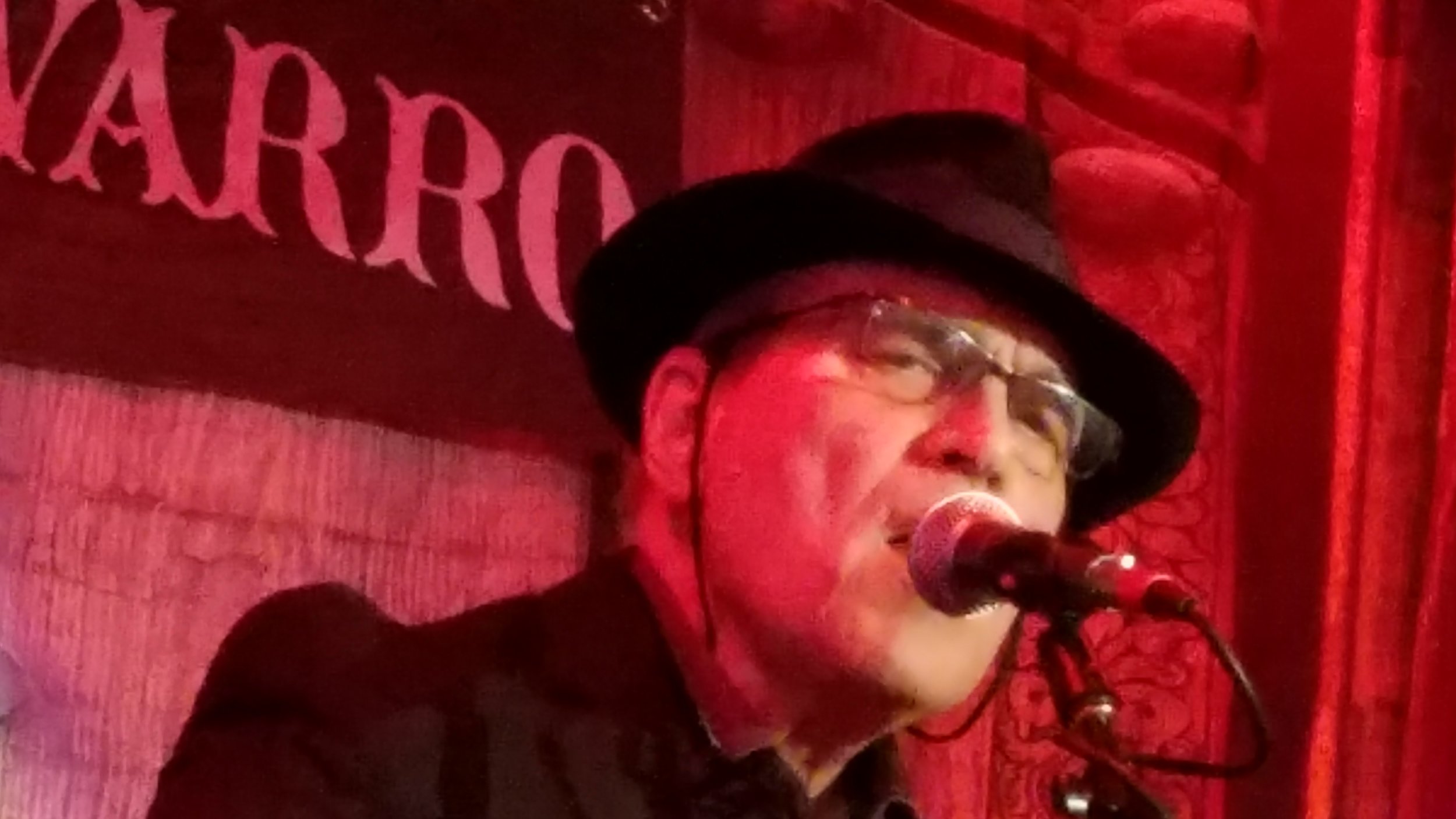
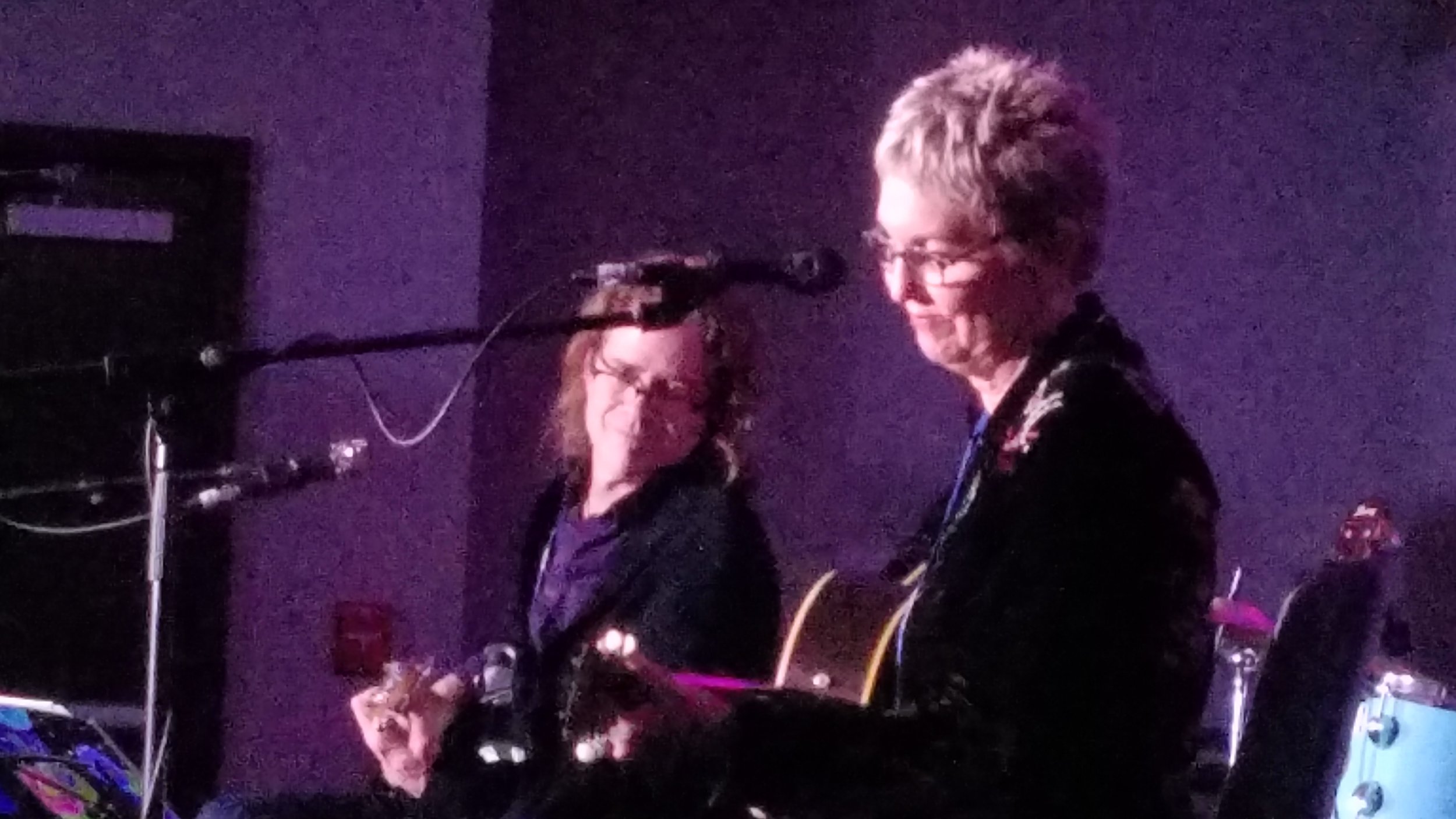
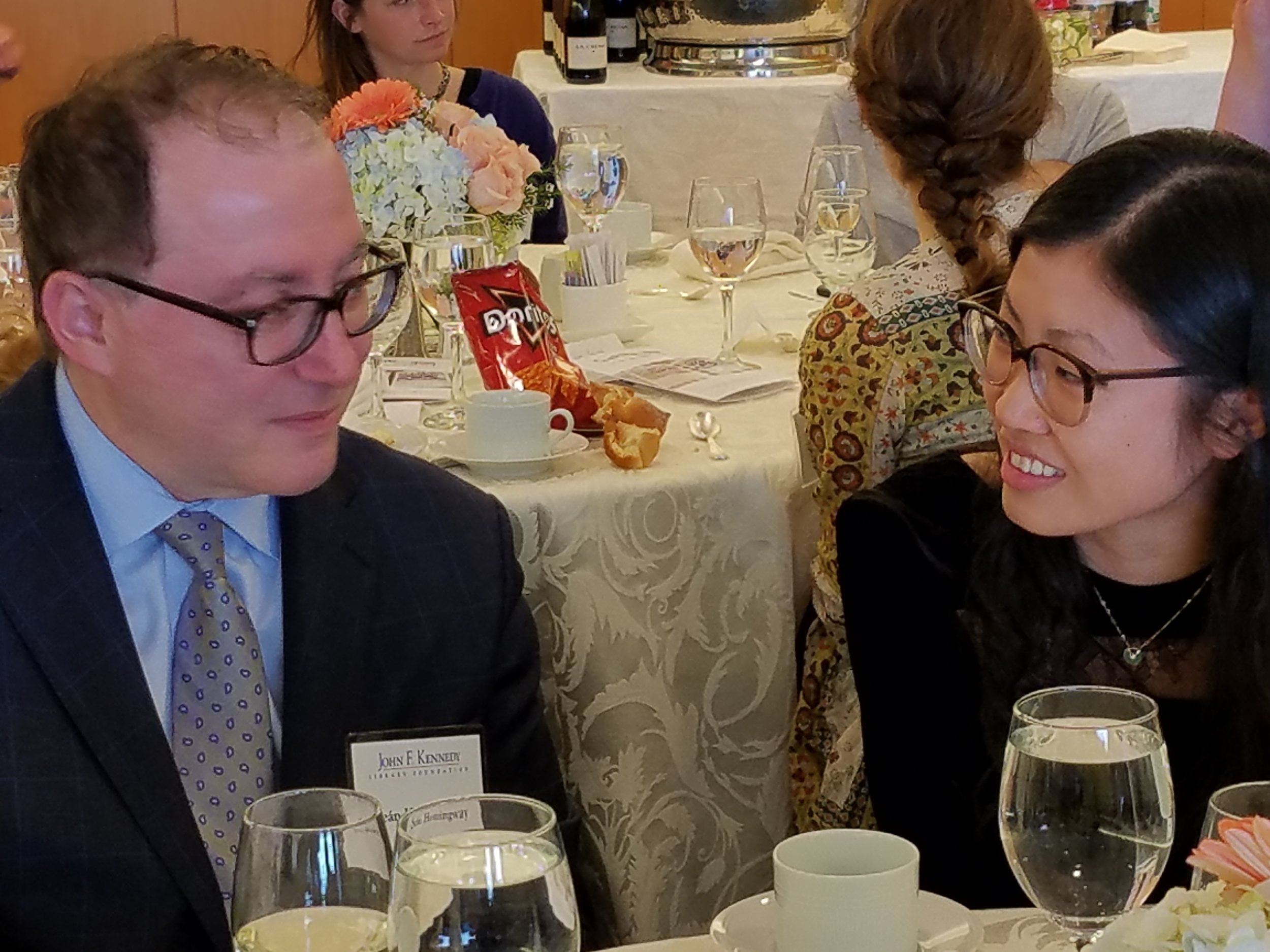
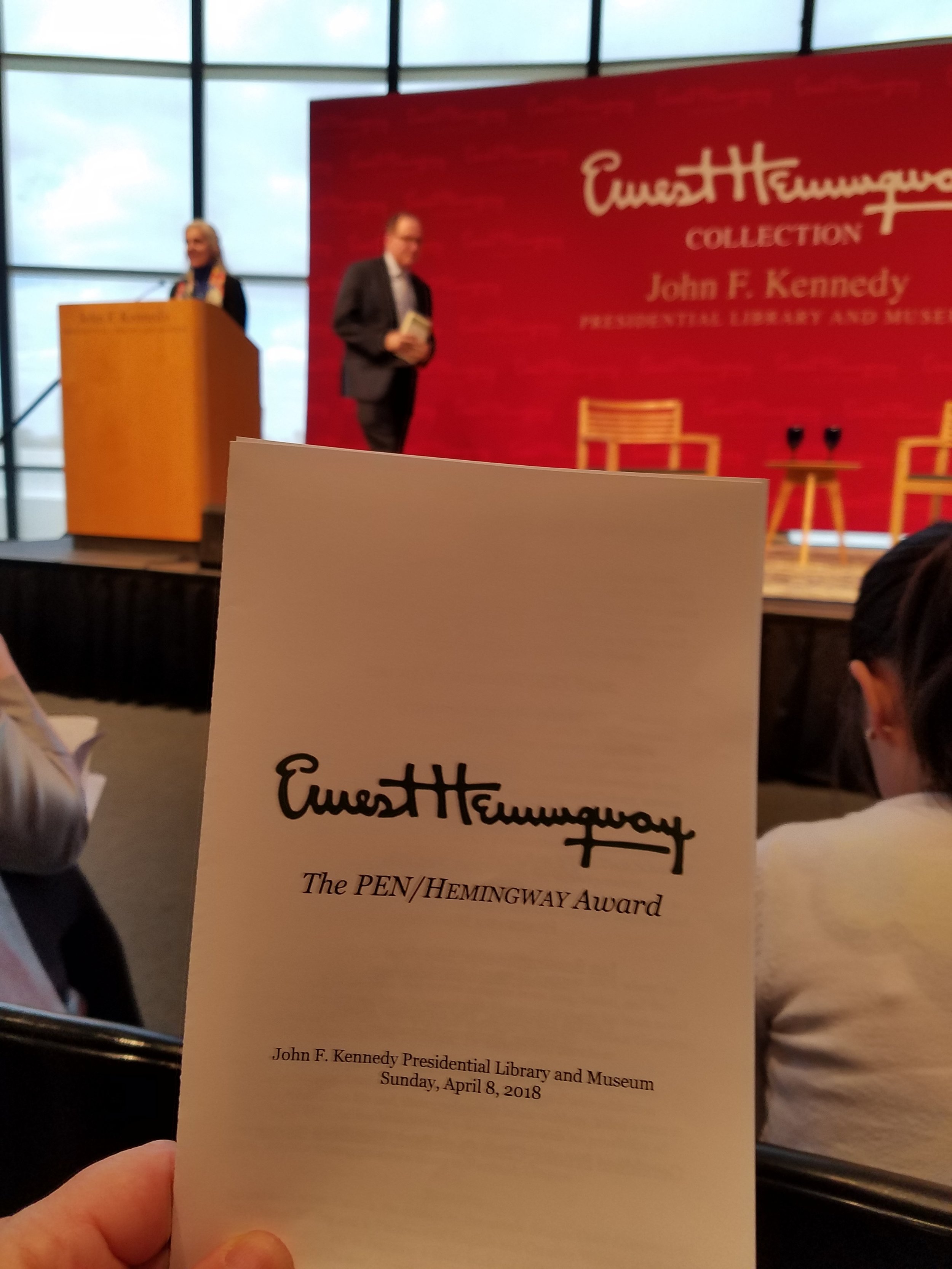
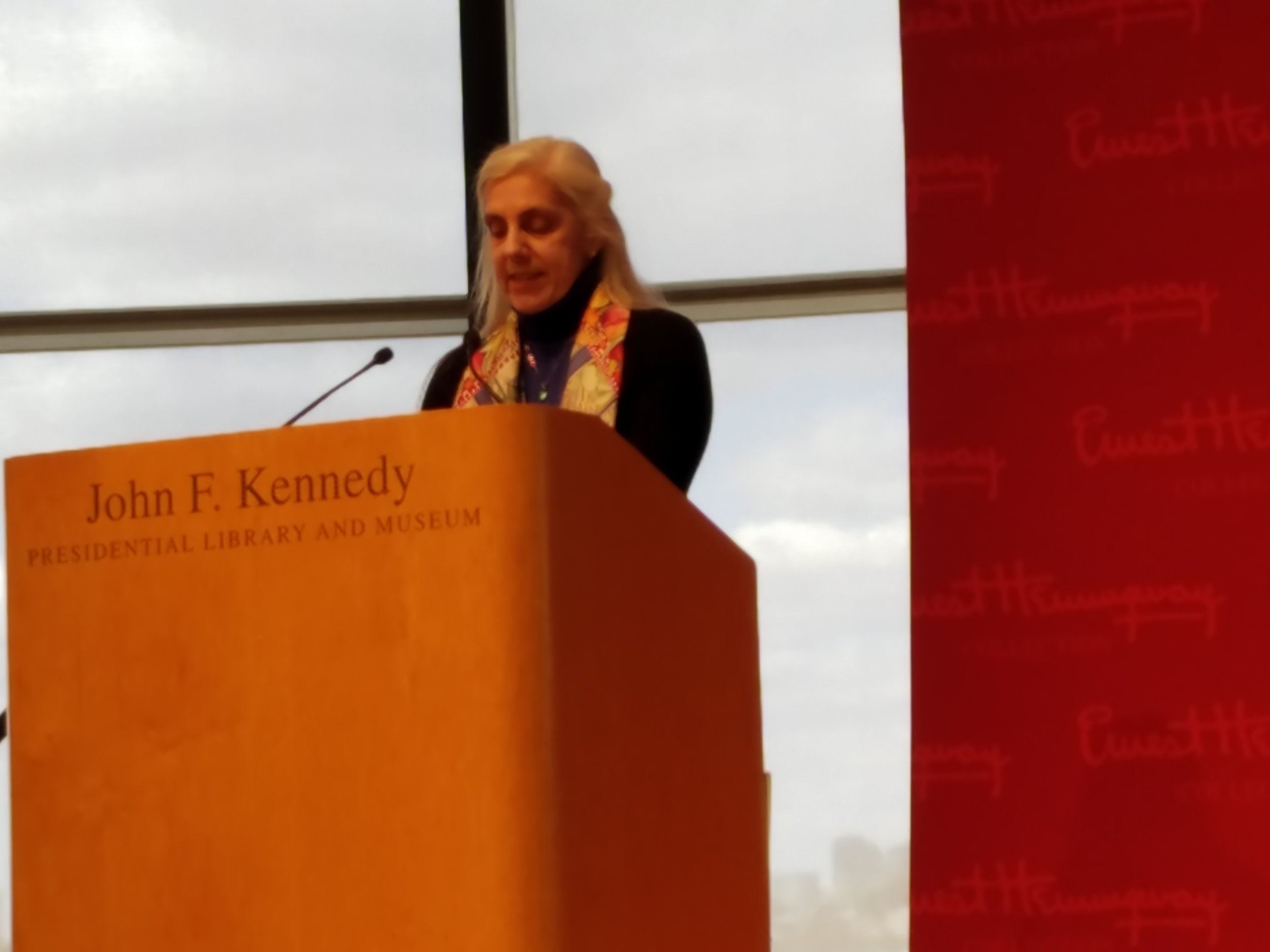
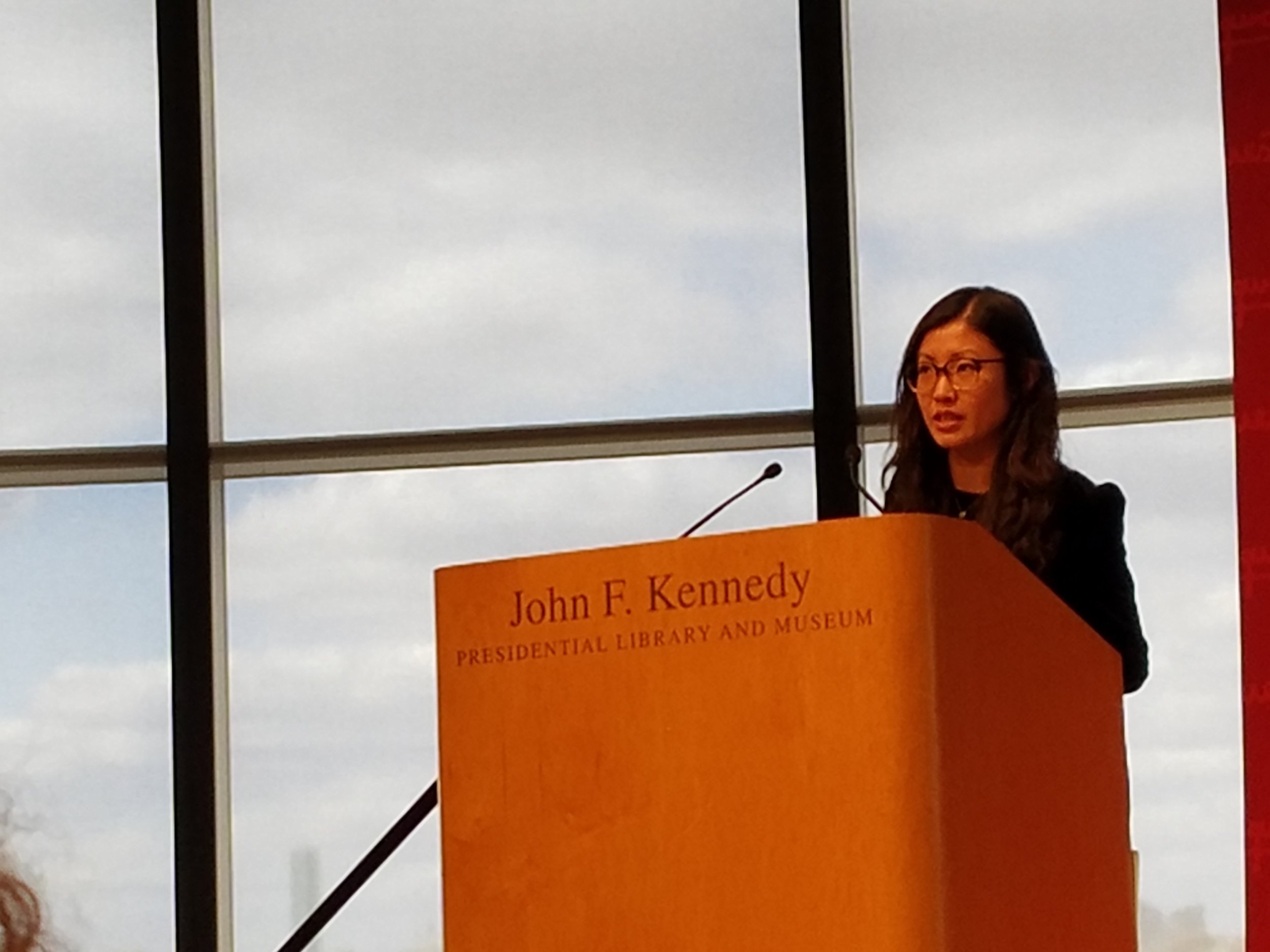
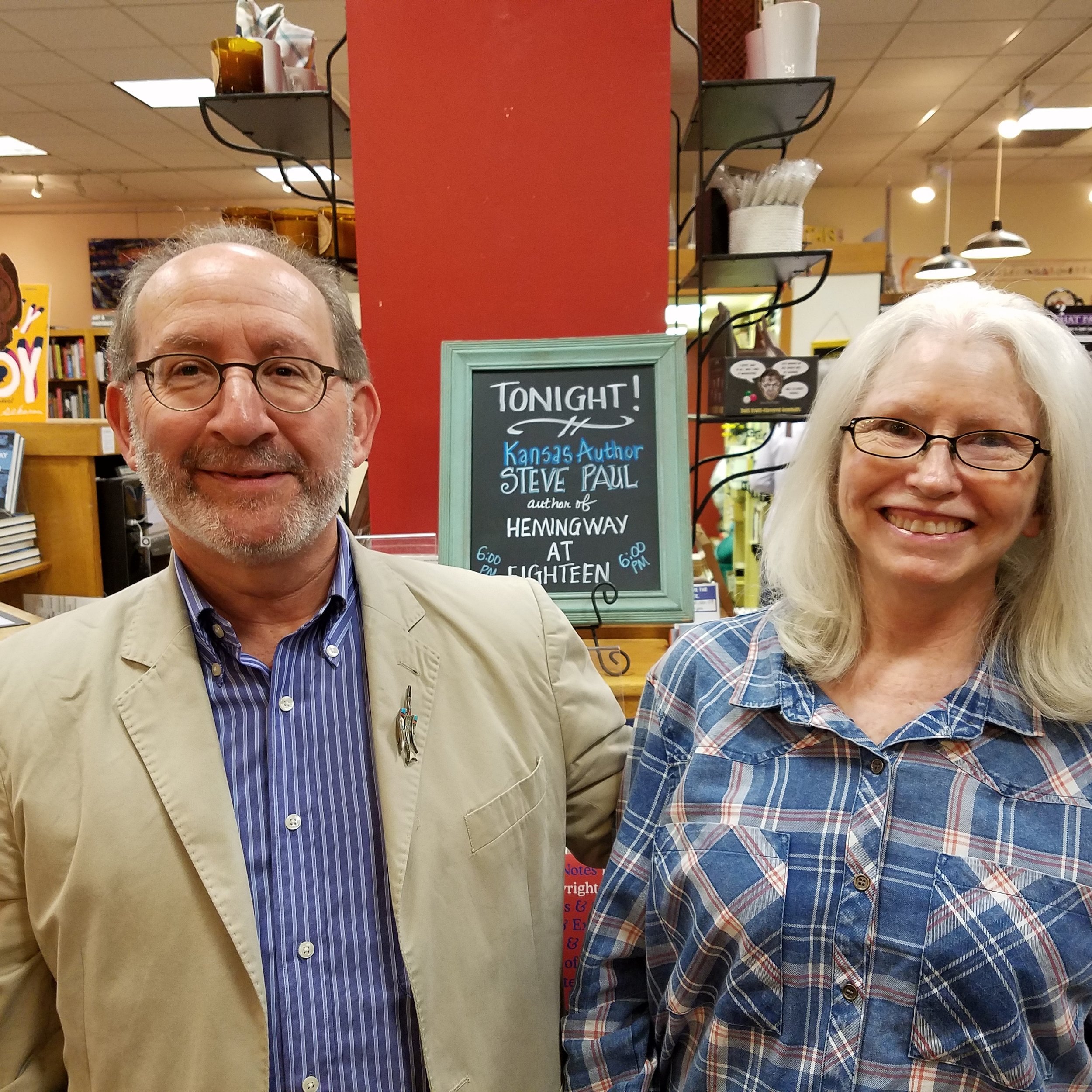
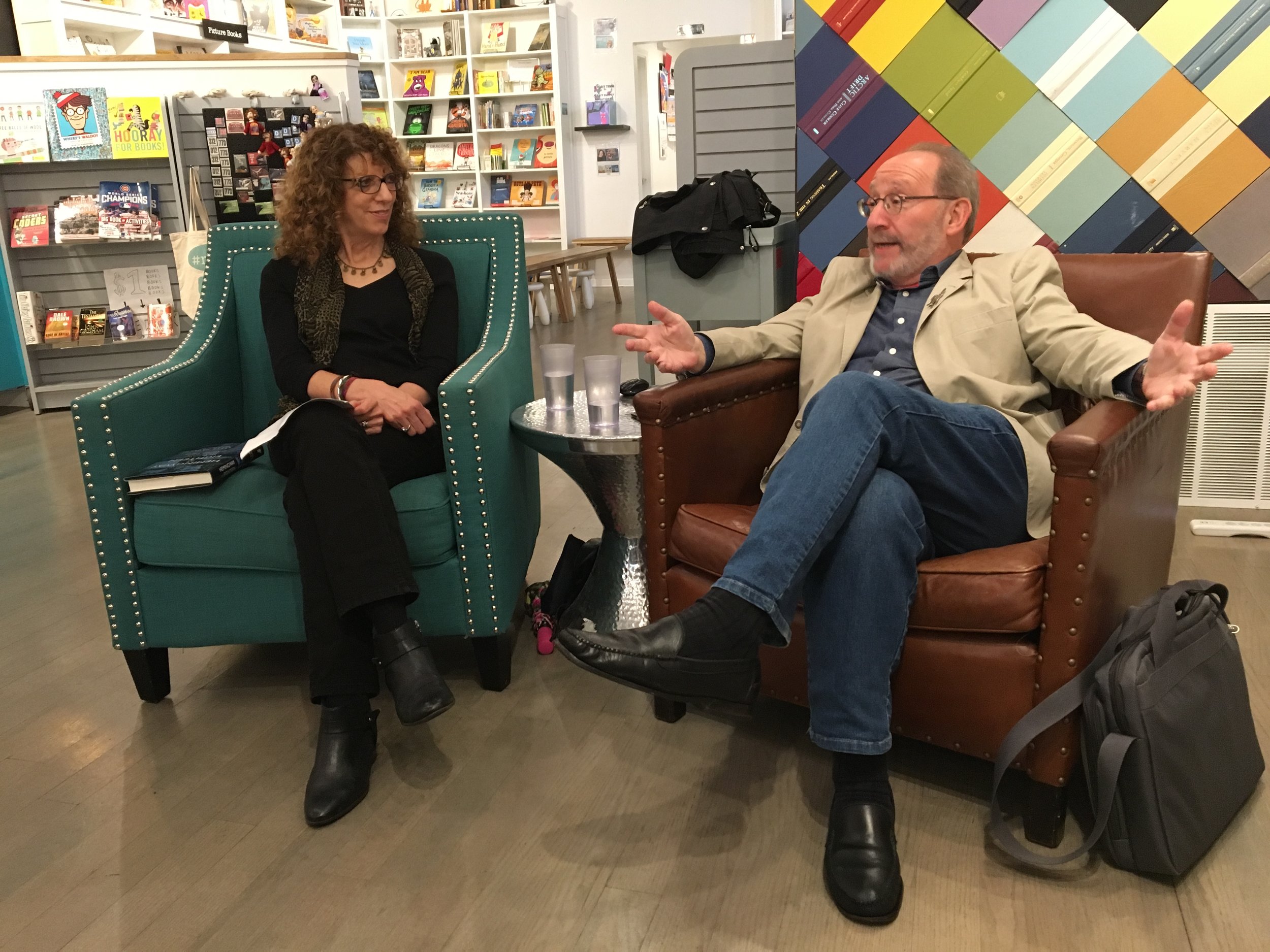
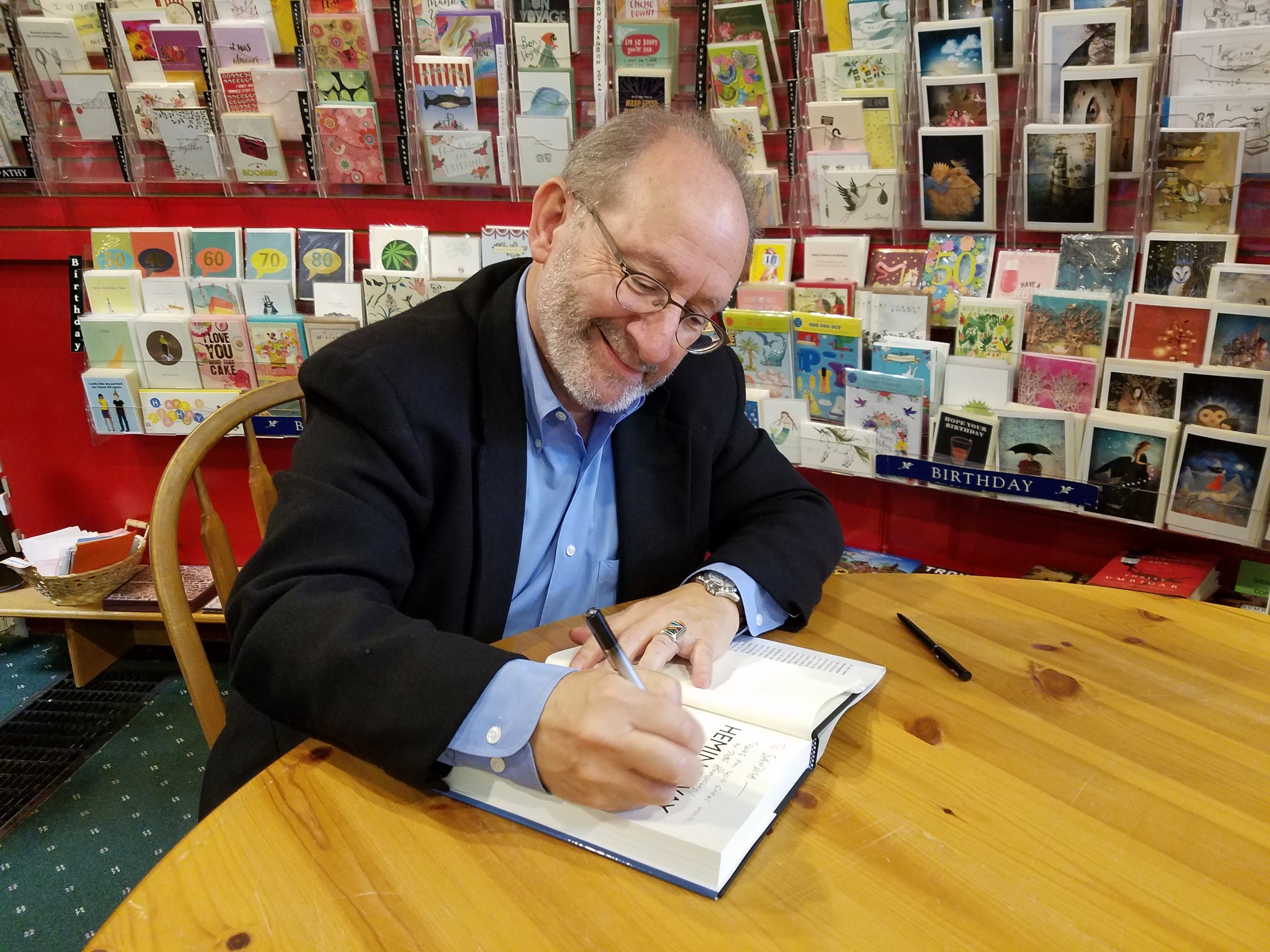
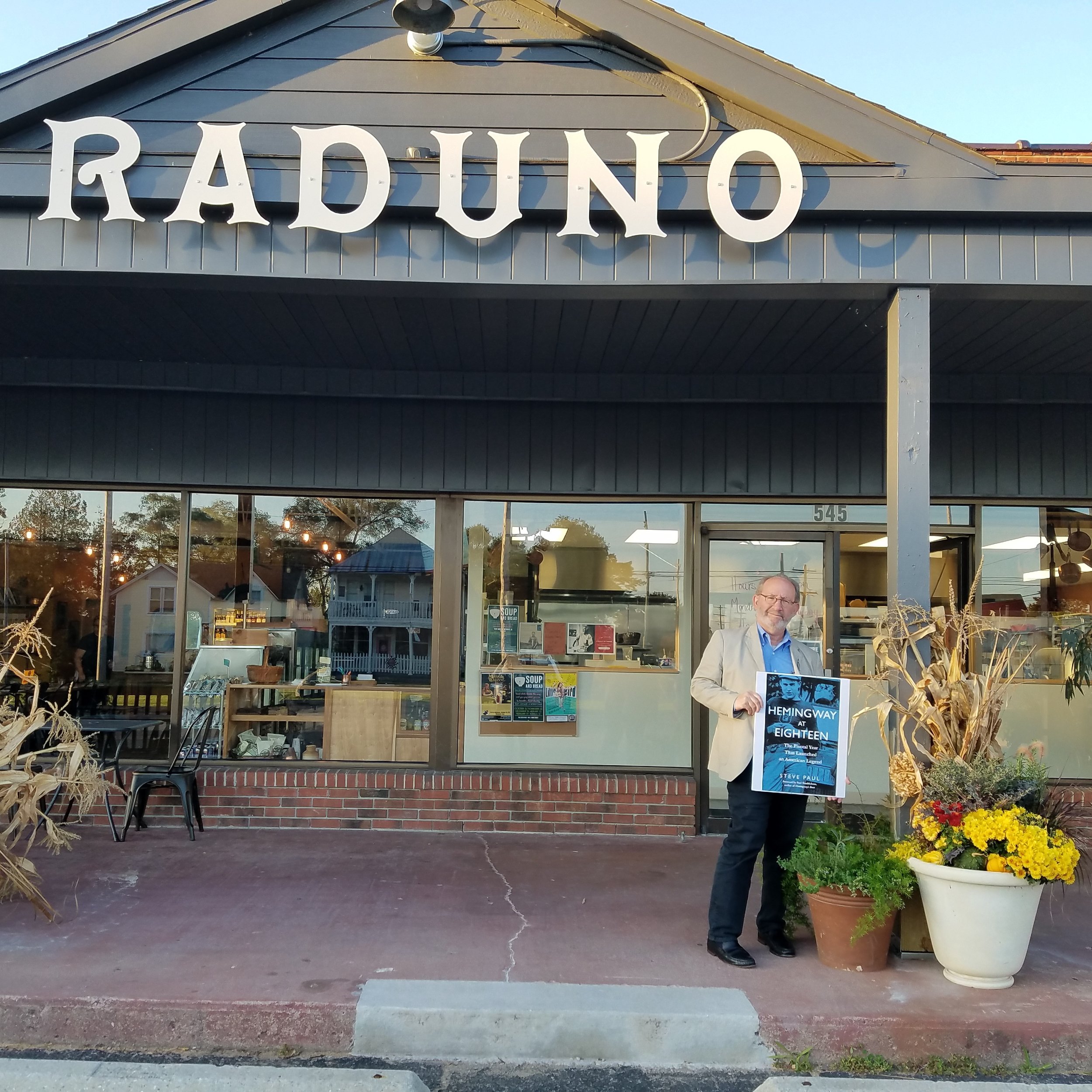
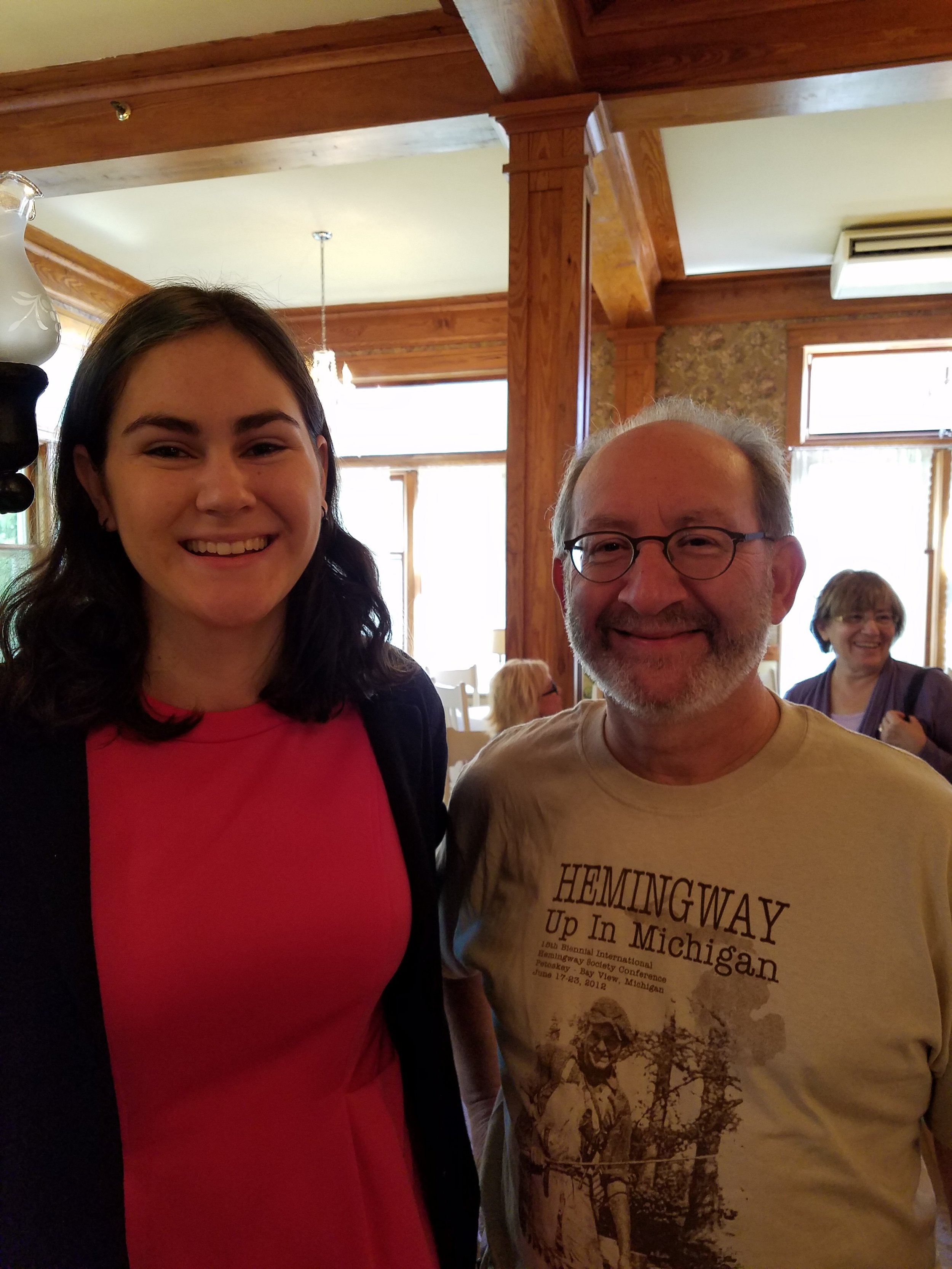
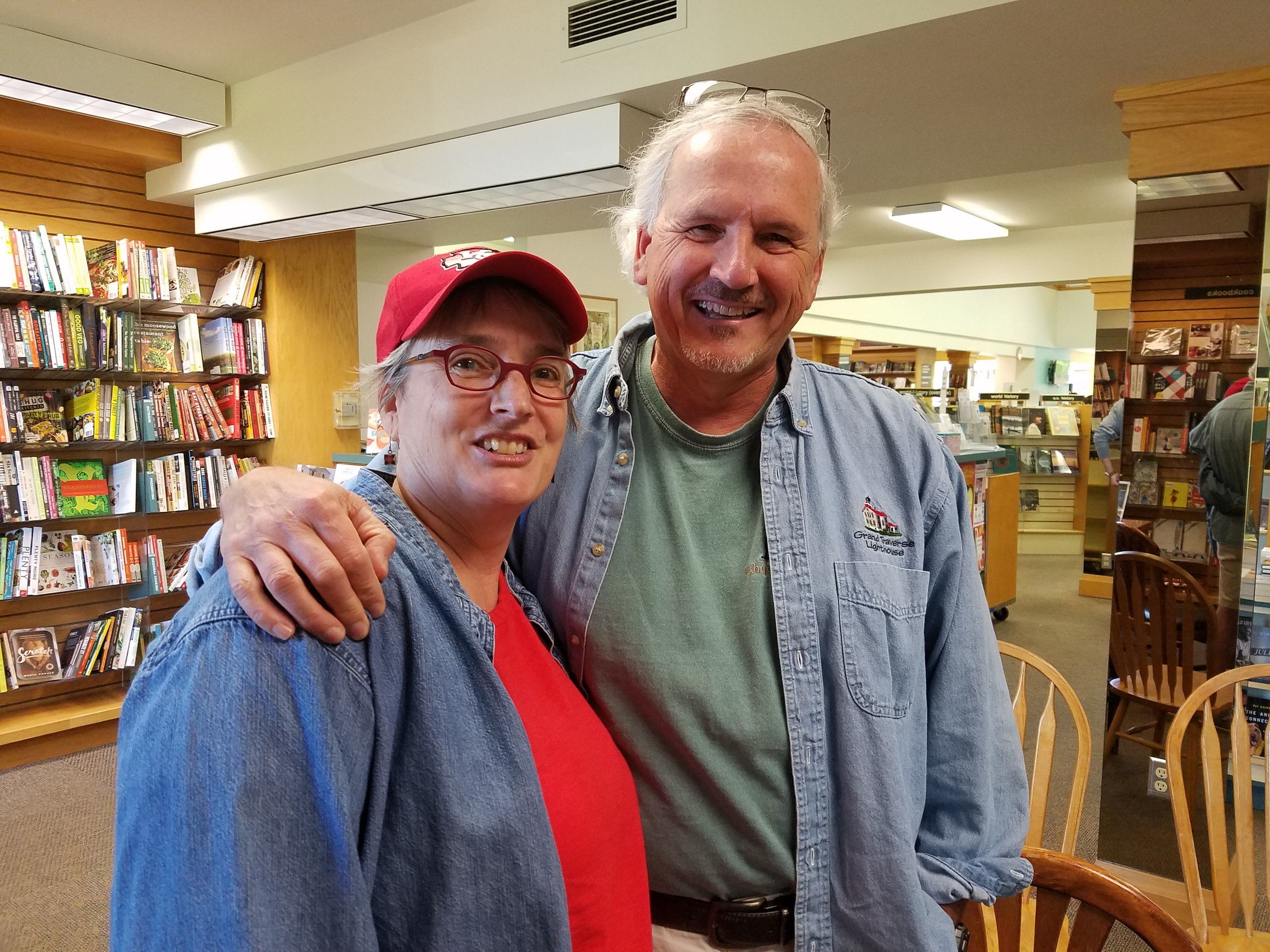
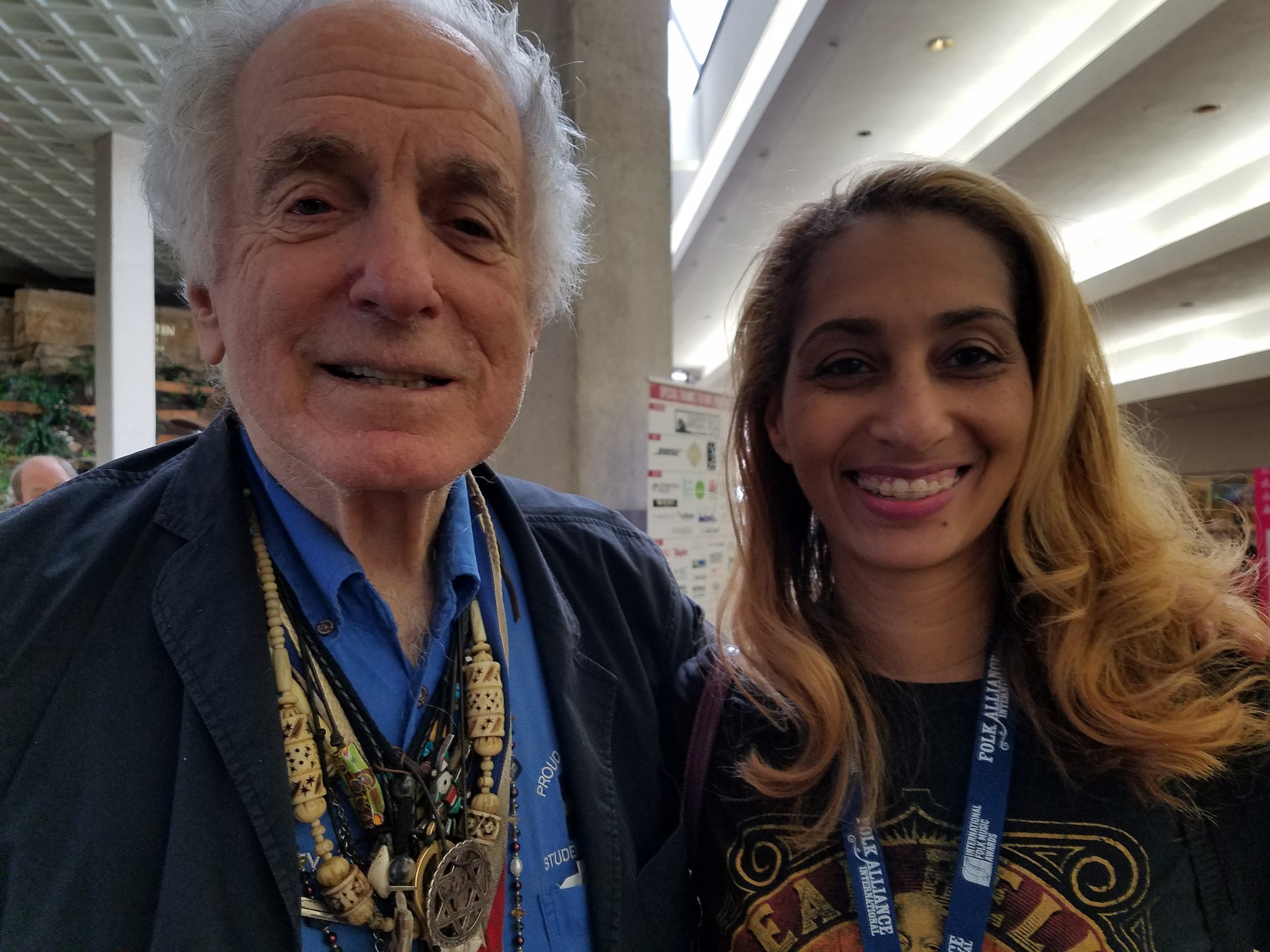
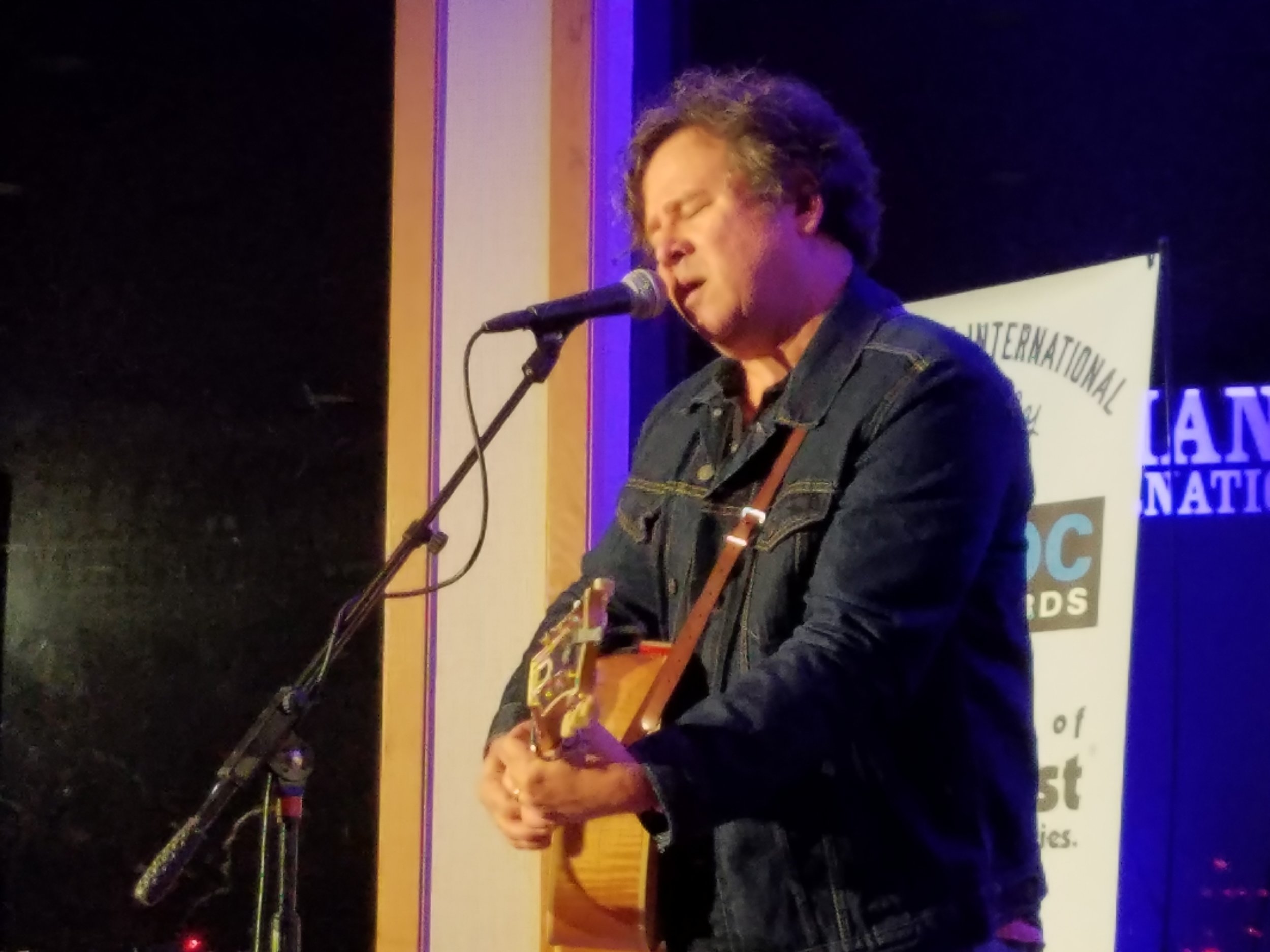
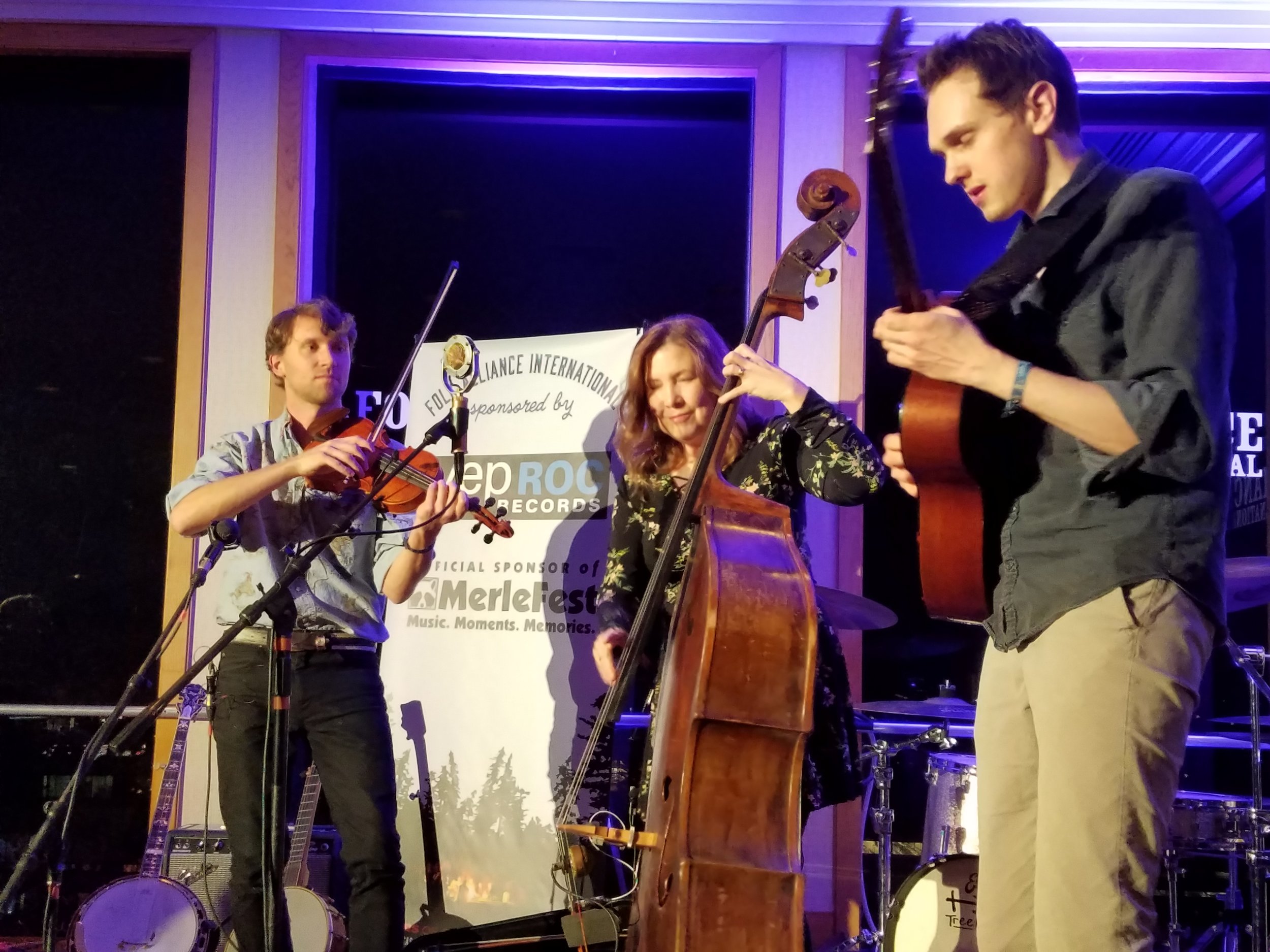
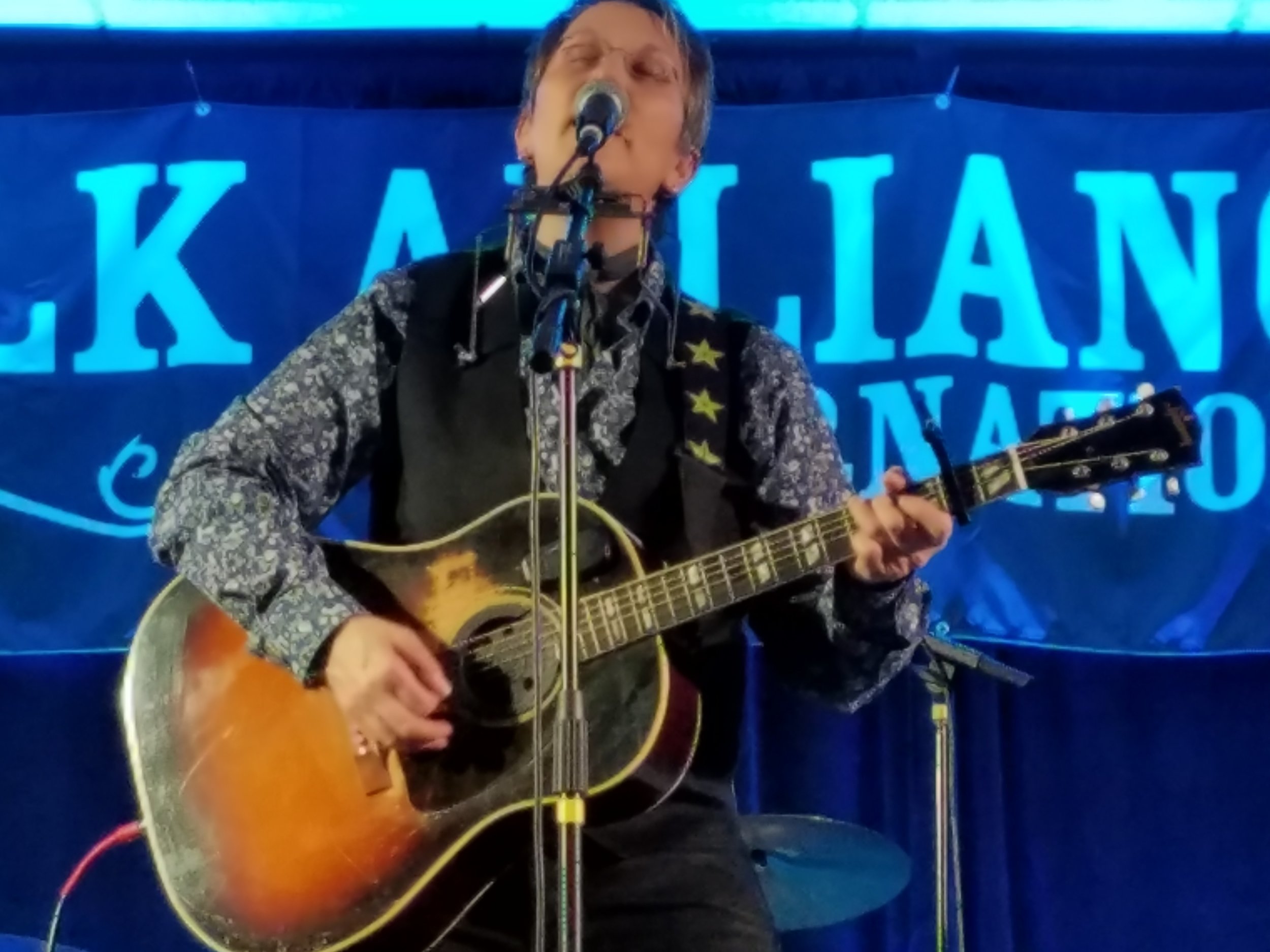
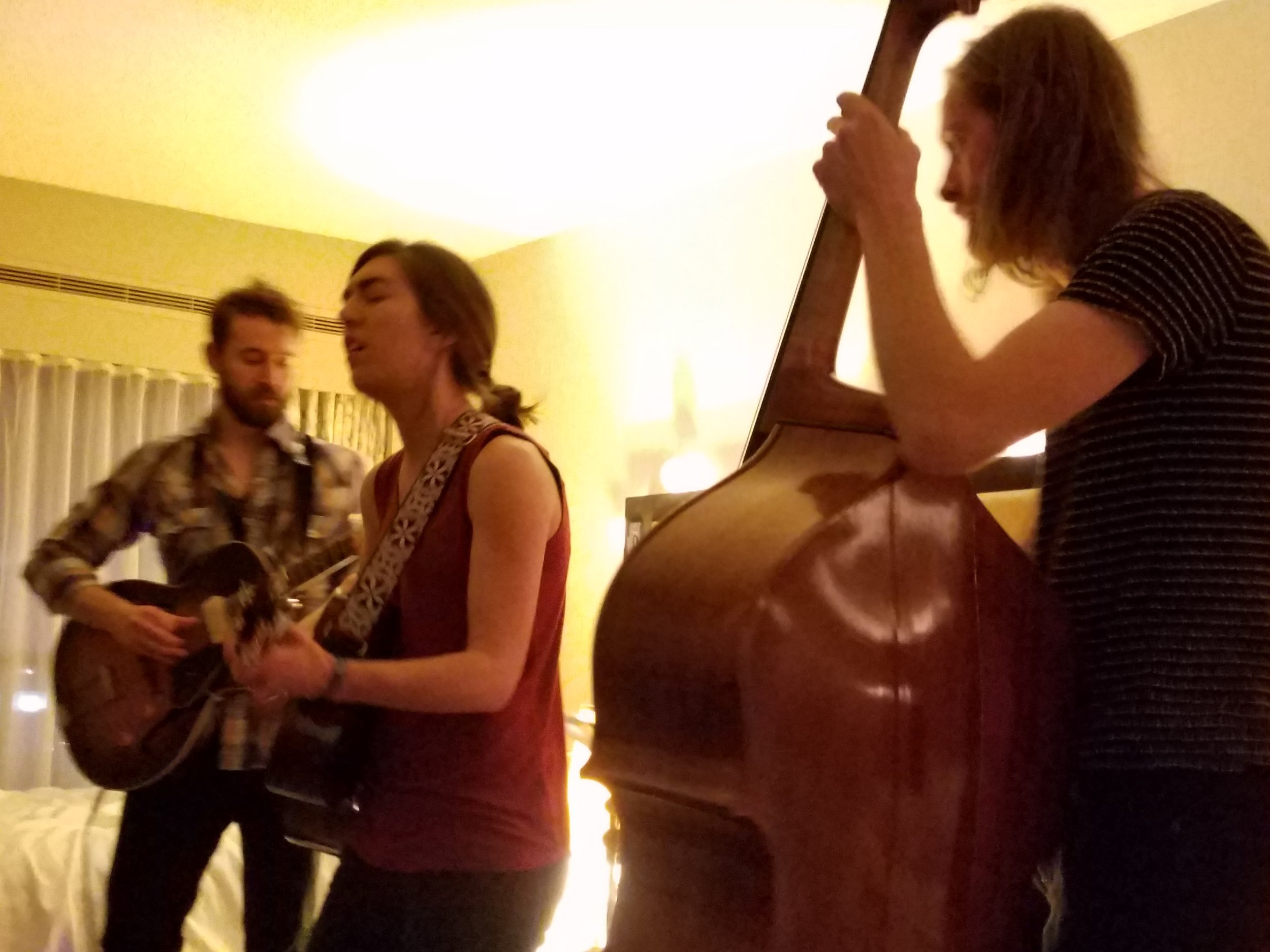
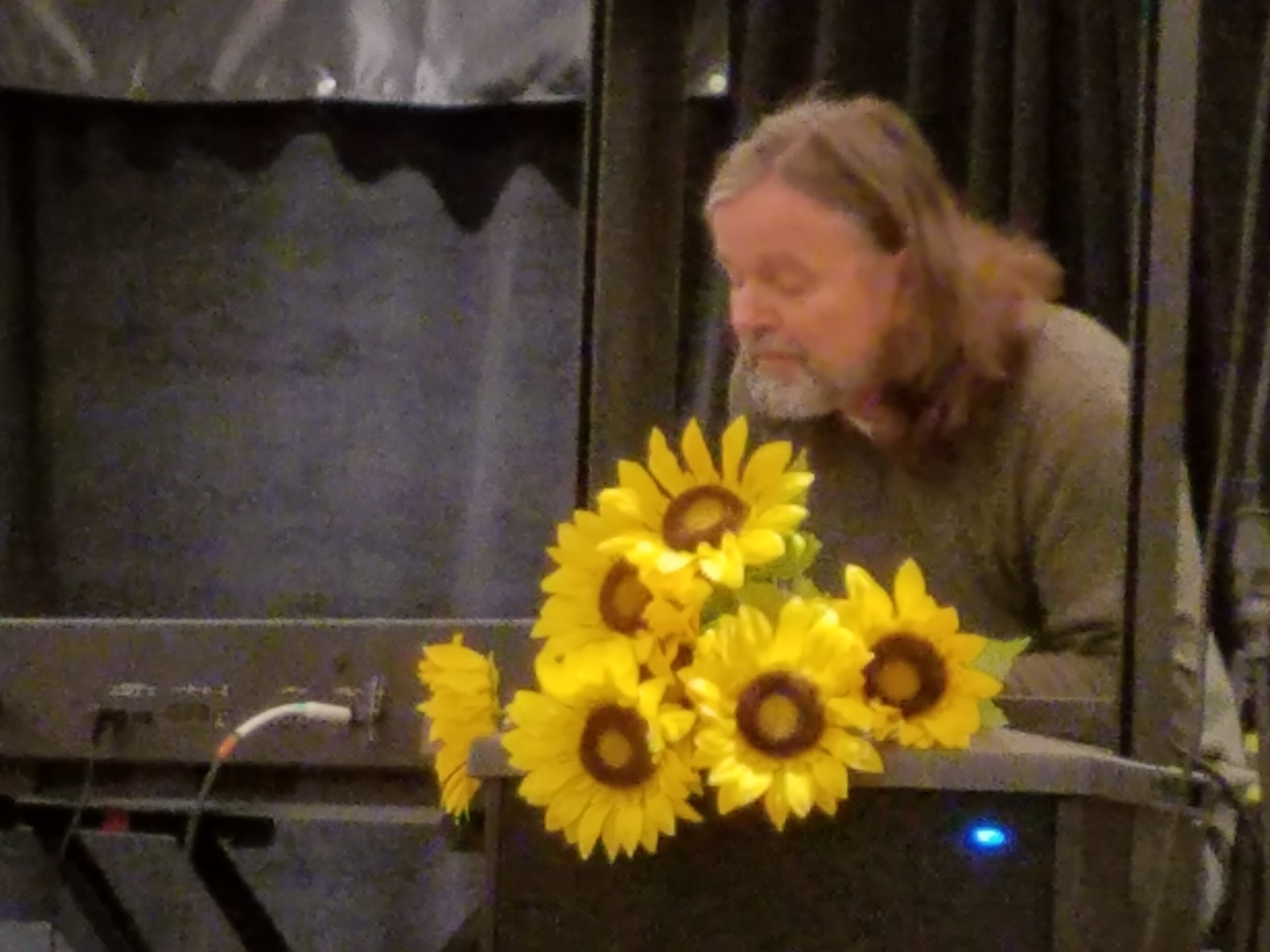
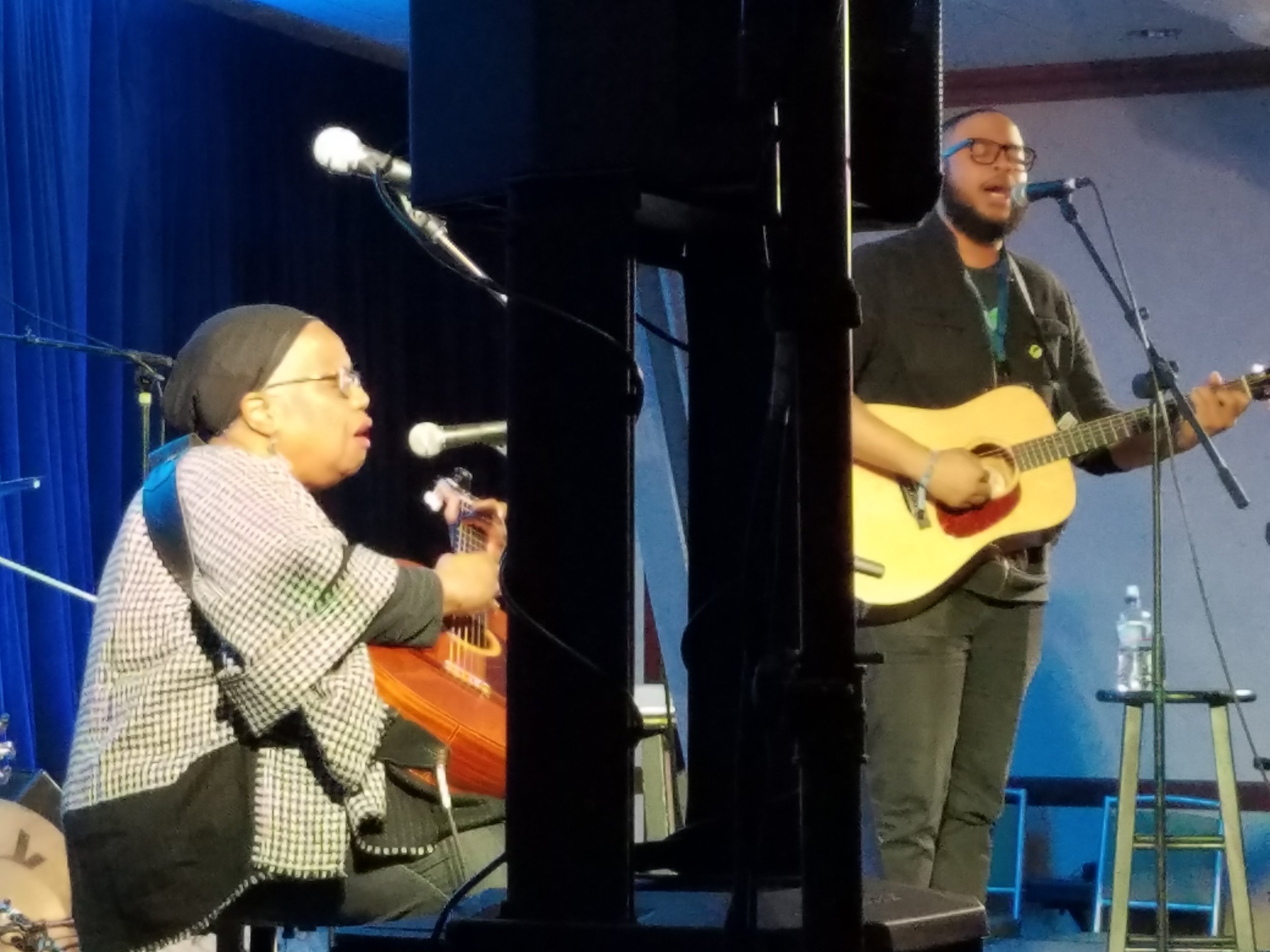
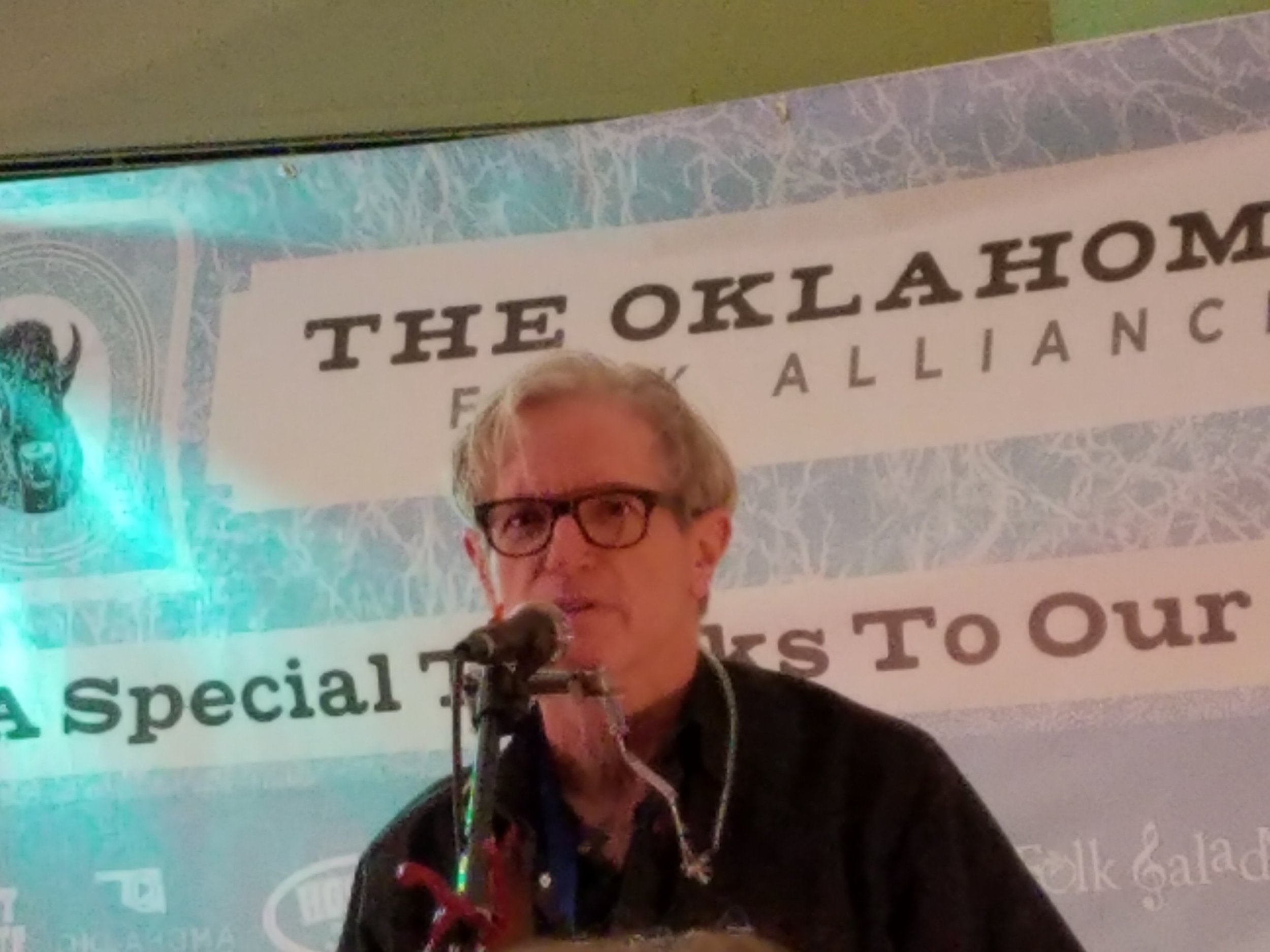
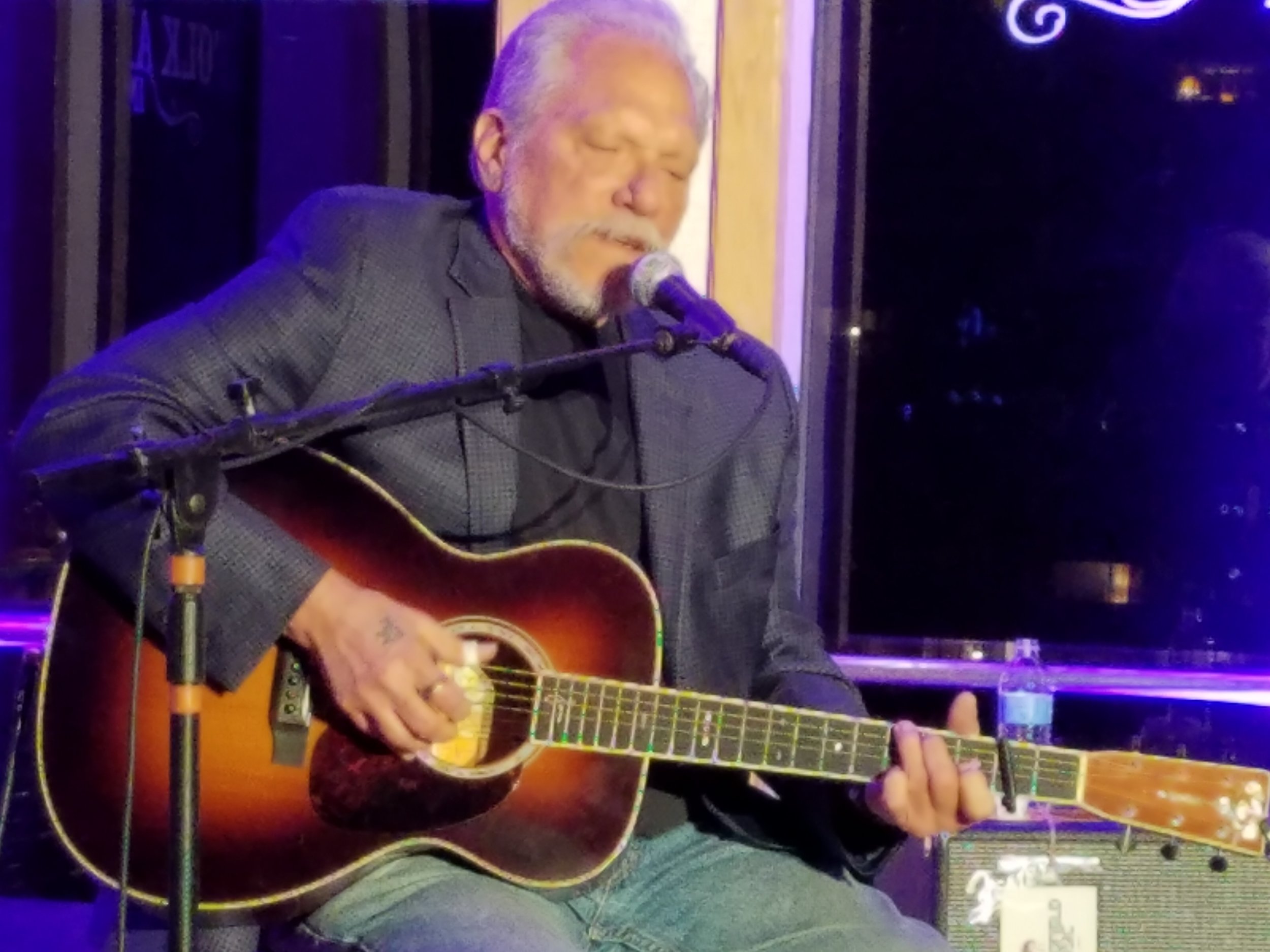
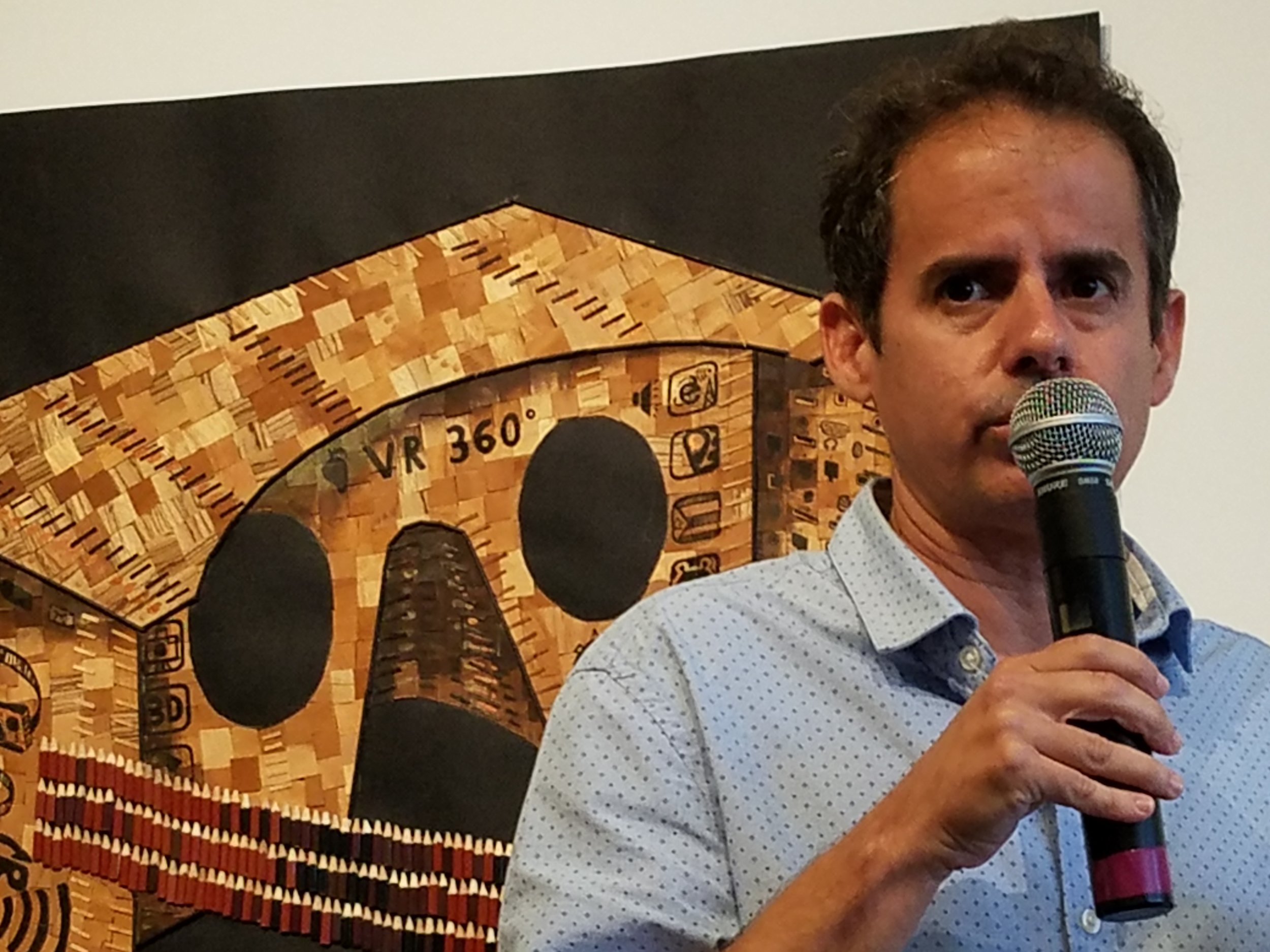
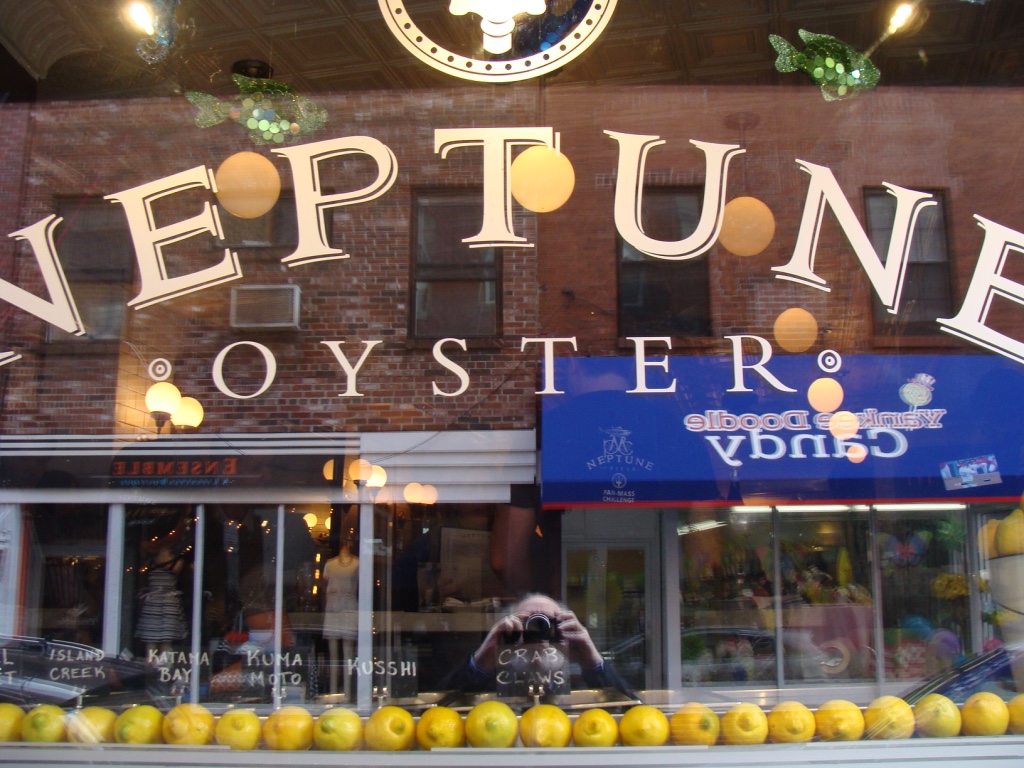
I just got the horrible news that our friend Raul Villarreal (left above), painter, traveler, and bon vivant, has died after a heart attack last night. We've gotten to know Raul in recent years in #Hemingway circles. Spent time with him last year in Paris, where the photo was taken, and then a week in Havana with him and Mike Curry (right) in December. Raul and Mike, colleagues at Santa Fe College in Gainesville, Fla., have been showing a documentary they produced about Hemingway, Cuba and Key West, which features interviews with Valerie Hemingway (center) and others. Raul came to the U.S. from Cuba as a boy. His father had been Hemingway's major domo, the man who ran the Finca Vigia household outside Havana, for several years and then, after the Cuban takeover, managed the house as the Hemingway Museum. Raul published a book about his father, "Hemingway's Cuban Son," a decade ago. It was an honor to meet Rene, Raul's father, back then, and of course to have known Raul's large spirit ever since. Carol Zastoupil showed her Cuba paintings at an exhibit Raul curated a couple of years ago at Santa Fe College. And I hooked Raul up a few years back with Robert Stewart at New Letters, who published some of his paintings in an issue with a section on Cuba. This is just so depressing. RIP, hermano. Abrazos to Rita and all who knew him.
Bringing It All Back Home: Reconnecting With Dylan and Dylanology
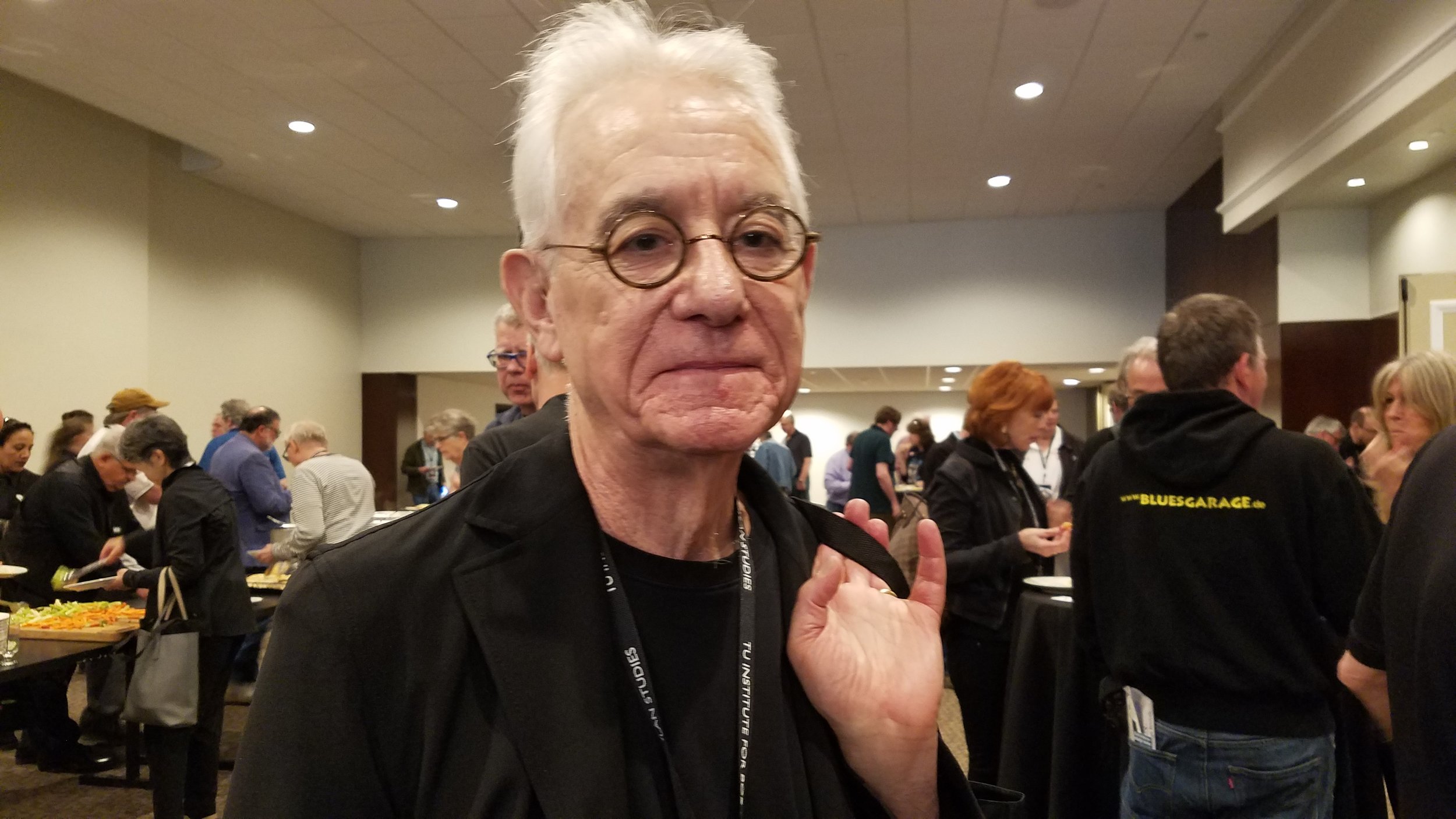
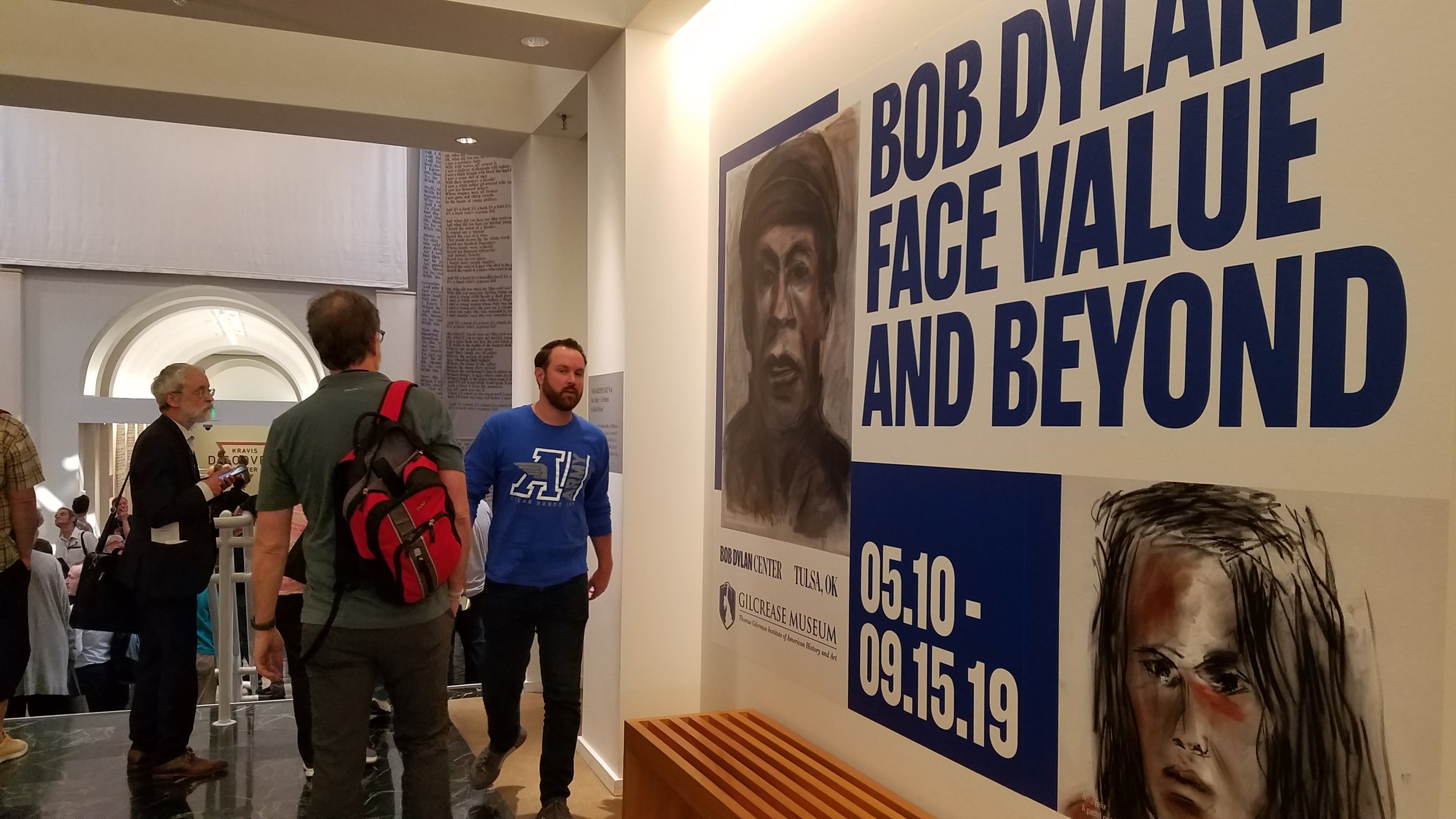
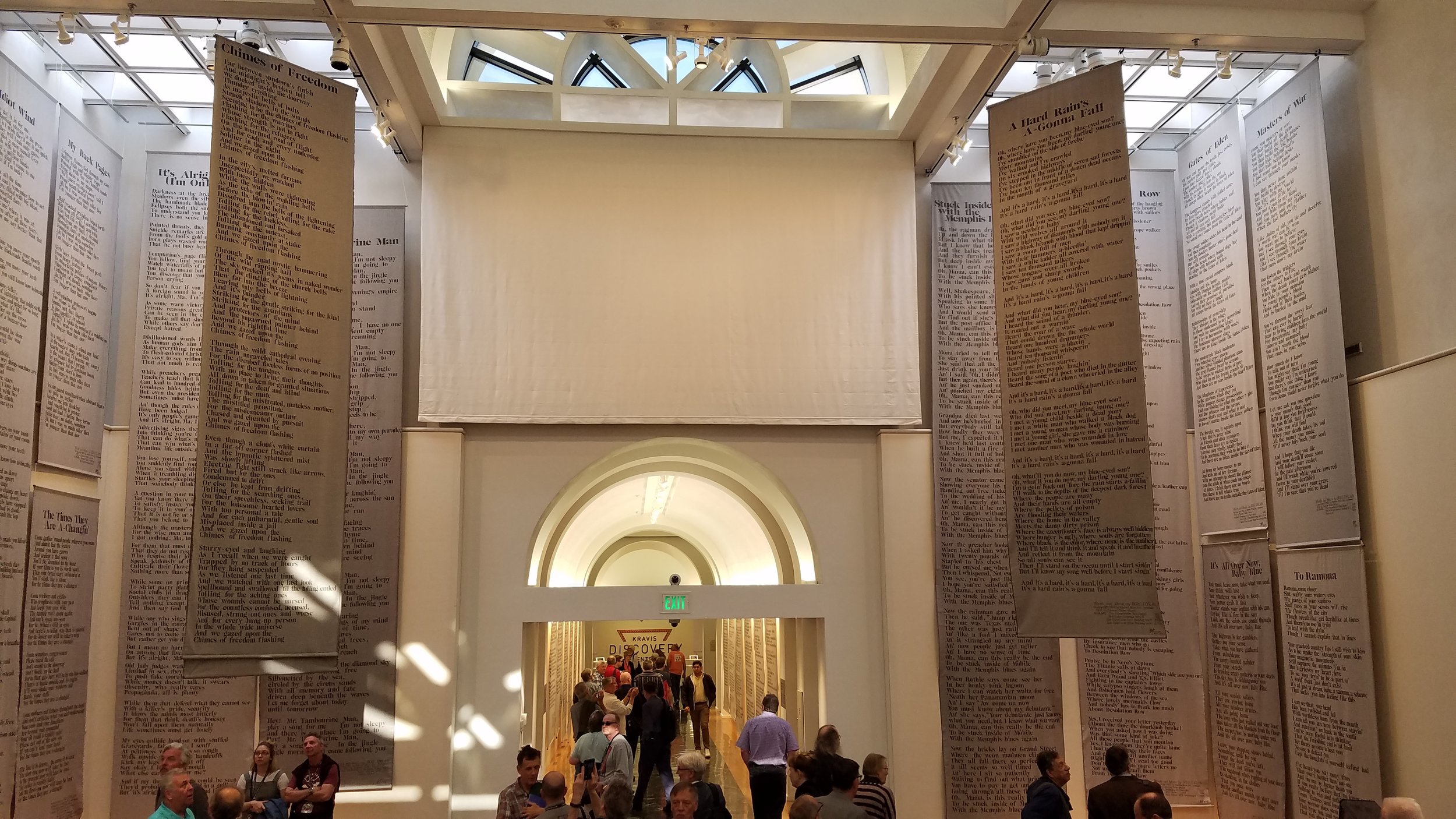
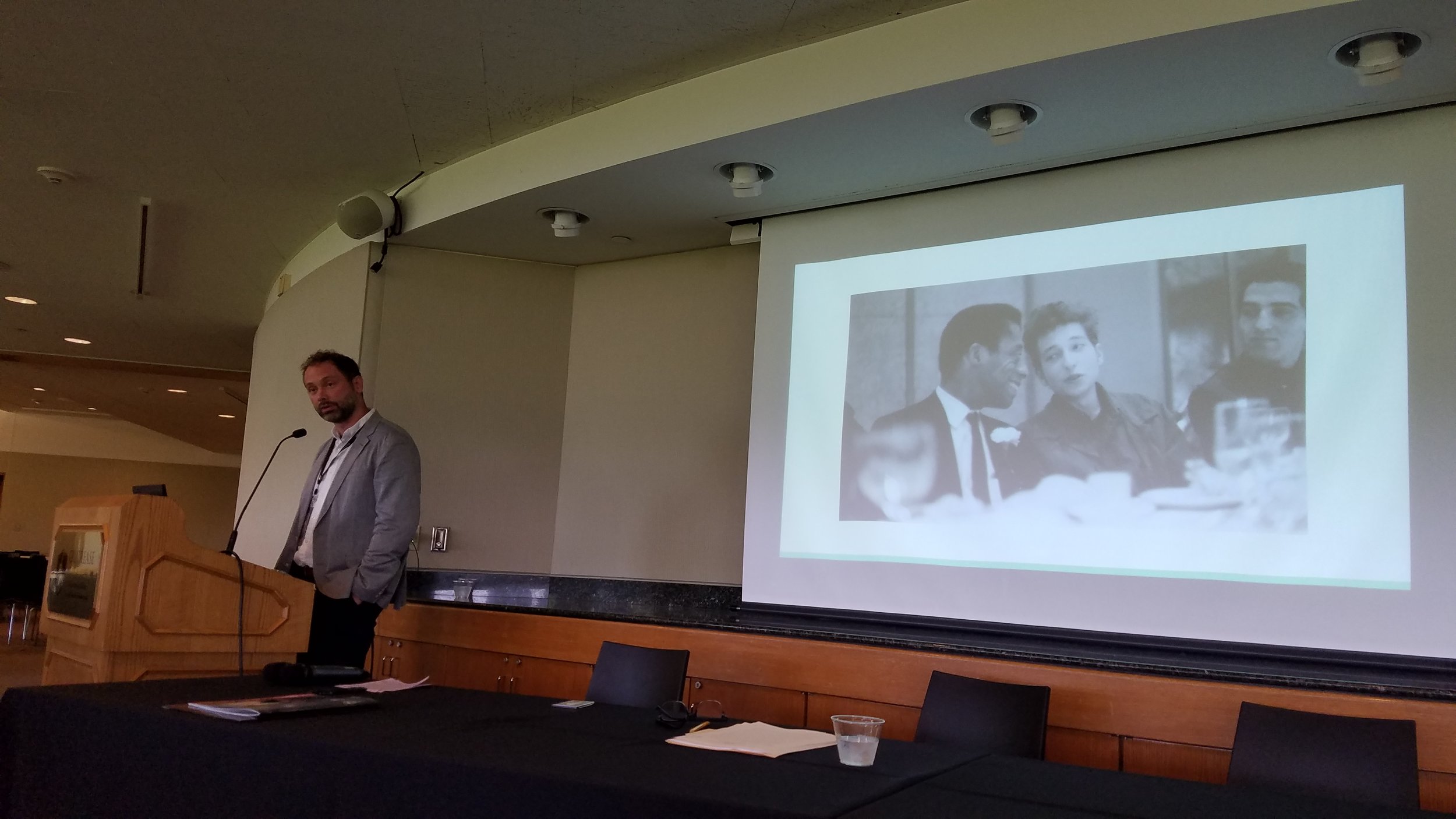
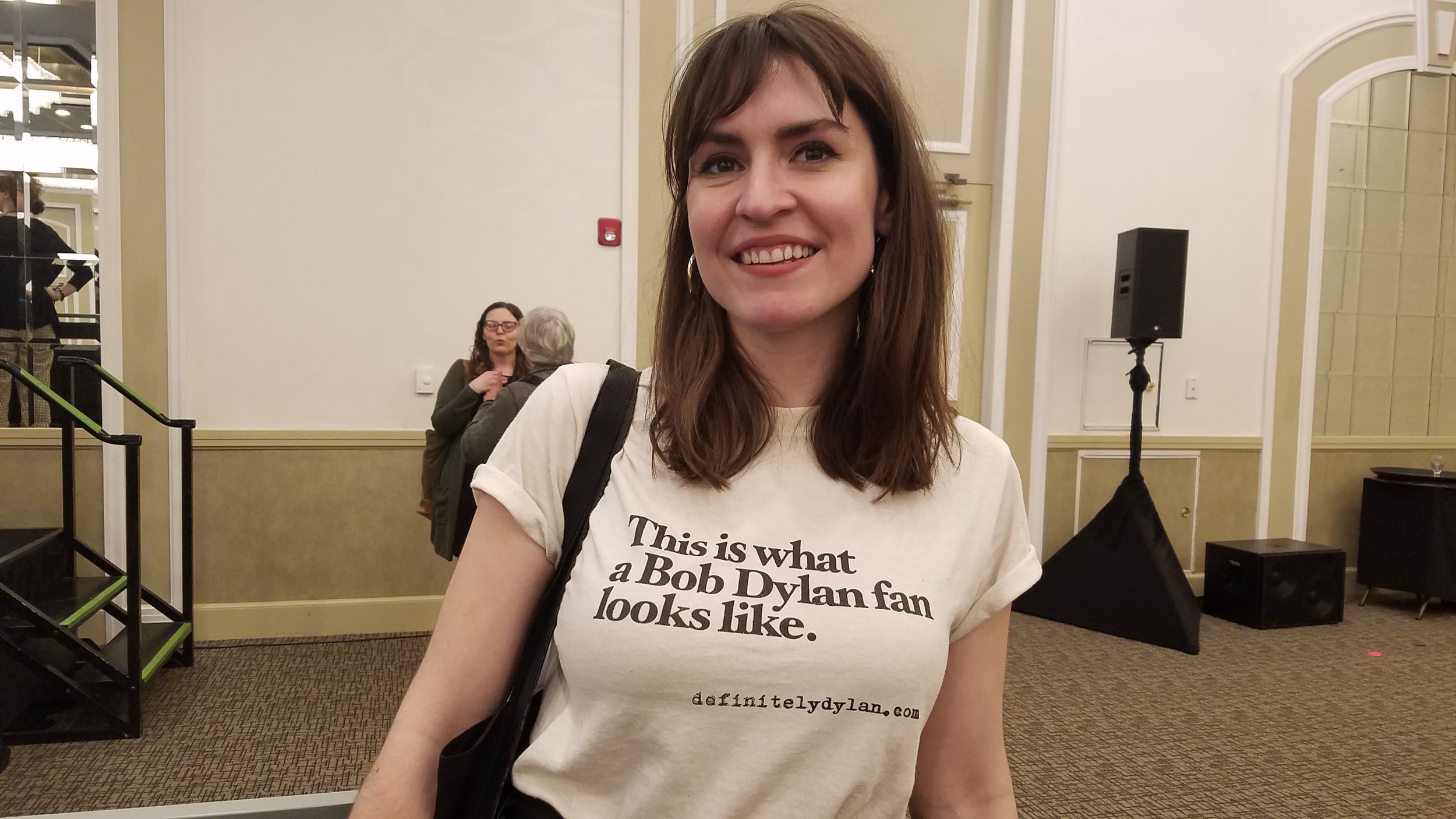
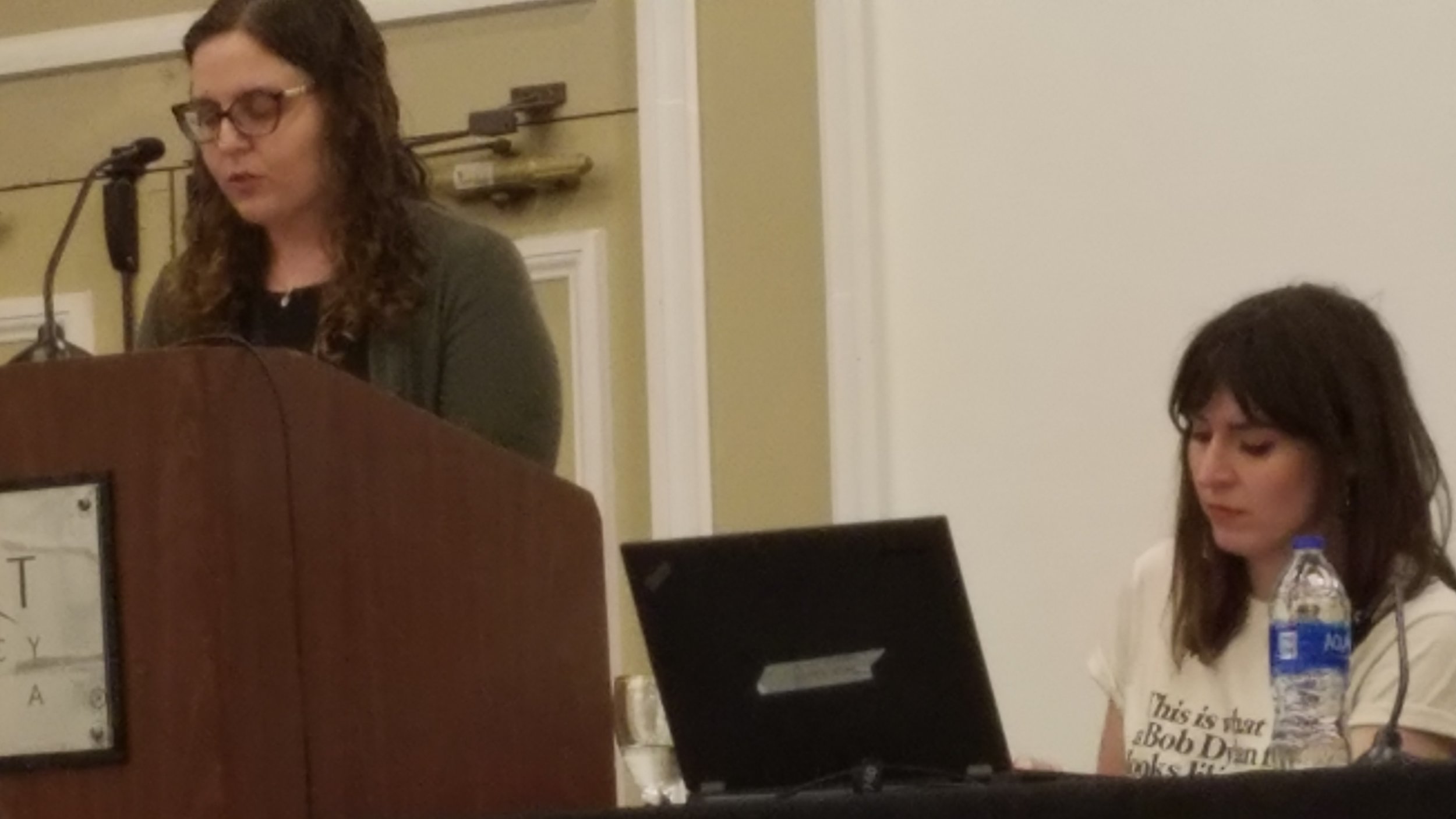
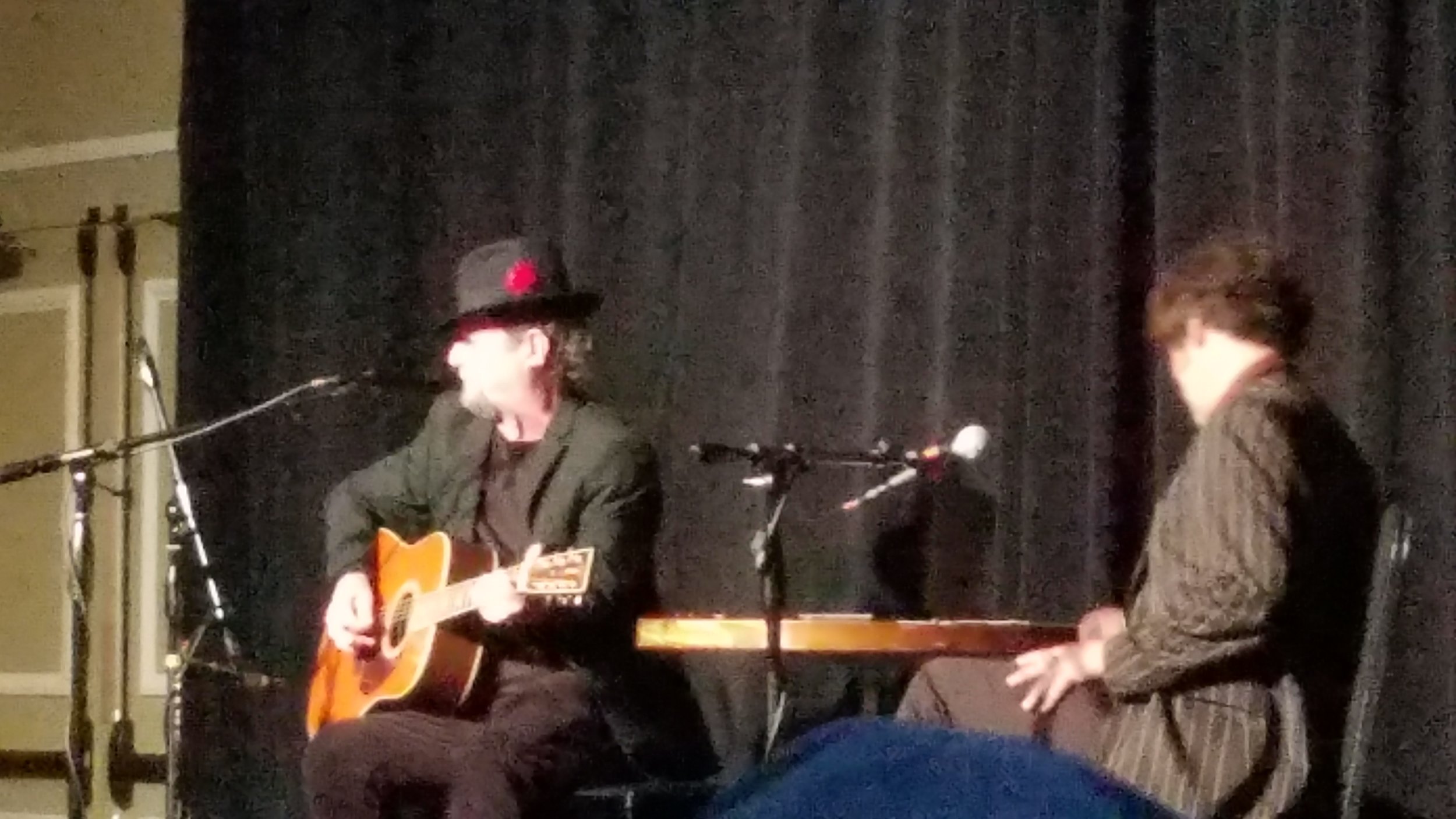
The World of Bob Dylan (photos above, from left): A conference poster; keynote speaker Greil Marcus; exhibits at the Gilcrease Museum include visual art works (drawings, portraits, sketches) by Dylan, and “Shakespeare’s in the Alley,” an installation of hand-lettered banners of Dylan lyrics by Skye, a Minnesota artist; Jeff Fallis, of Georgia Tech, delivers a paper on Dylan and James Baldwin; the writer Robert Polito discusses the Bob Dylan Archives with Michael Chaiken, curator of the collection; music critic Ann Powers; Laura Tenschert, a panelist and host of a London radio show on Dylan; panelist Nicolette Rohr on “Them Screamin’ Girls”; Roger McGuinn.
By Steve Paul
(c) 2019
Ninety minutes of rare concert footage. Deeply researched scholarly papers on poetry, art, song-making and mystery. Non-stop chatter on the nature of Bobness. This was the World of Bob Dylan, a symposium in Tulsa into which I immersed myself for the better part of four days.
Why? Because. Why Tulsa? Good question, but easy answer: A few years ago a broad-minded and very wealthy local foundation acquired Bob Dylan’s voluminous archives (manuscripts, photographs, recordings, etc.) and arranged a partnership with a handful of institutions to preserve them and make them accessible to serious researchers and, eventually, to the public in the form of an exhibition center still on the drawing boards.
So Tulsa, already the home of the attractive and important Woody Guthrie Center, with its public exhibitions and researchable archives, now is fast becoming the center of the Bob Dylan world, or at least that part of the world, populated by grey-bearded scholars and completist acolytes, that leads one to spend every waking hour in the mist of Dylan’s music and contemplating his vast myths and mysteries.
For as long as I’ve been listening to Dylan -- more than half a century, that is -- it was sobering to discover how little I really knew about him. He has been famously slippery about his life, creative consciousness and working methods except as they might be revealed (or not) in his work. He has been an artist of many guises — folk singer, poet-prophet, rock star, recluse, spiritual seeker, crooner, and, now, protector of his own enterprise as artist, song-writer and non-stop, touring performer. As much as I tuned my ears to his greater periods, and the formative cultural moments that helped to shape my own way of being and listening, over the years I drifted on and off of Dylan’s trail, so my grasp on the details remained tenuous at best.
So here I was surrounded by experts and obsessives who could itemize every time he altered a lyric or tell you which woman Dylan may have been singing about in this song or that or had seen him in concert, say, 67 times in the last 20 years or had thoughts about what he meant when he sang “How do you feel…?” There was the fund manager and harmonica player who could rattle off every recording on which Dylan picked up a mouth harp and how he played it. Or the young London woman, Laura Tenschert, who produces a radio show on Dylan and argues quite rightly that, first, how we think about Dylan has largely been shaped by generations of white male critics, and, second, we need to hear more from women and people of color on his work, influence and legacy.
As it happened, and not so unexpectedly, the audience for these proceedings was near totally white and predominantly male. Still, it was gratifying to hear young female Ph.D. candidates offering important takes on Dylan studies. One explored the Nobel laureate’s literary romanticism (see Emerson and Rimbaud). Another looked into pop-cultural myths about “screaming young women” and gender bias in the realm of music fandom in the 1960s. Regretfully, I missed a panel of three papers on Dylan and Native American trickster tales and discussions of the mostly overlooked role played by female African-American singers in Dylan’s gospel-influenced period of the 1980s. A presentation on Dylan and James Baldwin, who intersected once at a public event in New York, drew illuminating parallels between their respective voices in the civil rights movement, circa 1963.
Among the best-known presenters, the deep-think pop critic Greil Marcus discussed Dylan in the context of the blues. Dylan drew from that distinctly African-American source material for the album that announced his arrival as a folk singer in 1962, and 30 years later he returned to it in a haunting, evolutionary way on “Time Out of Mind.” The NPR music critic Ann Powers traced Dylan’s long career of myth-making and trend-setting through a series of self-conscious changes in his bodily image that, she maintained, reflected social movements, lifestyle upheavals and gender fluidity in the music world and beyond.
Roger McGuinn, the guitarist and co-founder of the Byrds, didn’t reveal much of substance about Dylan per se – did you know he was quite a skier? -- when he took the stage on the last conference night to talk about his own career and sing a few tunes. McGuinn’s association with Dylan dates to early 1965, when his band recorded “Mr. Tambourine Man.” The Byrds’ version of the song became the first Dylan-written pop hit and usually is credited with jump-starting the folk-rock sound. McGuinn played on the Dylan soundtrack for the movie “Pat Garrett and Billy the Kid” (1973). And two years later, Dylan recruited McGuinn to join the Rolling Thunder Revue (see the new Martin Scorcese docu-fantasy of that 1975 tour, now gloriously streaming on Netflix). “It was,” he said, “the best two-month party I’d ever been to.”
The Tulsa conference lasted only four days, and it hardly generated the carnival atmosphere that Dylan spun for Rolling Thunder. But, for me at least, it laid the groundwork for much further exploration and for living more deeply with Dylan and his music.
Kansas City: The Dreamlike Life and Times
Google’s Arts & Culture operation recently launched a site devoted to Kansas City. It’s filled with praiseworthy stories and photos focusing on the city’s many cultural resources. I was asked to contribute a relatively brief history of the place, which turned out to be a fun exercise in research and compression. Find my piece here:
Kansas City Will Long Remember the Enduring Spirit of Henry Bloch
Although I’m out of the daily newspaper business, I hear from editors from time to time. So I turned out this tribute to a man who left a mark on the world.
To Edward Dahlberg, 'Kansas City is a smutty and religious town'
A couple of years ago I gave a slide talk related to the Eighth Street Tunnel, a public works project that connected the heart of Kansas City with the West Bottoms by way of a trolley, or cable car, that rumbled through the high bluffs on the edge of downtown toward the stockyards and the original Union Station below. The tunnel has long been sealed, though it remains a curiosity for those who have a penchant for tucked-away pockets of local history.
My talk focused not on the tunnel per se but on the Eighth Street experience of a writer who grew up there but is not much remembered today. It occurred to me that the story of Edward Dahlberg’s boyhood remains a valuable and vivid Kansas City tale worth sharing.
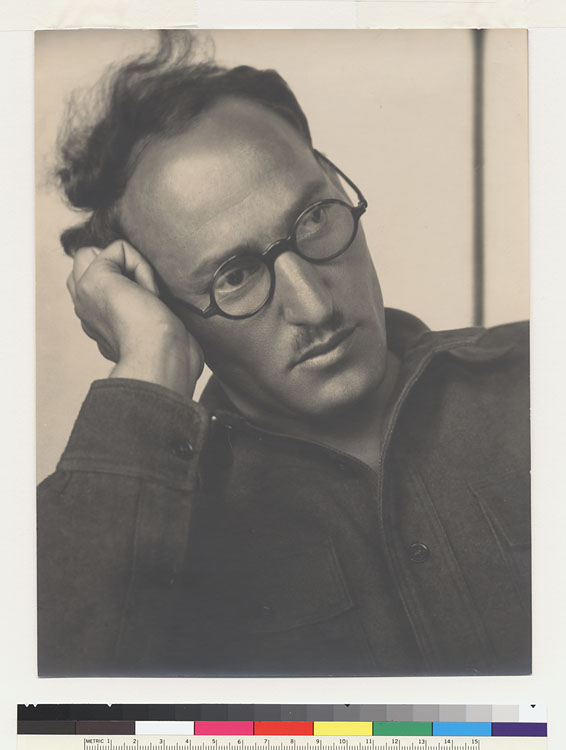
Edward Dahlberg (1900-1977) was one of the 20th century’s most erudite and irritating writers. Born in Boston to an unmarried and itinerant mother, Lizzie, he and she landed in Kansas City when he was in short pants, about 1906.
Edward grew up on and around Eighth Street, where his mother practiced her profession as a lady barber. They lived in a flat in a stone house on “dilapidated” McGee Street, just off Admiral Boulevard, according to one of Dahlberg’s accounts, though a city directory also puts his mother at 710 E. Eighth St, which would have been a few blocks east of McGee.
Late in life, Dahlberg wrote this about his home town:
“I have never forgotten how I imagined an Eighth Street Kansas City brothel smelled. The prostitutes occupied rooms upstairs over Basket’s Chili Con Carne lunch counter, which was next to a saloon and the first lady barber shop in K.C., where part-time streetwalkers and fast chippies cut the hair of round-shouldered ranchers from Lincoln, Nebraska or Dallas, Texas.” There was indeed a restaurant operated by J.S. Baskett, two Ts, at 12 E. Eighth St.
Lizzie first worked for someone else, but eventually opened her own shop, the Star Lady Barbershop, at 16 E. Eighth St. She first appears at that address in the Polk’s city directory of 1911. The streets and the situation were not always kind to the introverted boy, and at one point, when his mother’s long hours of work and complicated relationships with men became too much for her, Lizzie sent Edward off to a Jewish orphanage in Cleveland. When he returned to Kansas City a few years later as a young adult, he worked in the stockyards of the West Bottoms and became increasingly embarrassed by his mother and her occupation. He left for Omaha and points west, then eventually New York, where he managed to obtain an education in the classics at Columbia University in the mid-1920s.
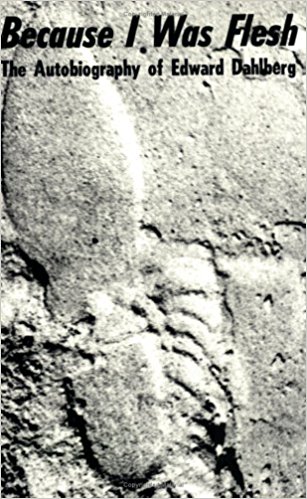
Dahlberg memorialized and rhapsodized over his mother in his autobiography, Because I Was Flesh, published in the mid-1960s. The book is poetically lush and feverishly frank about personal and sexual anxieties. It’s full of classical and biblical allusions, elevated language that could stop a casual reader in her tracks, and colorfully resonant descriptions of Kansas City in the early 20th century.
The town was not a senseless Babel: the wholesale distillers were on Wyandotte, the commission houses stood on lower Walnut, hustlers for a dollar an hour were on 12th and pimps loitered in the penny arcades between 8th and 5th on Main Street. If one had a sudden inclination for religion he could locate a preacher in a tented tabernacle of Shem beneath the 8th Street viaduct, and if he grew weary of the sermons, there was a man a few yards away who sold Arkansas diamonds, solid gold cuff links, dice, and did card tricks. Everybody said that vice was good for business, except the Christian Scientists and the dry Sunday phantoms who lived on the other side of the Kaw River in Kansas City, Kansas.
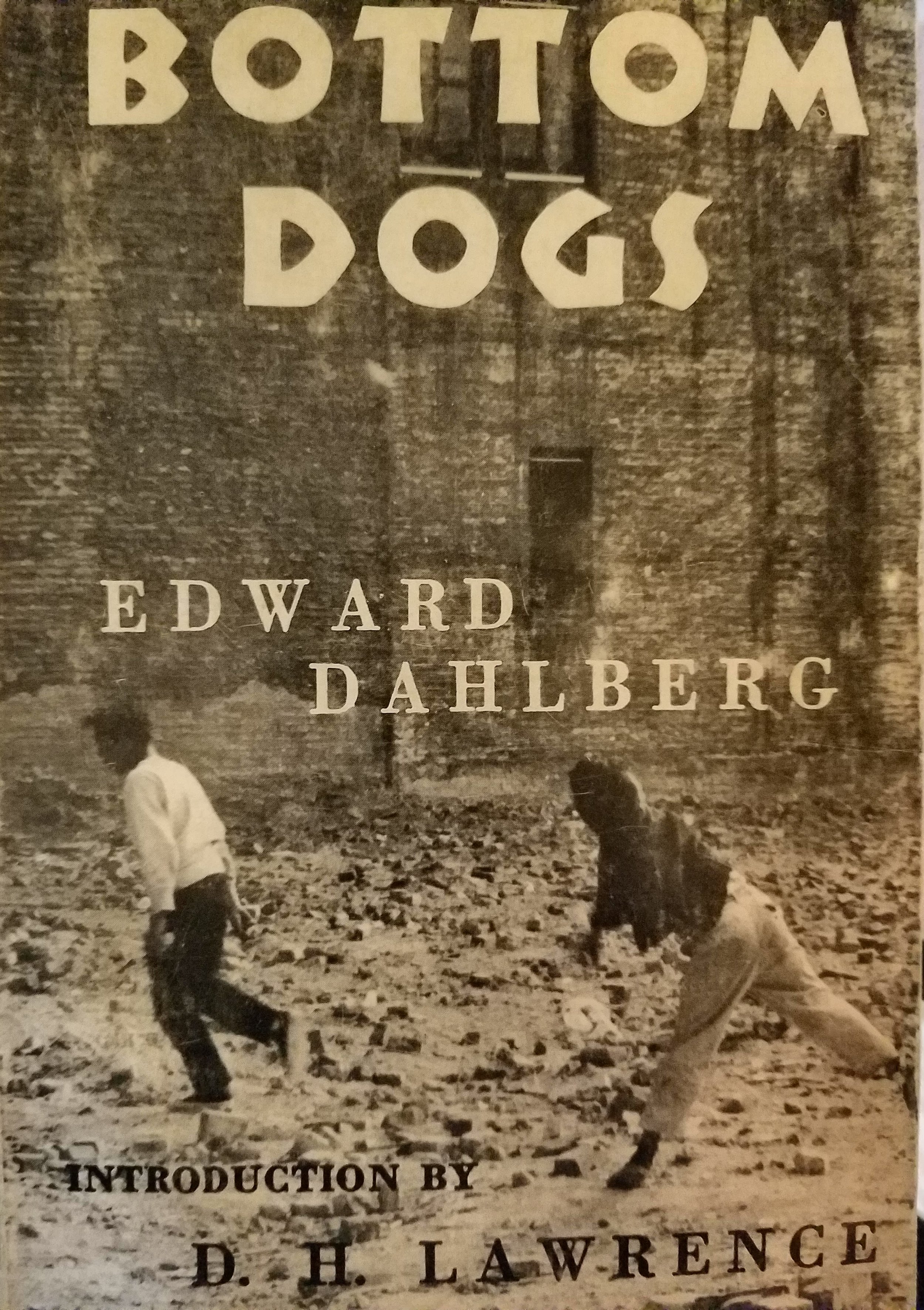
Dahlberg, like many writers, ended up in Europe in the 1920s. And there he produced his first novel, Bottom Dogs, which was published in 1930. D.H. Lawrence wrote an introduction. The critic Edmund Wilson said “Bottom Dogs is the back-streets of all our American cities and towns,” and some readers eventually identified the book in a line of “proletarian naturalism” linking him with the likes of James T. Farrell and even Jack Kerouac.
In Because I Was Flesh, Dahlberg revisits and essentially rewrites that first book, turning his fictional character and his mother Lizzie into the real characters of memoir.
In both books, Dahlberg writes about growing up in the shadow of the Eighth Street Viaduct, which spanned a few blocks beginning at Walnut and heading west toward the Eighth Street tunnel. Lizzie Dahlberg’s shop stood beneath the viaduct and next door to the Electric Fish and Oyster House. Wouldn’t you want to have the chance to dine again at the Electric Fish and Oyster House in downtown Kansas City?
Dahlberg must have read another book by a onetime Kansas Citian. Clyde Brion Davis, a newspaper man who once toiled at The Star, penned an autobiographical book called “The Great American Novel…” in the late 1930s.
Davis arrived in Kansas City around the same time as Dahlberg, 1907. From the Union Station in the West Bottoms he was directed to a wooden runway that led to the elevated station. “And presently I was rattling along in a trolley car over the roofs of factories and railroad tracks and thence through the Eighth Street tunnel and into the hilliest and most hectic city I have ever seen. No Kansas Citian walks along the streets. He travels at a half run. It is easier to skip down the hills than to hold back in a dignified walk. And the momentum helps climb the hill ahead.”
Davis also wrote about the street life underneath the Eighth Street Viaduct:
It “cuts a heavy black span across sun-drenched Main Street and Delaware and throws an equally black and cool shadow beneath. A few wagons and drays plod up the hill beside this shadow, but underneath the viaduct and around the pillars is a haven for the weary and heat-stricken. And here is the gathering place for that remarkable clan known as ‘street fakers.’ There is Peters who sells Magic Oil….There is Edwards with his straw hat and red, white and blue hatband and beery breath who is ‘advertising’ Arkansas diamonds. … There is the street faker with the patent potato peelers and the one with the revolutionary cleansing cream.”
Davis doesn’t mention the Star Lady Barbershop, but surely he encountered Lizzie in one shop or another under the viaduct and perhaps even sat in one of her chairs for a trim and a scrape as the city buzzed outside and the streetcar trundled overhead.
When Edward Dahlberg left Cleveland and returned to Kansas City he was 17 or 18. It’s tempting to consider that he might have been here around the same time as Ernest Hemingway, who was working as a reporter for The Kansas City Star (in 1917-18). They were about the same age. But there’s no existing correspondence between the two of them and no evidence that I’ve yet turned up that each was aware of the other’s life in Kansas City. I’d add however that in the ensuing years, Dahlberg developed a strong dislike of Hemingway and his work.
When he came back, though, Dahlberg found what he felt like was a changed place: “The city was now filled with Christian Scientists, spiritualists and impecunious bachelors who went to the tabernacles and religious gatherings to meet spinsters who thought maidenhead and godhead were indivisible. The city was no longer my parent. I could not saunter along Locust, McGee and Cherry Streets. Kansas City had become a great, soulless town, and the laughter had expired underneath the 8th Street viaduct.”
It’s possible, of course, that what had changed was Dahlberg’s sensibilities rather than the city. He was no longer seven years old. He was a young adult, on the verge of exploring his own future.
Lizzie Dahlberg owned her barber shop at least into 1925 or so. She wound up owning one or more houses in North Kansas City and Northmoor. I think I have copies of some letters that Dahlberg wrote to Sherwood Anderson from one of those houses, perhaps after Lizzie had died.
It shouldn’t be forgotten that Edward Dahlberg returned to Kansas City as recently as 1965 to be a writer in residence at UMKC. I once heard from an English teacher there that Dahlberg was very much the dirty old man that he sometimes revealed himself to be in his books. Not to excuse his behavior, but that was the world he had grown up around, in that “smutty and religious town,” in those turn-of-the-century years.
In the end, Dahlberg turned on the city of his eye-opening youth: “Homer detested Ithaca, and let me admit, I hate Kansas City, which is still a wild, rough outpost town of wheat, railroads, packing houses, and rugged West Bottoms factories.”
Echoing Thomas Wolfe and others, Dahlberg concluded, “Nobody ought to return to his native city; it’s a premature burial, and yields nothing but a terrible sickness of the mind.”
Sources
Because I Was Flesh, by Edward Dahlberg. (New Directions, 1967).
Bottom Dogs, by Edward Dahlberg (City Lights, 1961).
“The Great American Novel…,” by Clyde Brion Davis (Farrar & Rinehart, 1938)
The Leafless American & Other Writings, by Edward Dahlberg (McPherson & Co., 1986)
Going all in again with a four-day immersion among the Folk
I’m on the returning-home side of the Folk Alliance International conference in Montreal. It was my sixth annual immersion into the global music gathering, which unites an uncommonly diverse collection of people through the power of song. You can measure its value by way of any number of fronts: Discovery, preservation and promotion of cultural traditions, inventive reworkings of those traditions, nostalgia, memory and celebration of craft – be it instrumental mastery or the writing of songs. All of those things defined my Folk Alliance experience once again.
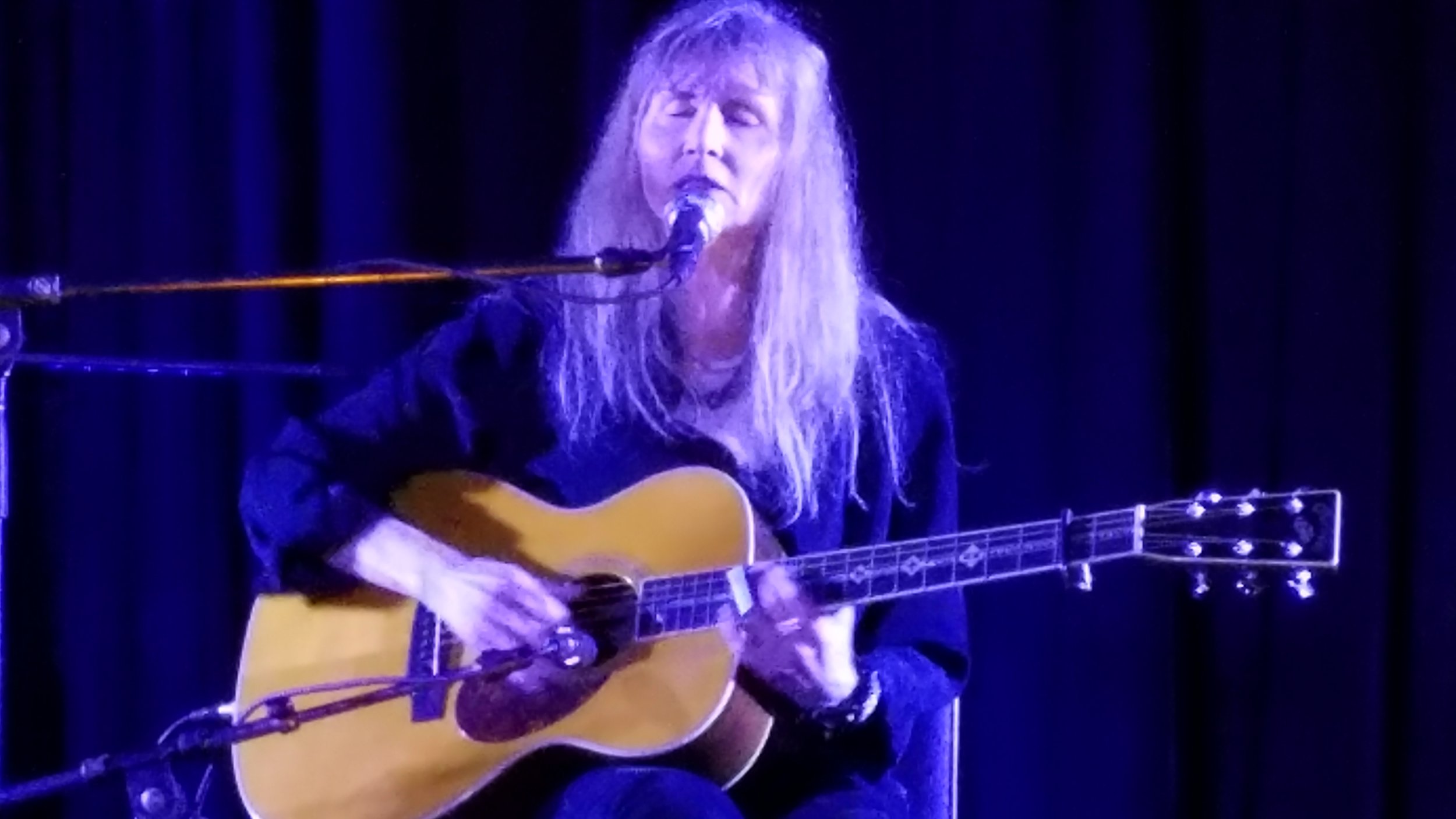
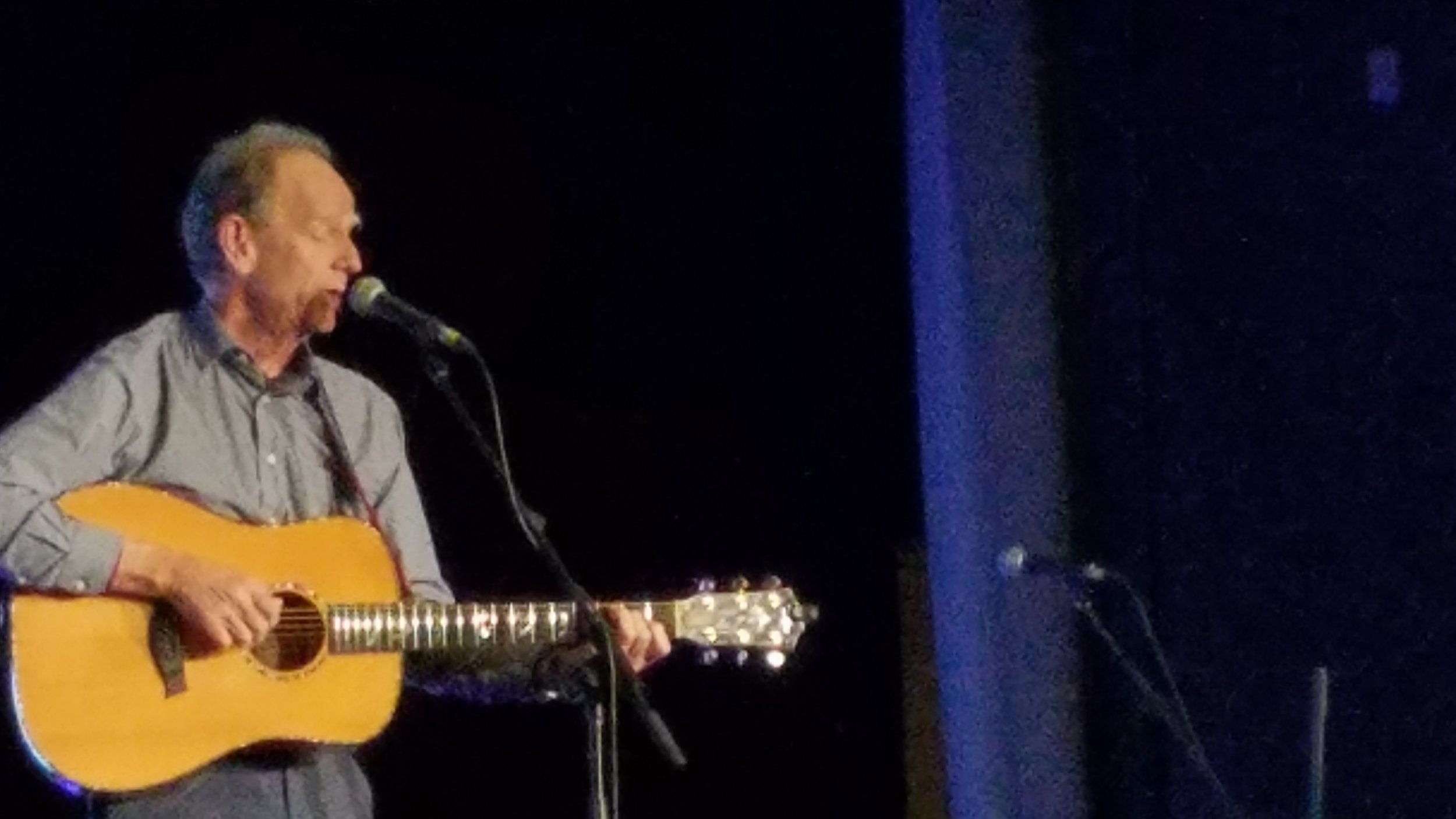
I’d gotten hooked during the last five years of conferences held in Kansas City. I found it in part to be a place of hope and determination for hundreds of young musicians who have turned their passion for music into their life’s path. Until you walk the hotel halls late at night in the midst of a kind of musical speed dating extravaganza, you might not get the full picture. There was more than one moment when I wondered about the life-span of an emerging musician’s career. How long does it take to convince someone they have or have not found an audience for their music? I’d be curious to learn whether anyone has studied the subject. Then again, when you have the voice and the song-writing vision of some of the reigning superstars of folk, the answer is self-evident. Joni Mitchell, who, as a Canadian, was a guiding spirit in absentia of this conference, recently turned 75 and her lifetime’s work was duly celebrated in a Los Angeles concert last fall. Eric Andersen, who turned 76 here the other day, has been at it for nearly 60 years, though his rich, deep-amber voice is not always what it once was. After Livingston Taylor announced from the stage one night that he first began performing 50 years ago, I was able to tell him, that, why yes, I saw him for the first time 50 years ago, in one of the free Sunday concerts on the Cambridge Common where I fanned my folkie, guitar-picking flame.
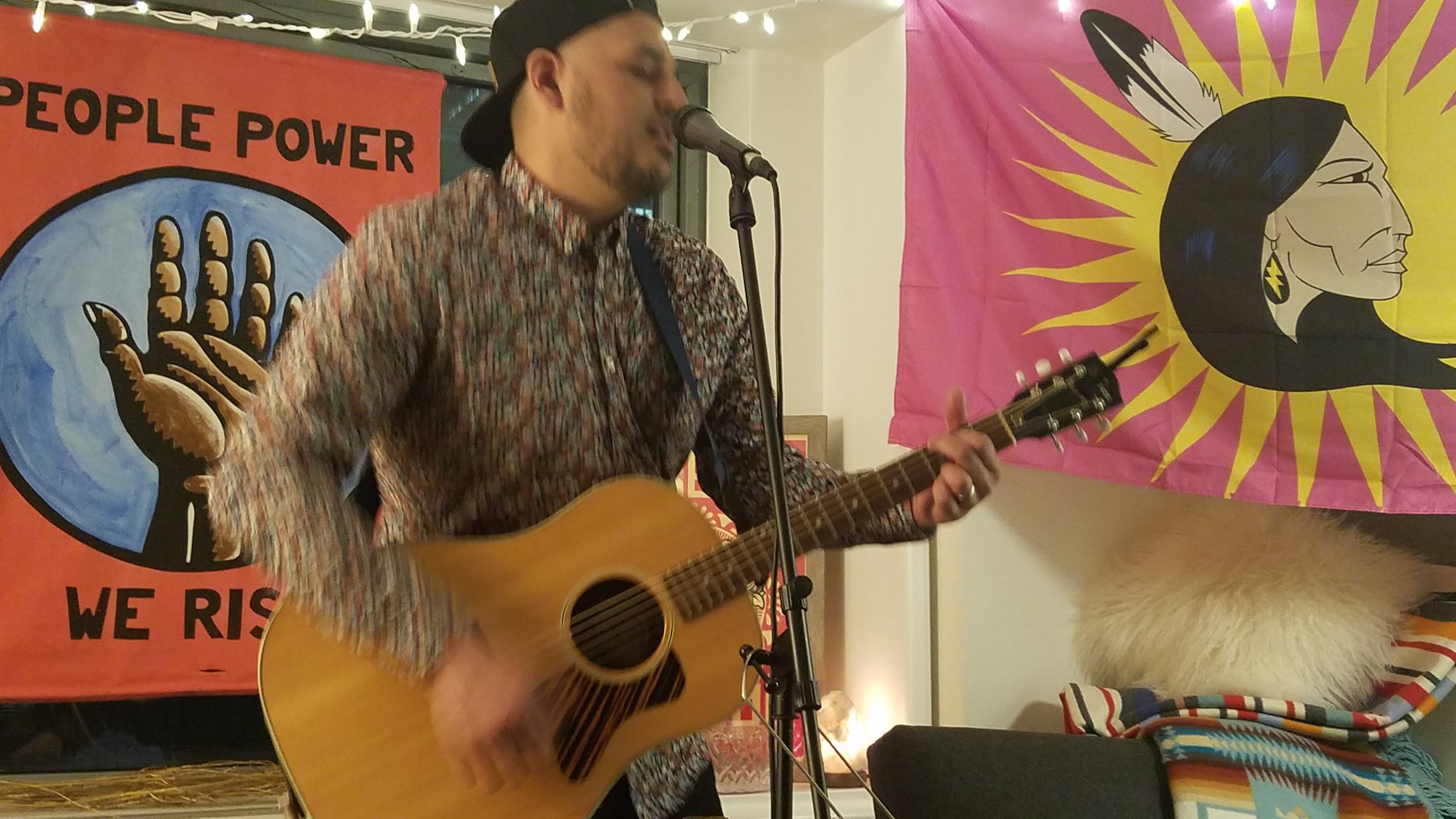
Some of my favorite Folk Alliance experiences, aside from the comfort of memory lane, involve discovering new sounds and ancient ones for the first time. The conference highlighted numerous indigenous cultures, including musicians from all across the vast continent. Not a day went by without a welcome message that included the acknowledgement that this piece of riverside Canada was “unceded territory” of the Kahnawake Mohawk, a gesture of an ongoing reconciliation project to amend for centuries of imperial genocide and cultural suppression. Typical of the contemporary indigenous performers was singer-songwriter Adrian Sutherland, who, along with his own songs, covers (Canadian) Neil Young’s “Heart of Gold” and adds a verse in his native Cree dialect (find it on YouTube). Buffy Sainte-Marie was handed an award for being who she is as a musician and political activist practicing and stirring controversy at least as long as I’ve been listening to folk. Another northern Canada surprise was the punkish trio of Josh Q and the Trade-Offs, who rocked a small hotel room packed with fans.
It seemed like an honor to encounter the world of Inuit music, which combines drumming, dance and the tradition of throat-singing from the far north. A performance by the ensemble Arctic Song was a revelation. But beyond that, hang around long enough and it’s possible to learn something, as I did in a conversation with a Canadian ethnomusicologist and during a seminar session led by two throat-singing practitioners. For one thing, the art is not ritualistic or spiritual. It seems to have stemmed from women in the culture, who had time to fill at home when their men were off fishing and hunting. For some it was body language that bonded them with their babies. It also became an aspect of play and competition, enough so that some scholars consider the music to be not singing per se but “throat games.” I can’t begin to describe the sound in words other than it combines breath, rhythmic vibrations and guttural expressions that reflect the natural and animal lives surrounding the people of the Arctic or Canadian tundra. I loved the description of one song that suggested that if one painted the sound of the wind the music would stem from that.
As if that weren’t discovery enough, it was rather eye-opening to learn that Arctic throat-singing had no relation to the throat-singing I’d encountered over the years from some Central Asian cultures. And sure enough, a throat-singing trio from Tuva in the Russian Federation was on hand to emphasize the point. Their performance was astounding and thrilling in the moment.
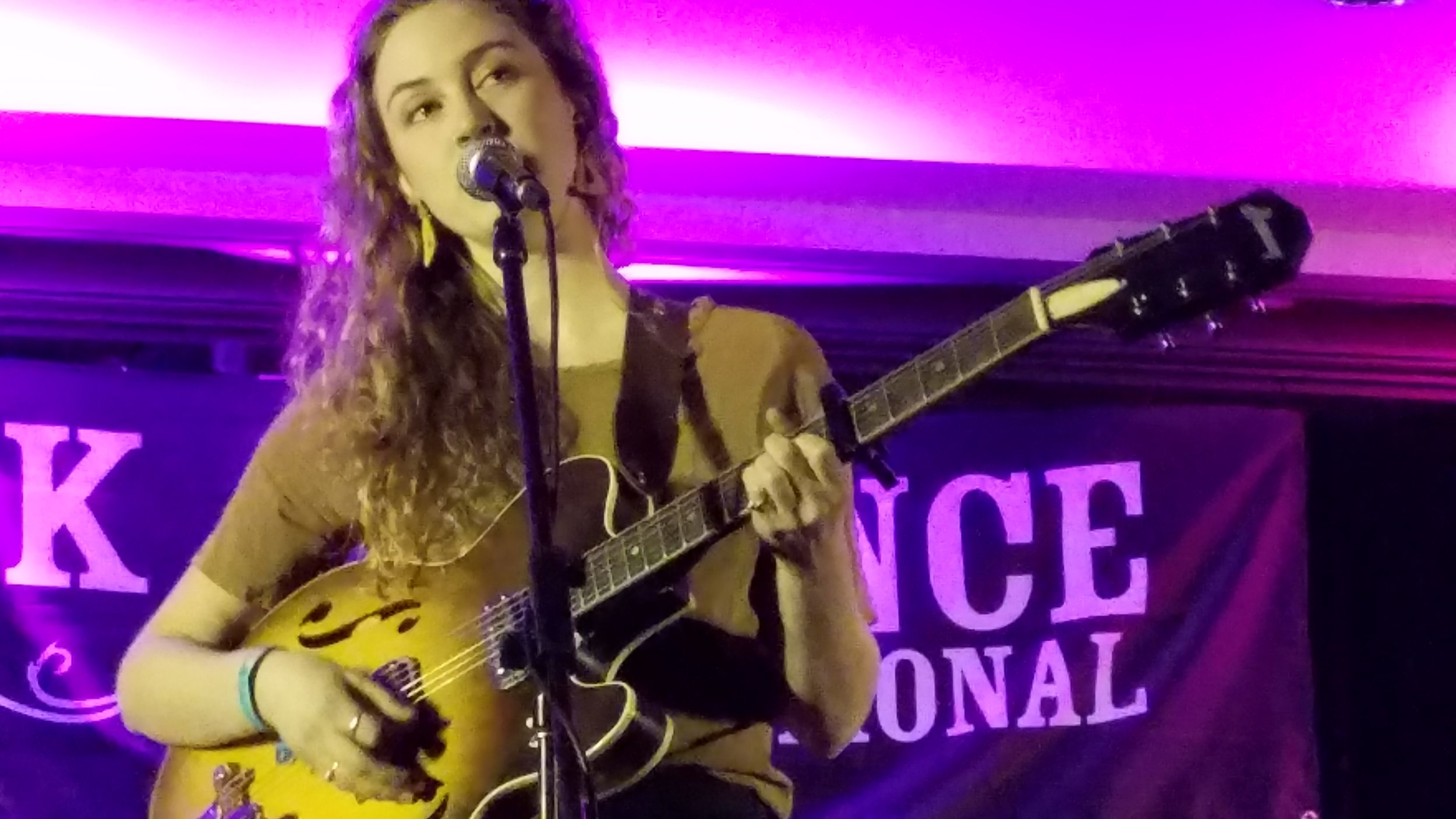
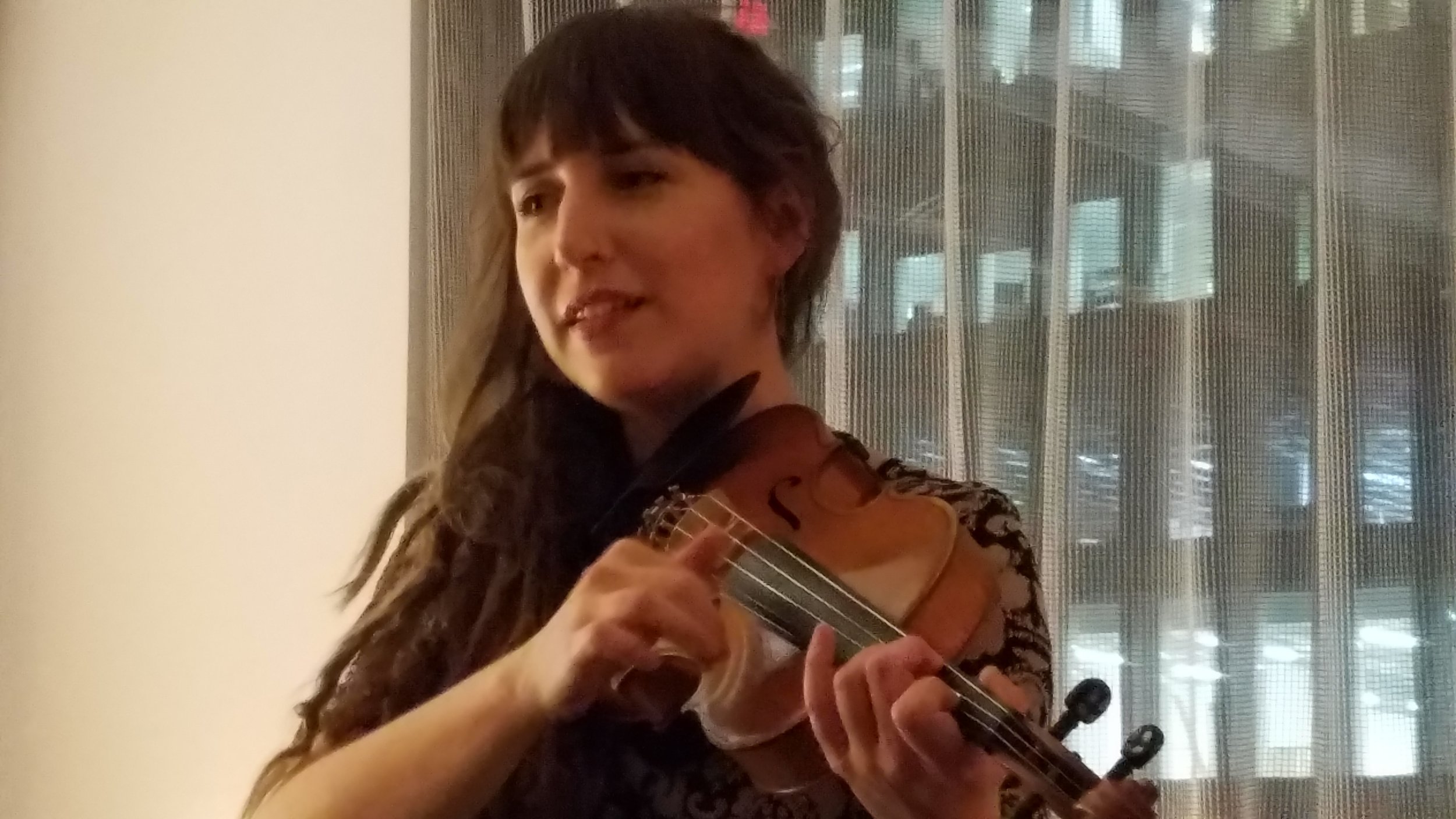
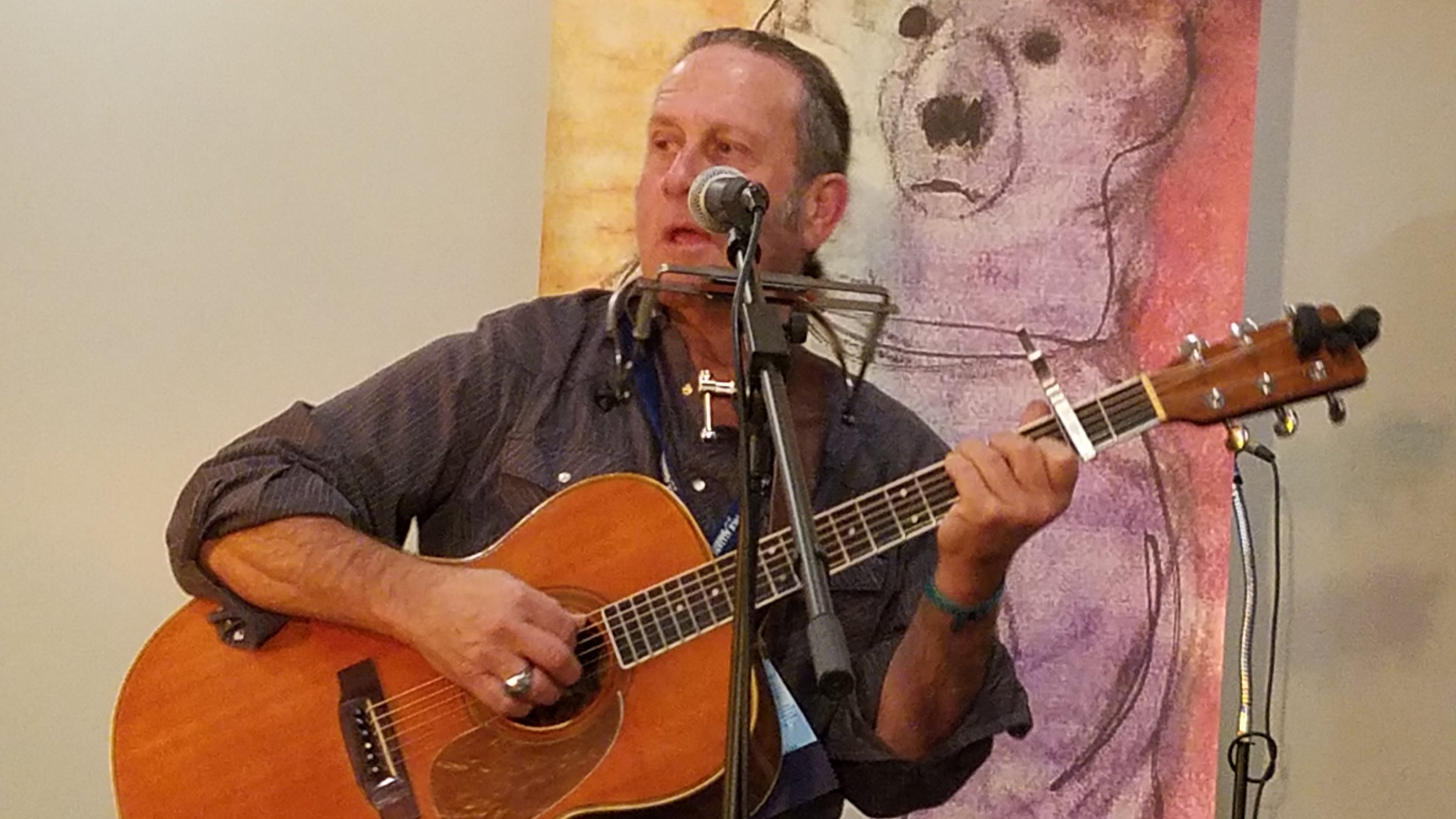
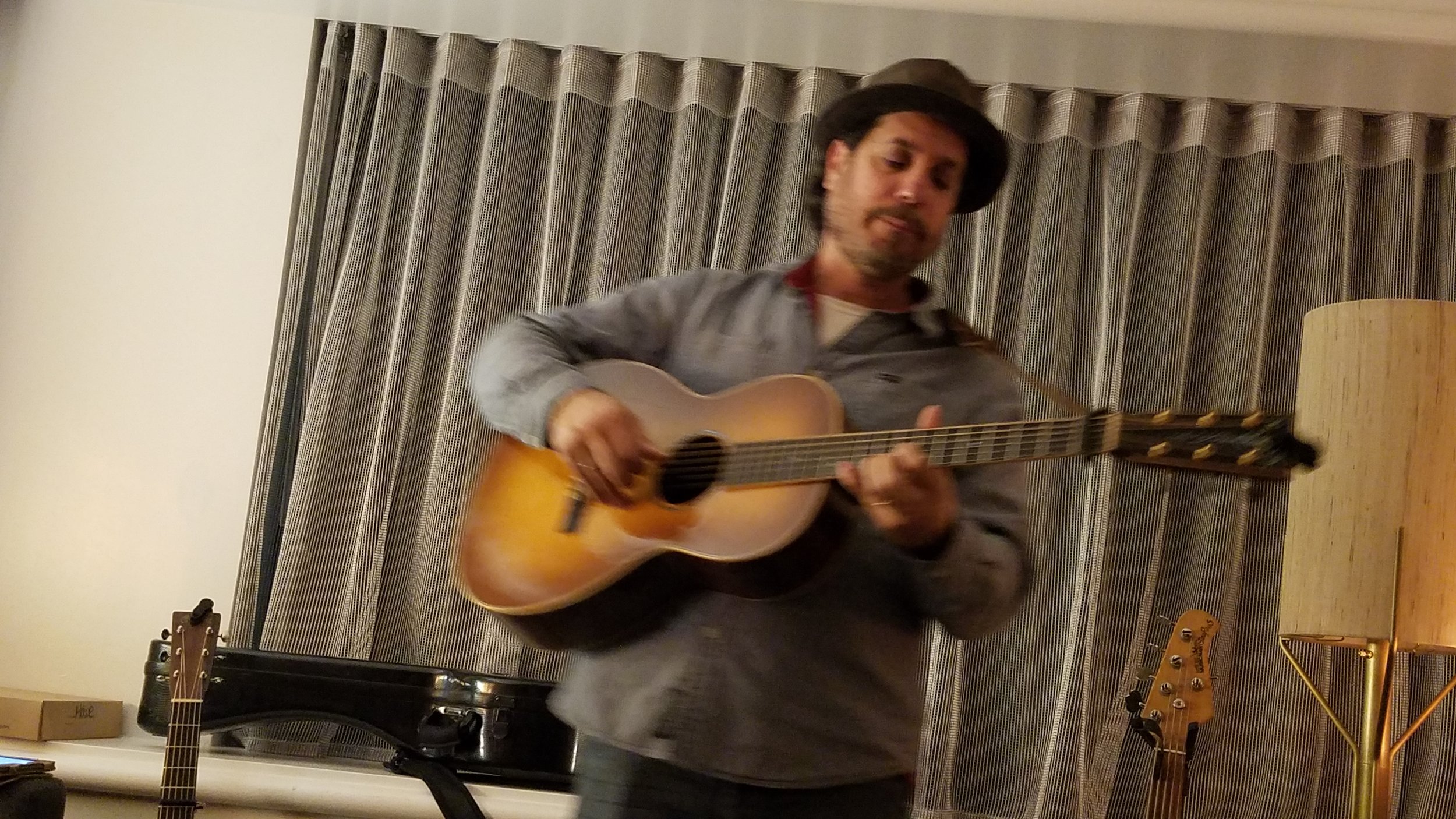
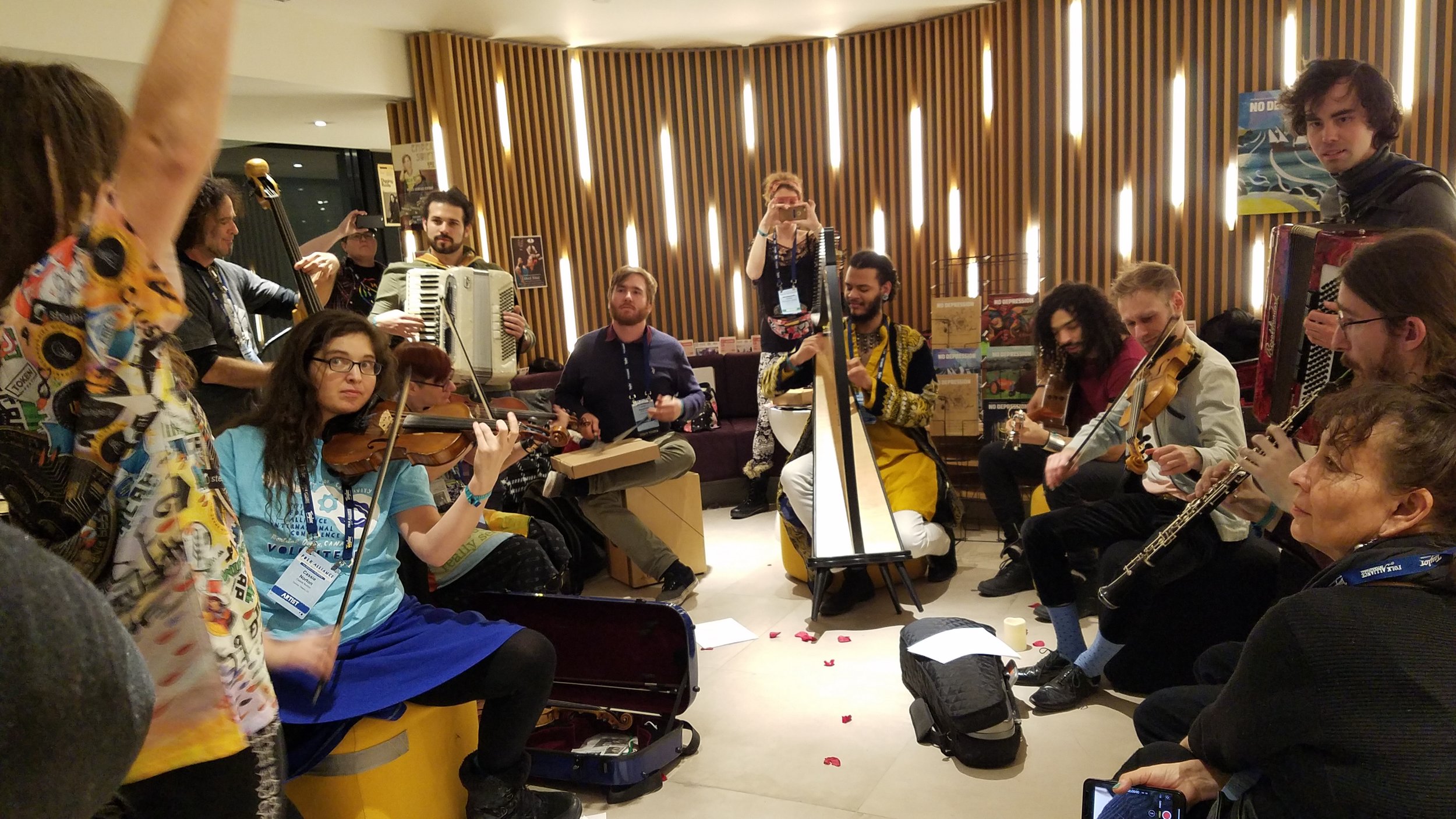
Folk Alliance creates community and friendships in abundance. After an evening of multiple showcase concerts, the action turns to three throbbing floors of the host hotel with poster-lined hallways and room after room of private concerts that run, officially, until about 3 in the morning, though often much beyond that. Musicians can play to an audience of one or to an impenetrable crowd, and it all ebbs and flows as players trade off every 20 to 30 minutes. Some rooms are corporately sponsored, by record labels, agents or cultural organizations. Some become ad hoc house concerts. Serendipity rules. I don’t usually feel guilty slipping out of a room when the music doesn’t move me. And it’s rewarding to come across musicians whose sound I wanted to hear more than once and who didn’t mind at all that I showed up to their private showcases like a regular. Among those now on my radar and playlists are the jazz-inflected duo of Jenna Mammina, a singer, and Rolf Sturm, a guitar phenom; the singer-songwriter duo of Freebo (the onetime bassist for the likes of Bonnie Raitt and Jackson Browne) and Alice Howe; Sam Lynch, a dramatically expressive young woman from Vancouver, B.C.; Melanie Brulée, a high-energy, country-fied singer and songwriter from Toronto; and the Black Horse Motel, a band from Philadelphia that features hard-driving songs fueled by dobro, fiddle and a drip-painted cello.
Jenna Mammina had never met Reggie Harris before, but her guitarist knew him and got him to join her in a song — George Harrison’s “Give Me Love.” This turned out to be a miracle photo, snapped as they sang the last bar.
More serendipity brought a stirring solo session by singer-songwriter Maya de Vitry, now of Nashville, whom I’d heard in previous years with her band the Stray Birds; a global jam session that accrued around the harp and voice of Kansas City performer Calvin Arsenia; and a totally unexpected rendition of Radiohead’s “Weird Fishes” by the joint forces of two guitar trios, one from Los Angeles, one from Montreal. Yes, almost anything goes at Folk Alliance.
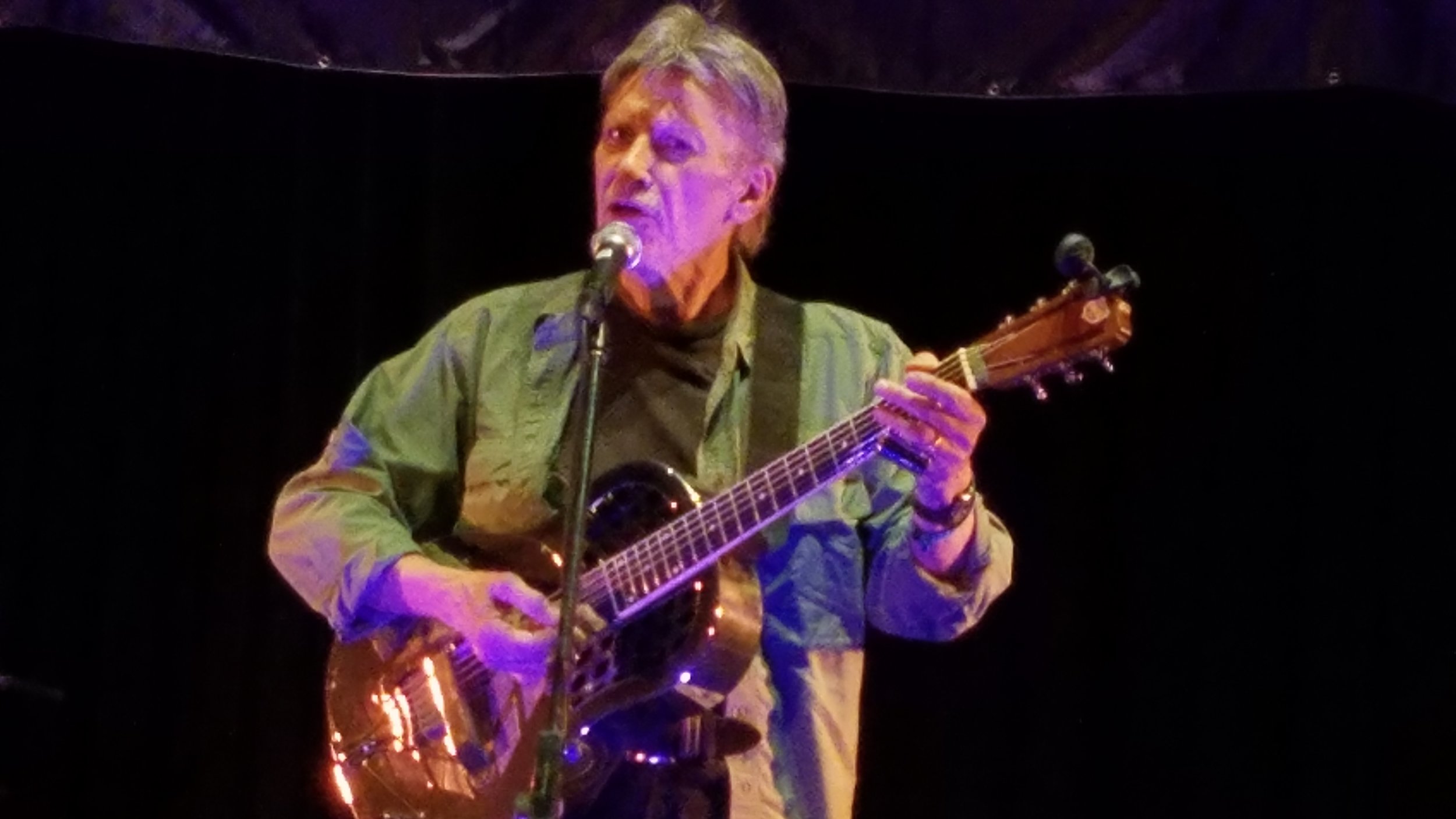
Other choice moments came from hearing the slide-guitar blues of John Kay, better known perhaps as the founding voice of the ‘60s band Steppenwolf, and of Rory Block. And then to hear them speak, in separate sessions, about their careers. Kay had a fine anecdote about defeating the local censors in Virginia during a performance of “The Pusher.” Block, as a teen-ager growing up in Greenwich Village, had met bluesmen like Son House, Mississippi John Hurt and the Rev. Gary Davis. But her slide playing took on new dimensions when, a few years later, she paid close attention to Bonnie Raitt. May the circle forever be unbroken.
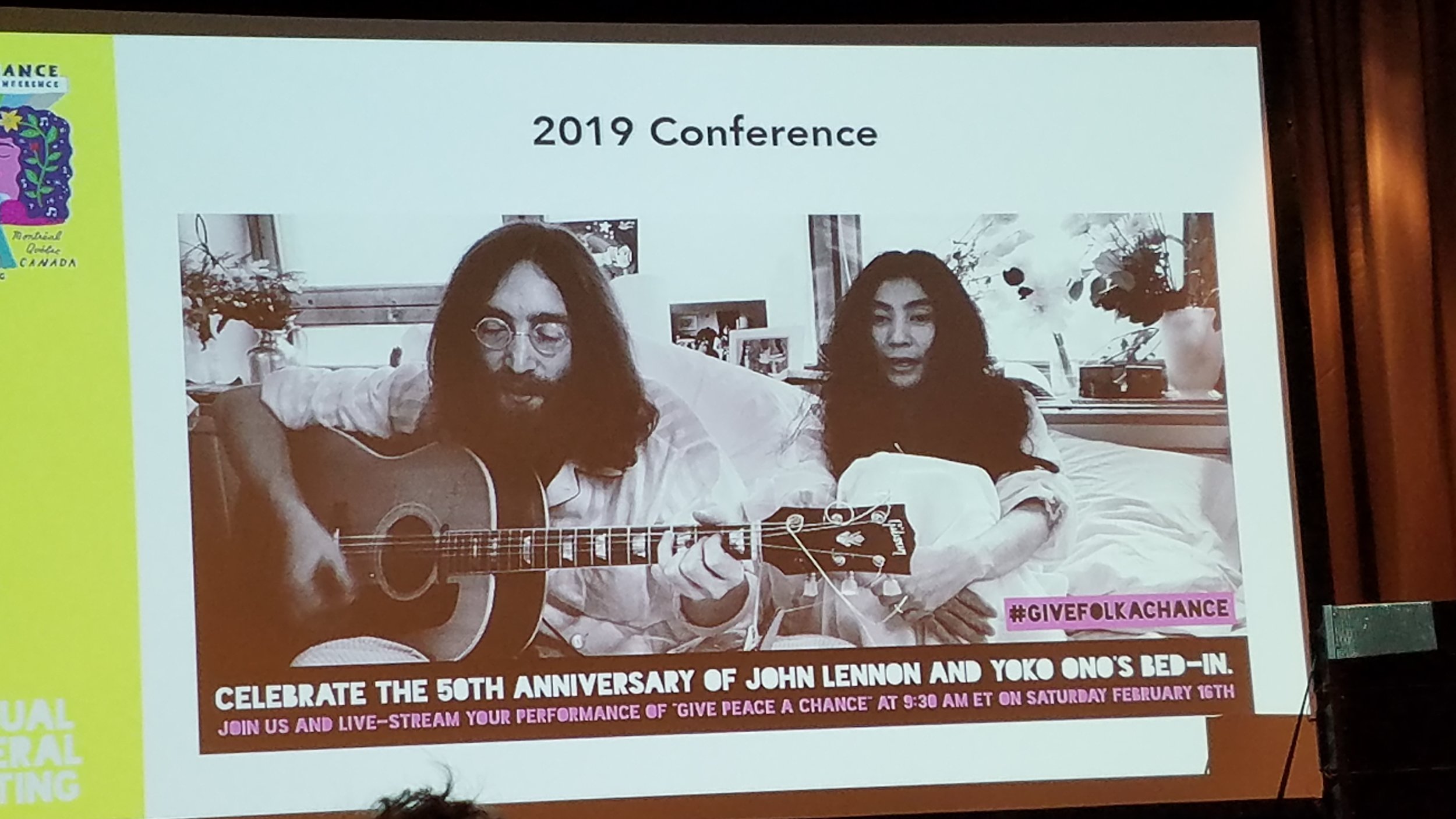
A few more prominent spirits hovered over the long weekend. Foremost was Leonard Cohen, who hailed from Montreal. But also: John Lennon and Yoko Ono, whose give-peace-a-chance “bed-in” was commemorated 50 years to the day later – and in the very same hotel.
The Folk Alliance conference moves on next year to New Orleans then takes up residence again in Kansas City, the organization’s world headquarters, in 2021 and 2022. You can bet I’ll be there, ears and heart wide open.
Gallery photo captions (from left): Jenna Mammina & Rolf Sturm, Leonard Cohen, Sam Lynch, Emerald Rae, Marc Berger, Danny Schmidt, Alice Howe and Freebo, John and Yoko bed-in promo, Rory Block, John Kay, Arctic Song, Eric Andersen, Calvin Arsenia jam, Mireya Ramos, Flor de Toloache, Jim Lauderdale, Livingston Taylor, Adrian Sutherland, Beausolais with Michael Doucet, Alash Ensemble, Eliza Gilkyson, Montreal and Los Angeles guitar trios, Maya de Vitry, Black Horse Motel, Melanie Brulée (with cellist Desiree Haney of Black Horse Motel).
A man, a van, a rolling drama unplanned
I’m not sure what lesson to draw from a near-nightmare travel experience not long ago on the way into Washington D.C. But you know when someone says, in a tender act of inspiration, that it’s not the journey but the destination, don’t always believe them. This one was all about a most harrowing journey.
I flew into the Baltimore airport and, having sifted the options for getting into Washington, I booked a shuttle van that, with the likelihood of multiple stops, would eventually take me directly to my hotel.
The first hiccup was a mere Hadley Hemingway moment. When my van number was called, I was all the way to the door before I realized I’d left my backpack behind -- the backpack with my laptop, my life’s work, inside. Not unlike the tragic day in 1922 when Ernest Hemingway’s wife lost a valise with all his early manuscripts in a Paris train station. That legendary crisis, of course, was going through my head as I ran back to the bench where I’d been waiting. OK, the pack was still there. Onward.
The van had three other passengers and two stops. The driver turned out to be somewhat tentative, though often insistent when adjacent to more aggressive types. I ended up navigating when he missed one exit and nearly missed two others. And by my count, in something more than an hour’s journey, our van encountered four near sideswipes and maneuvered into two near T-bones.
But the real drama came from the seat behind me. An older man was expressing some discomfort and by the time the van made its first stop, somewhere in exurban Maryland, it seemed he was undergoing something like a medical emergency or psychotic episode. He let out a scream, he said he was going to kill himself, he tried to escape out the back door of the van as the first passenger was getting out the side door. The driver pushed him back inside. I asked the man’s wife whether her husband should go to a hospital or whether we should call an ambulance. She said he’d be OK once he got to their daughter’s place in Virginia. I asked whether the daughter could meet the van somewhere, but, no, she was working.
I tried two or three times to determine from the driver how long it would take to get to their stop. He was a little rattled but finally consulted the GPS and came up with 20 minutes. I relayed the news to the ailing man. His wife had given him a nitroglycerine pill, and he began to calm down. Not for long. We were in the midst of bumper-to-bumper highway traffic when he stirred again, making a gesture toward the side door handle, which was locked and unable to be opened from the inside. I wondered how an ambulance or a police car could ever find us in the stream of slow-moving traffic. I told the man gently to chill out and assured him we’d be getting to their destination soon. He sat back.
At one point the man muttered something to his wife about killing two guys and how it wasn’t worth it because he didn’t know them. I was pretty sure he was talking about the driver and me. I tried to remember the name of that hi-jacked bus movie with what’s-her-name. And I felt at times as if we’d been deposited in a cosmic episode of Law & Order. If only Mariska Hargitay or Ice-T were on hand to save the day.
After recovering from one of those missed exits, the van finally arrived at the narrow, tree-lined street in Arlington, where the couple’s daughter lived. As they departed the woman turned to me and mouthed a thank you. After the man alighted, with help from the driver, he turned, looked at me and stuck out his arm for a firm handshake. “Take care” was all I could muster.
As the driver sat back down I gave him a tap on the shoulder. “We made it,” I said. He thanked me, said we couldn’t have survived without my help. “It’s tough getting old,” the driver said. I couldn’t agree more, though I realized the man might not have been much older than me. There but for fortune. Next stop: my destination, a D.C. hotel.
From the Archives: A Mamet Discovery Prompts Unearthing This Piece About Hemingway and TV Writing
While researching another project recently at the Harry Ransom Center, on the campus of the University of Texas in Austin, I followed a digression into Hemingway territory and learned something I’d never encountered before. The playwright David Mamet (right) had once set out to write a screenplay based on Across the River and Into the Trees, one of Hemingway’s most problematic novels. Problematic because most critics hold it up as one of Hemingway’s worst. That may or may not be true, but despite its flaws, the book, like several of Hemingway’s lesser works, does serve up some elegant writing here and there. So, Across the River, published in 1950, is at least approachable on a prose, or sentence-by-sentence, level.
Mamet recognized the novel’s reputation but once noted in an interview that great plays often lead to lousy movies and perhaps the reverse may have been true for a bad book. I’m not sure his logic on paper was quite that clear, but I think that was what he was trying to say.
Mamet has often been creatively compared to Hemingway, which, in that same interview (with Playboy, in 1995) he deflected: It would be a “heavy, impossible burden. You know, you can’t play Stanley Kowalski without being compared to Marlon Brando – even by people who never saw Marlon Brando in the movie, let alone on stage. He revolutionized that role and the American notion of what it meant to act. The same is true of Hemingway and writing.”
That said, the discovery of these Mamet notes sent me back to a newspaper piece I wrote – yikes, sixteen years ago -- that connected some dots between Mamet and Hemingway through the craft of television writing. That piece also made a nod to the likes of Aaron Sorkin and Amy Sherman-Palladino, the creator of a TV series of the day called “Gilmore Girls” and now the creative spirit behind one of the most popular and lauded new streaming series, “The Marvelous Mrs. Maisel” (on Amazon Prime). Again, Hemingway. I watched a few more episodes of “Mrs. Maisel” the other day, which gave me further impetus to repost this piece.
The following article first appeared in The Kansas City Star in November 2002.
Motor mouths: Smart and savvy TV writers figure it out: Papa knew best
“Wall Street Journal says people are talking really fast on
television.”
“You don't say.”
“No, really. Especially on `West Wing.' “
“Smart show.”
“That's right. Mostly written by a guy named Aaron Sorkin.”
“All that politics _”
“Ripped from the headlines!”
“And real-life drama.”
“It's nice that Bartlet and his wife are getting closer.”
“Illness will do that.”
“I suppose. But it's about -- “
“Power and powerlessness.”
”Good way to put it, but I've been thinking about this TV thing for a
long time. And one thing the Journal didn't mention -- “
“Only one?”
“Well, a few things, but one important one was the real source of that
dialogue.”
“Yeah?”
“Straight out of Hemingway.”
“Howzat?”
“Sun.”
“Sun?
“The Sun Also Rises. All that Paris banter. All those young hipsters.”
“All that drinking -- “
“That, too, but I first noticed this a few years ago on another show
Sorkin did -- `Sports Night.' “
“That ESPN thing.”
“Something like that. But it was great. Behind the scenes at a sports
talk show that had virtually nothing to do with --”
“Sports.”
“Yeah. It was all about the people. And they talked fast, and they
talked on top of each other and they completed one another's --”
“Sentences.”
“You've got it. And for some reason that's why I put two and two
together.”
“And came up with Hemingway.”
“Listen to this. It's when Jake Barnes invites a passing woman to sit
down and have a drink. He's the narrator:
“What's the matter?” she asked. “Going on a party?”
“Sure. Aren't you?”
“I don't know. You never know in this town.”
“Don't you like Paris?”
“No.”
“Why don't you go somewhere else?”
“Isn't anywhere else.”
“You're happy, all right.”
“Happy, hell!”
“I see what you're talking about.”
“Things happen fast on TV comedies, and even some dramas, and this
article I read said it had to do with cramming lots of scenes in a show to
keep people laughing. Wears some people out. ‘Lucy’ was funny. But
‘Seinfeld’ was faster. Just like those old screwball comedies from way back
when.”
“Yeh, yeh, yeh.”
“I might add that ‘Frasier’ is just as clever, more urbane, but
slower.”
“It takes time to make a latte.”
“And you know `Seinfeld,' that show about nothing.”
“Yada yada yada.”
“Exactly. Know where that comes from?”
“I'm getting a feeling --”
“Yep. ‘A Clean Well-Lighted Place.’ Seinfeld did yada yada. Hemingway
did nada nada. Read it and weep.”
“Will do.”
“These really good TV guys -- Sorkin, David Chase --”
“ ‘Sopranos.’ “
“Yup. And Matt Groening _”
“ ‘Simpsons.’ “
“Roger.”
“Homer?"
“No. Roger. As in `Roger that.' You're right. ‘Simpsons.’ But what I was
trying to say -- “
“Before I interrupted --"
“Was that the best of this stuff seems to be so aware of things. Aware
of the world. Aware of pop culture.”
”Uh huh.”
“I mean, some of these guys even love books.”
“I'll never forget that Jack London episode of ‘Northern Exposure.’ “
“Brilliant. That's what I mean. Or Amy Sherman-Palladino.”
“Who?”
“She writes `Gilmore Girls.' There's some media-savvy dialogue, for you,
even though it feels a little forced.”
“She's no Hemingway, you mean.”
”Well, I don't think I'm too far out on a literary limb with that
theory. Surely Sorkin read `Hills Like White Elephants.' “
“Who hasn't?”
“One thing you hear a lot is wordplay. Repetition. You accent something
by repeating it two or three or more times.”
“Repetition.”
“It's like ping-pong words. Not sing-song to put you to sleep. Ping-pong to
keep you alert.”
“Back and forth you mean?”
“Words ping-ponging, or pinballing. Like one time on `Gilmore Girls'
Rory and a friend were riffing on the word ‘wing-it.’ They didn't know they
were riffing, they were just saying what the writers wrote. But ‘wing-it’ as
a compound verb and an adjective, meaning just the opposite of ‘Zagat,’
meaning you'd look it up in the restaurant guide rather than wing-it. The
friend was having a date and she was worried about not looking
at Zagat and they'd be forced to wing-it. Zagat. Wing-it.”
“Wow.”
“It's like action poetry.”
“Poetry? On television?”
“TV is literature, you know. I mean look at ‘Sports Night.’ “
“It's a shame they killed it.”
“Yeah, that really torqued my chili.”
“Peter Krause was great.
“Just like he is on `Six Feet Under.' And now one of those `Sports
Night' guys is on ‘West Wing.’ “
“The guy with glasses.”
“But Felicity What's-Her-Name -- she played the lead character, the
talk-show producer -- was married to William H. Macy and they were great,
too.”
“Great character -- Macy. The ratings consultant.”
“Huffman. Felicity Huffman. And they're theater people.”
“Really?”
“They do Mamet. I mean they're friends with Mamet.”
“Mamet?”
“The F-word guy. Plays. Movies.”
“Yeah, I know, I know. But did you just say, ‘It really torqued my
chili’?”
“Did.”
“Where'd that come from?”
”People talk that way.”
“C'mon --”
“No, they do. The beauty of language. I love it. ‘Torqued my chili.’
Some guy from Oklahoma says it. I heard it at a diner.”
“A diner?”
“You know, like in `The Killers.' “
“Ernie again?”
“Short story.”
“Kind of like television.”
“Except without the ads.”
“Another reason they talk fast, right?”
“Yeah. To squeeze in more -- “
“Commercials."
Remembering Fico: The Hemingway Trail in Cuba Loses Another Direct Connection
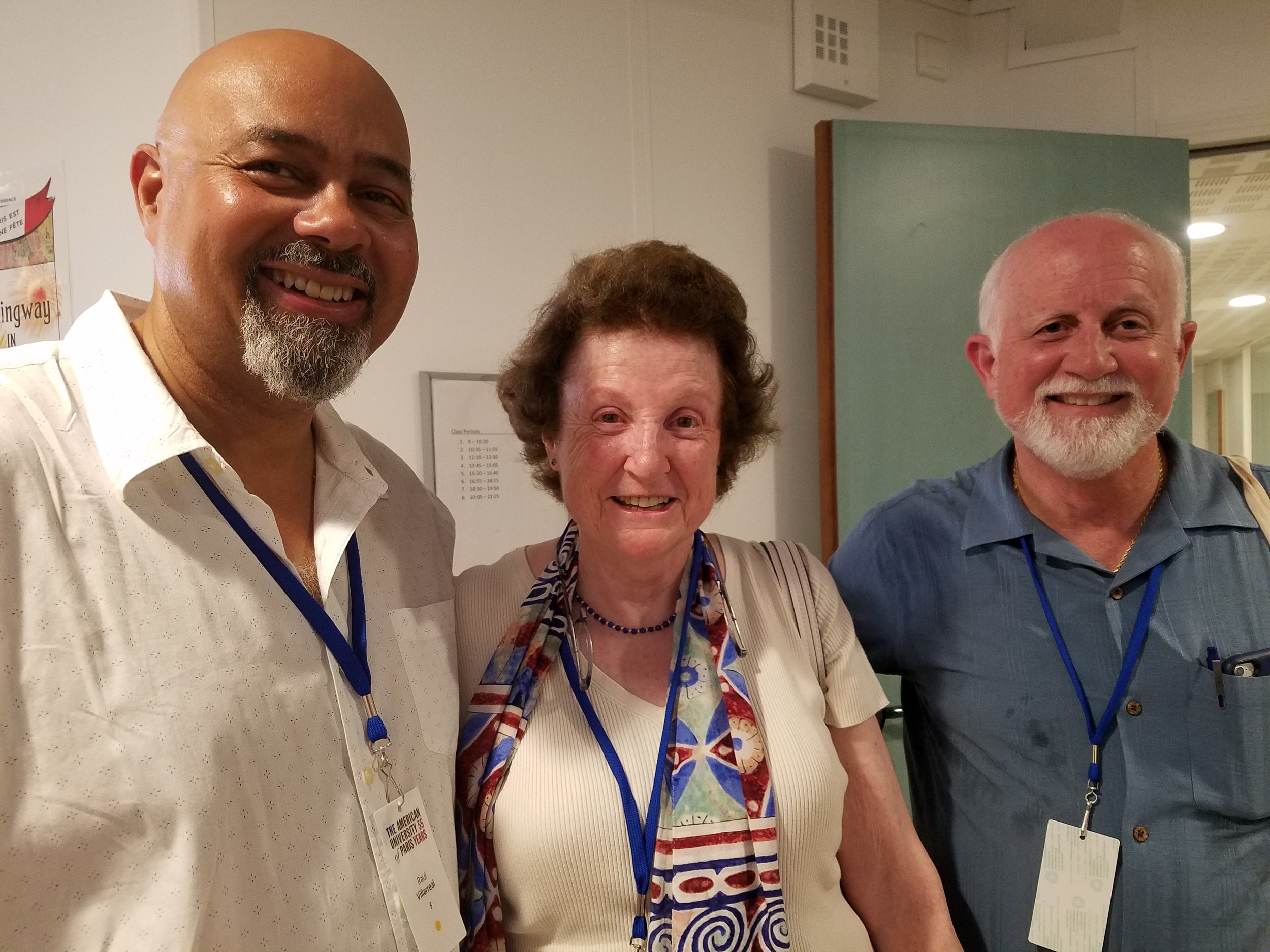
While we were in Cuba last month, we learned of the recent death of Alberto "Fico" Ramos. Fico is well-known in Hemingway circles, because he was one of the original members of the baseball team that the writer created for his son Gregory after taking up residence outside Havana in the early 1940s. The team was called the Gigi Stars, Gigi being the 10-year-old (or so) Gregory’s nickname. Fico later became chef at the Hemingway house, known as the Finca Vigia, or Lookout Farm. The house stands high on a hilltop above San Francisco de Paula, a village about a dozen miles southeast of Havana. The Cuban government has owned the house since the Hemingways left in 1960 and now operates it as the Museo Ernest Hemingway.
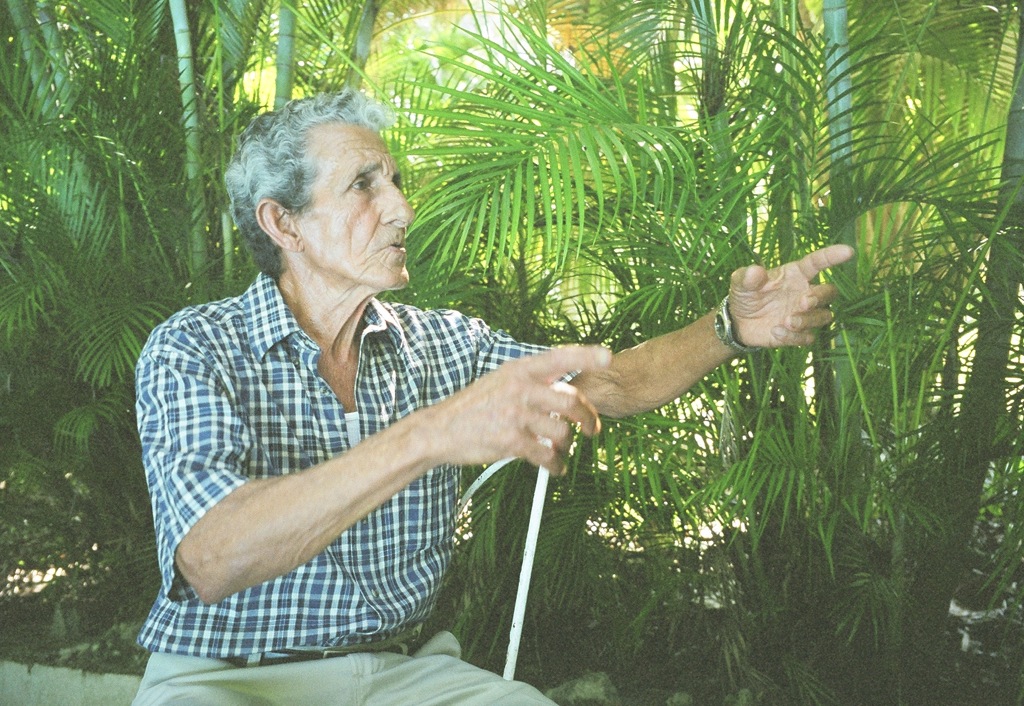
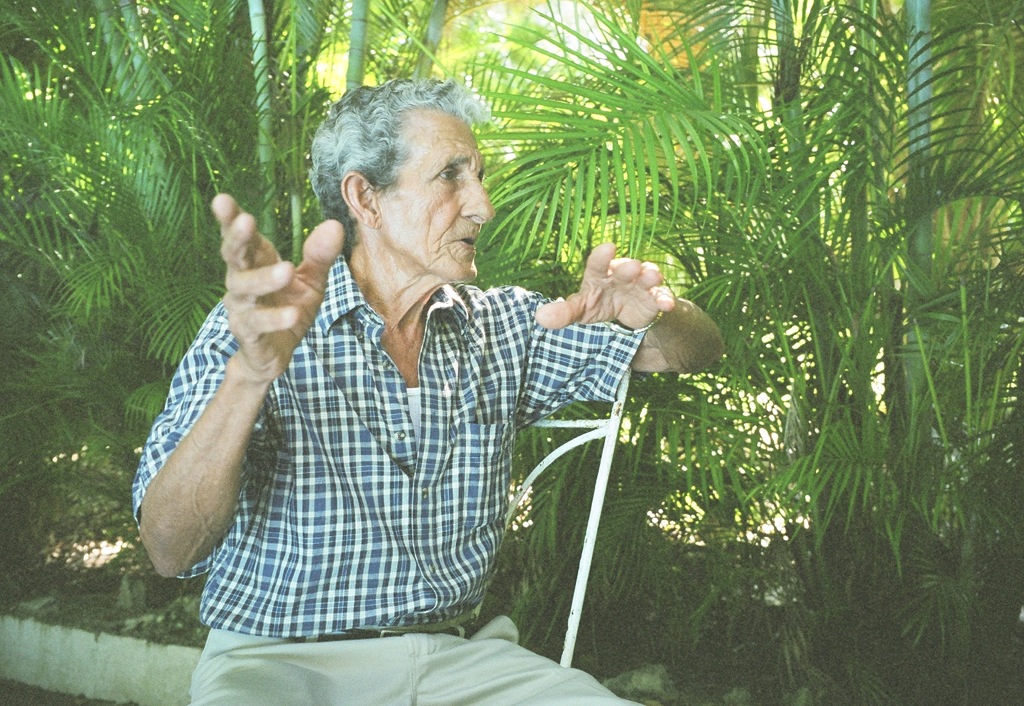
We met Fico on our first trip to Cuba, in 2003, and I sat in on an interview session on the grounds of the Finca, sitting by the drained pool, where I took this photo. I remember Fico as extremely personable and eager to share stories of life around the Hemingways. Our friend Raul Villareal, with whom we spent a week in Havana in December, confirmed Fico’s death the first week of December. “He was able to see his daughter who came in from Miami and I was told that he left us peacefully in her company,” Raul told us in an email. Fico in fact worked with Raul’s father, René Villareal, who ran the Hemingway household in the 1950s and oversaw its preservation after Hemingway’s suicide in 1961. “I was very sad to hear the news,” Raul added. “(W)e lost one of the few remaining Cubans who knew and worked for Hemingway.”
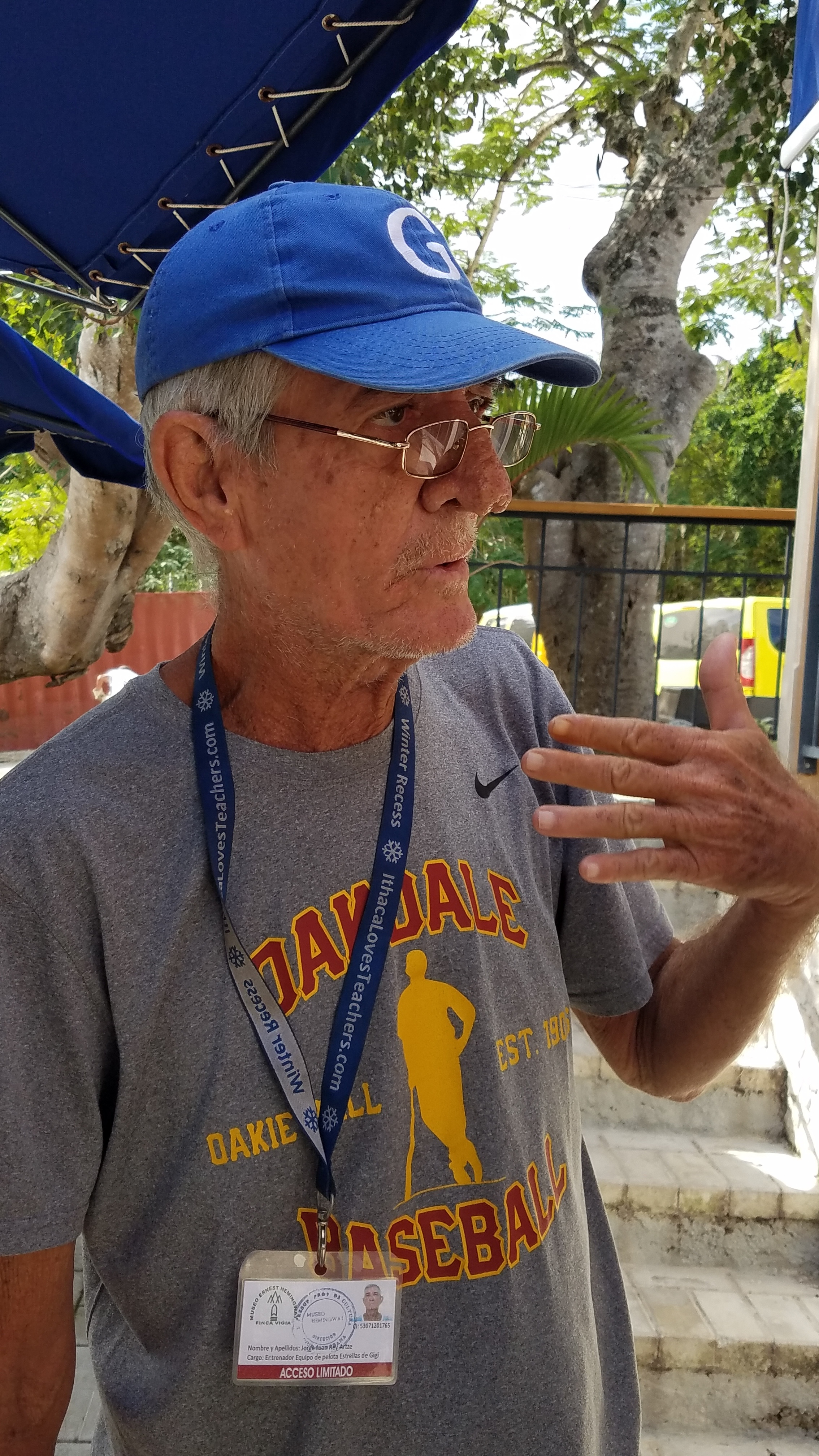
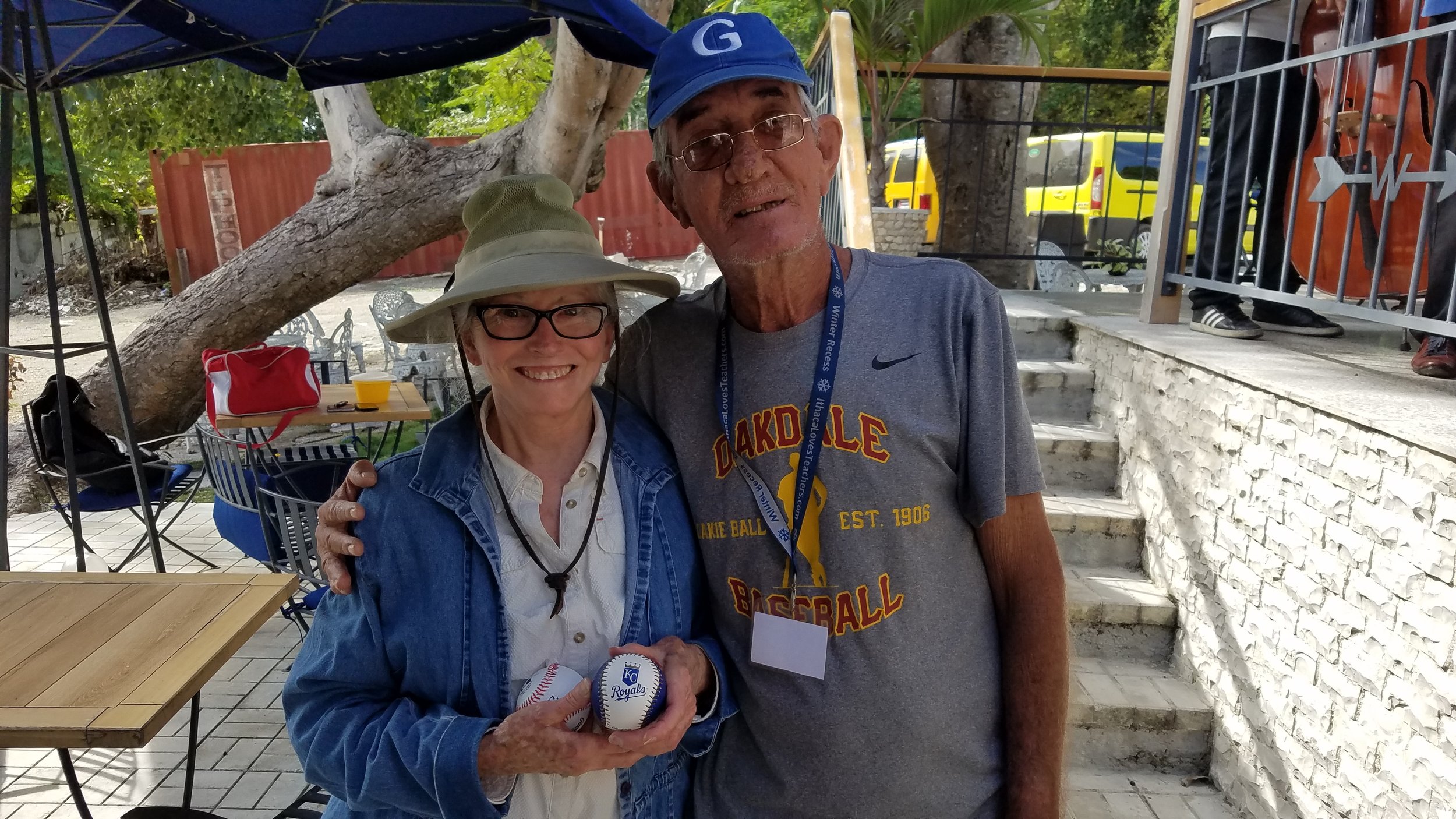
To bring the story full baseball circle: On our return visit to the Finca Vigia in December, we happened to meet Jorge Juan Rey Artze, who for 10 years has coached a youth baseball team in the surrounding village of San Francisco de Paula. Carol Zastoupil thus was able to continue her mission to deliver baseballs to young Cubans. We’ve often seen kids swinging crude bats against rocks in the street, so she has taken the lead in loading her bag with baseballs. (I pack a few sets of guitar strings to hand out.) A couple of years ago, we stopped to watch a youth team practice in Guantanamo City and shared a bunch of balls with them, leading to a team picture and much good cheer.
A sad postscript: Our friend Raul Villareal died unexpectedly of a heart attack not long after I wrote this item about Ficto and just a few months after our trip to Cuba in December 2018. You’ll find a tribute to Raul elsewhere on this blog.
Flash Fiction: My First Noir
Fiction — writing fiction, that is — has never worked very well for me. This year I’ve been making another run at it. In the crevices around the larger project and a few smaller ones I’ve managed to turn out one story still in progress, one story that felt done enough to submit just recently, and a piece of flash fiction that editors at Akashic Books were kind enough to include the other day in their online series Mondays Are Murder. Akashic is the house that published Kansas City Noir, the fiction collection I edited featuring 14 writers, in 2012. My story here (follow the link) is in Akashic’s Noir anthology style, set in a specific place (Midtown Kansas City). Locals may well recognize the opening setting, daytime in Milton’s Tap Room. And squeamish readers might be aware there’s a NSFW moment near the, uh, climax.
http://www.akashicbooks.com/blue-is-the-color-of-night-by-steve-paul/
The Kansas City Star Leaves its Historic Home
My friends and former colleagues at The Kansas City Star packed up their stuff the other day and moved from their historic building at 1729 Grand to new quarters in the printing plant across the street. The old brick building is bound for a new future. I wrote this piece for the Connecting blog, which maintains a network for the Associated Press. The AP's Kansas City bureau was housed at 1729 Grand for something like 60 years, so it shares in the building's history as well.
Here's the link (scroll to the second item on the page: http://campaign.r20.constantcontact.com/render?m=1116239949582&ca=fe15d003-e1fc-4e3e-b443-141c3f2edd47
On the PEN/Hemingway beat: An Interview With Weike Wang
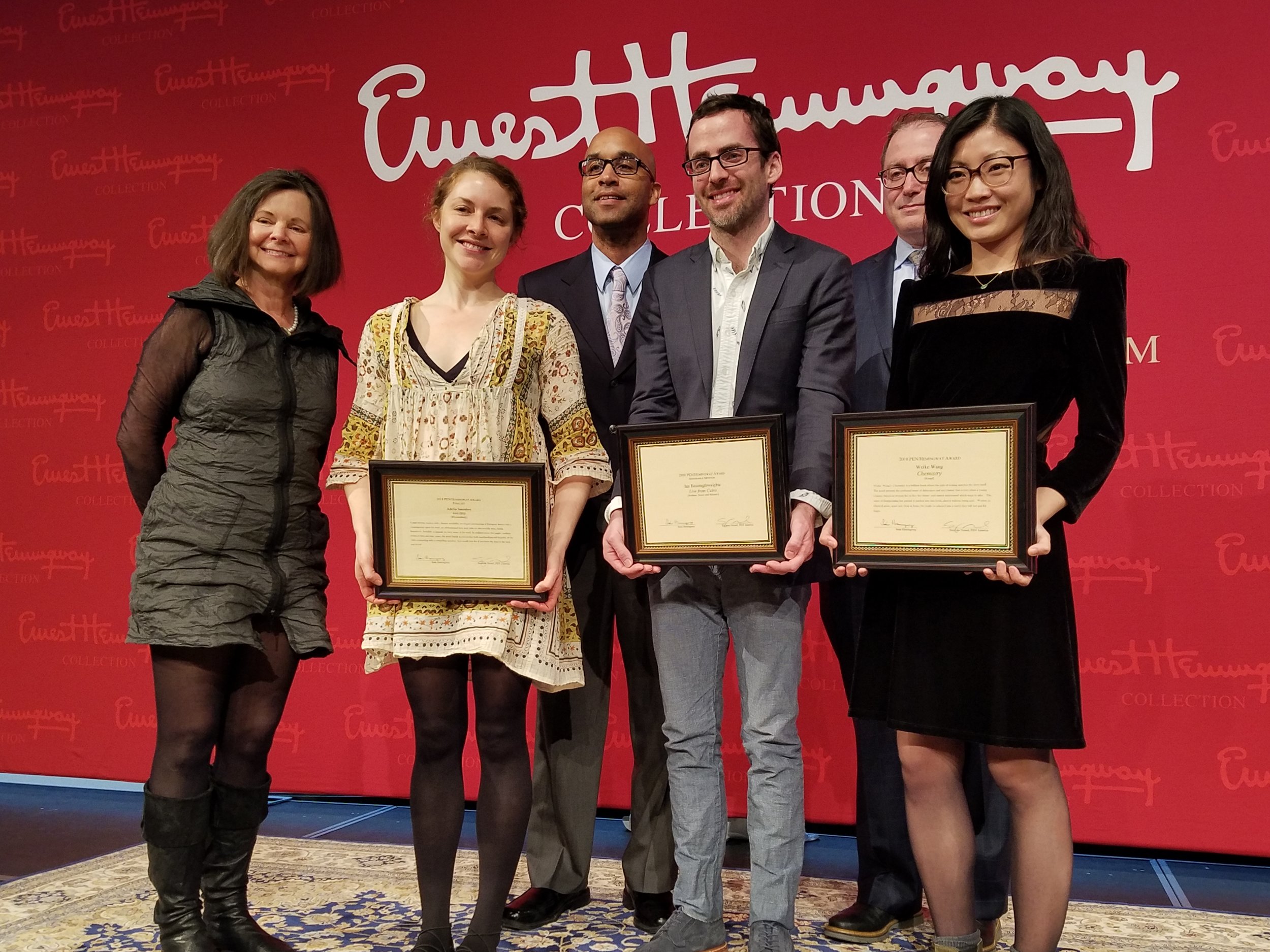
I wrote this account of the 2018 PEN/Hemingway Award event for the newsletter of the International Hemingway Society. Here it is, including a brief interview with Weike Wing, author of the award-winning novel, Chemistry.
By STEVE PAUL
This was a transitional year for the annual PEN/Hemingway literary awards, which the Ernest Hemingway Foundation has co-sponsored for more than four decades. Not long before the April 8 awards event in Boston, our longtime co-sponsor, the New England PEN organization, ceded administration of the program to its parent organization, PEN America. The New York-based advocacy group oversees a long lineup of annual literary awards.
Without the presence of New England PEN and its own regional literary awards, this year’s event at the John F. Kennedy Presidential Library and Museum was somewhat smaller than usual but wholly focused on the Hemingway award, which honors a first book of fiction. Seán Hemingway (pictured above with Weike Wang), standing in for his uncle Patrick, oversaw the proceedings, in which the 43rd annual PEN/Hemingway award went to Weike Wang, author of the novel Chemistry. (More on Wang and her book below.)
The audience heard from awards judge Geraldine Brooks and Suzanne Nossel, CEO of PEN America, which is operating in overdrive, she said, during a “crisis for expression in our own country.” Ricardo Cortez Cruz, author of the novel Straight Outta Compton and professor of English and creative writing at Illinois State University, gave a stirring keynote about Hemingway and “the joy and optimism that comes with knowing that writing can change the world.”
Dr. Hilary K. Justice (pictured at the lectern), specialist at the JFK’s Hemingway Collection, opened the proceedings with a smart and lyrical essay based in part on her call for the Hemingway community to identify their favorite Papa sentences.
The PEN/Hemingway program also highlighted two finalists: Lisa Ko, for The Leavers, and Adelia Saunders, author of Indelible. Honorable mentions went to Ian Bassingthwaite for Live from Cairo, and Curtis Dawkins, author of the prison novel The Graybar Hotel.
Wang receives $25,000 and residencies at the University of Idaho and the Ucross Foundation in Wyoming. The runners-up receive smaller amounts. Along with our Ernest Hemingway Foundation and PEN America, sponsors of the program include the Hemingway family, the JFK Presidential Library and Museum and its associated support organizations.
Weike Wang’s Chemistry is a briskly moving short novel about a young woman, daughter of Chinese immigrants, who is struggling with her American identity, her family and boyfriend relationships, and with the doctoral chemistry lab that threatens to define her future. A few days after the ceremony in Boston, I got in touch to command her attention for a brief email interview. It appears here with only slight revisions for clarity.
Q. First, can you give me a recap of your path towards writing? You apparently were in another field (chemistry? public health?), so when, how, and why did you veer into fiction?
A. I was undergrad chem and English. I was also premed. Then the latter didn't quite work out and I moved into grad school for cancer epidemiology. I have always been writing fiction, but I don't think it is necessarily a profession you go into as it is one you fall into. When I finished the MFA and wrote this novel, I had no idea any of this would happen. I had hoped, but never actually thought it would. I can sometimes be self destructively practical. Had the novel not worked out, my plan was then to find a job in epi and move on from writing.
Q. There are no right answers here, but in your workshopping and MFA did you develop any ideas or relationship, pro or con, with Hemingway? It's always interesting, because very few PEN/Hemingway winners -- the books, I mean -- feel as if they've been influenced by his work.
A. That is true, but I did read the story “Hills Like White Elephants” during my MFA. I came to Hemingway's work fairly late, in college and later I would say. But I have a good relationship with Hemingway's work. I learned a great deal from him in terms of dialogue (especially from the above story) and shaping a piece of fiction to mimic something in real life yet to still be inherently fiction. What I love about that first story I read of his is the explosiveness both explicit and subversive.
Q. Your reading on Sunday really heightened the humor that seasons your novel. I've been thinking about that and wonder whether humor is a concerted strategy or comes out of your natural authorial voice or emerges from your vision of the narrator's character?
A. Voice, I believe. I don't think I could write anything without some ounce of humor. You cannot have dark without light. Humor has been my natural way of coping with growing up. But I do think it works well in writing and I take a leaf of that ability from teachers like Amy Hempel and Sigrid Nunez.
Q. Sorry for the obvious question, but does your narrator's experience reflect elements of your own life or is she wholly invented? This, of course, is a Hemingway issue, given that readers always seem to expect that he was writing about his own life.
A. Ah. When I met Seán at the lunch, he told me he had read some earlier drafts of “Hills Like White Elephants” and the very first draft read more like a recorded conversation and was probably a recorded conversation between Hemingway and Hadley. Then the shaping of the work happened and now we have this brilliant story that has no bearing with the original conversation but used it as a springboard. That is how I feel about this book. I took a lot of elements from my life. The science and PhD world is as part of me as football and baseball lingo is to my husband. The longer I write the more I see that transforming the prose is a large part of being the writer. Much of that transformation happens in revision, hence why revision is so paramount.
Q. The structure of "Chemistry" seems something like an orchestration of atomic particles and really benefits from its non-linear but ultimately forward motion. How did you determine to write the novel that way?
A. I think the non-linear narration came from my inability to write a straight story from event to event. I favor the collage structure. I think it gives the reader and writer a more immersive experience. I also found something clunky about going from chapter to chapter, putting in a “cliff hanger,” finding the “hook.” Much of the book is also about language and the flow of language, so I wanted it to move fairly seamlessly.
A. What's next for you? Also, are you still teaching?
Q. More books! Hopefully. I am working on a second novel and stories. I'm not teaching this semester but I will be next semester at Barnard and UPenn. Teaching is pretty fun. Students are funny, in a good way. But also I guess in a funny way.
Hemingway Society member Steve Paul is author of Hemingway at Eighteen: The Pivotal Year That Launched an American Legend (Chicago Review Press, 2017).
Secrets and Surprises at the Library for the Performing Arts
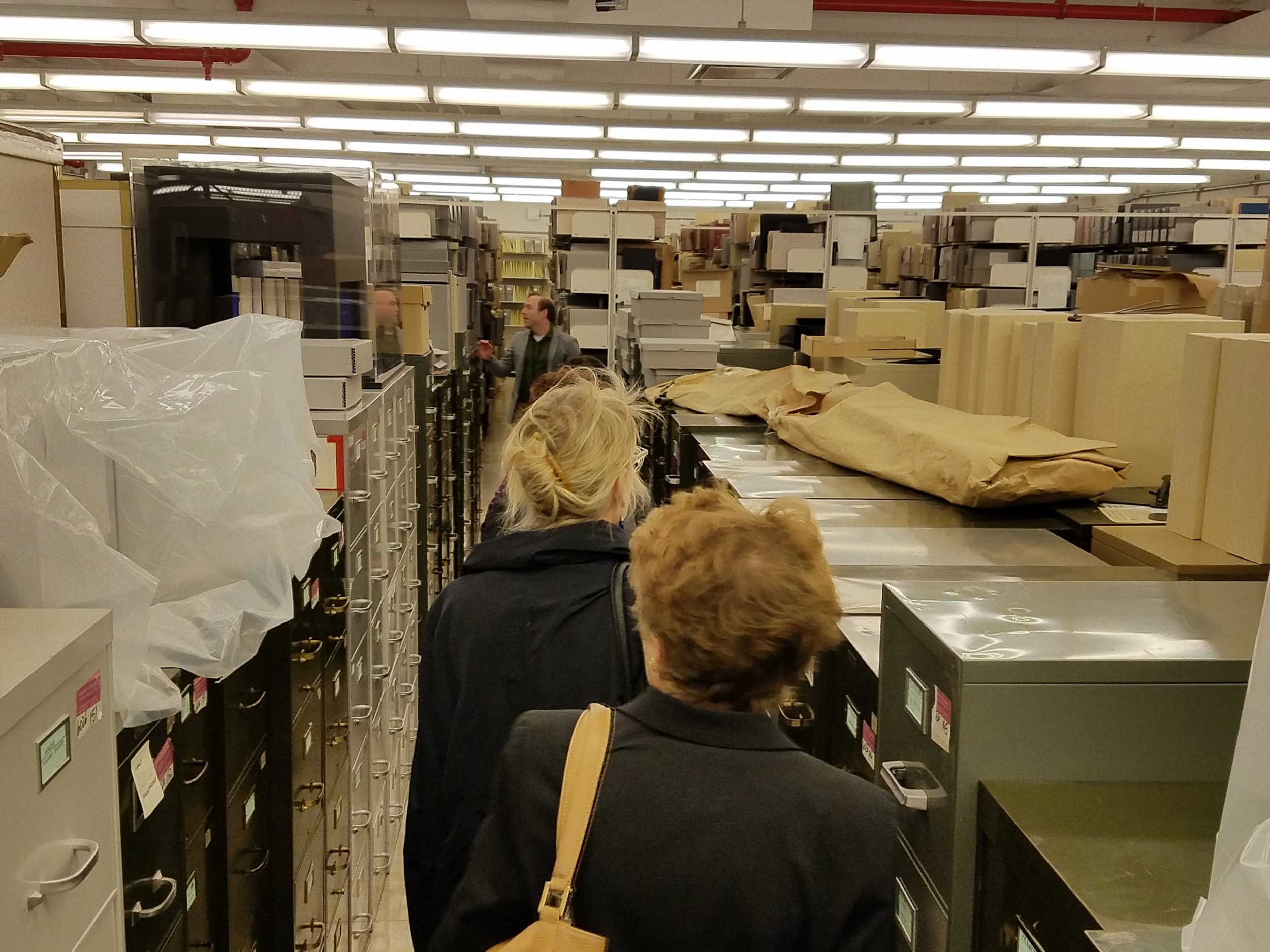
Those inclined – impelled? -- to a life of research tend to geek out in libraries. Gems of forgotten history bubble up from back rooms. Intellectual encounters with voices of the past arise from quaint, hand-written letters. And photographs open a deep connection with the humanity of a subject or the revealing details of a place. So it was on a recent behind-the-scenes tour of the Library for the Performing Arts, the Lincoln Center branch of the New York Public Library. The library contains vast quantities of archives, and the back rooms seem like one of those English garden mazes, lined by file cabinets, shelved boxes, and old-school card catalogues.
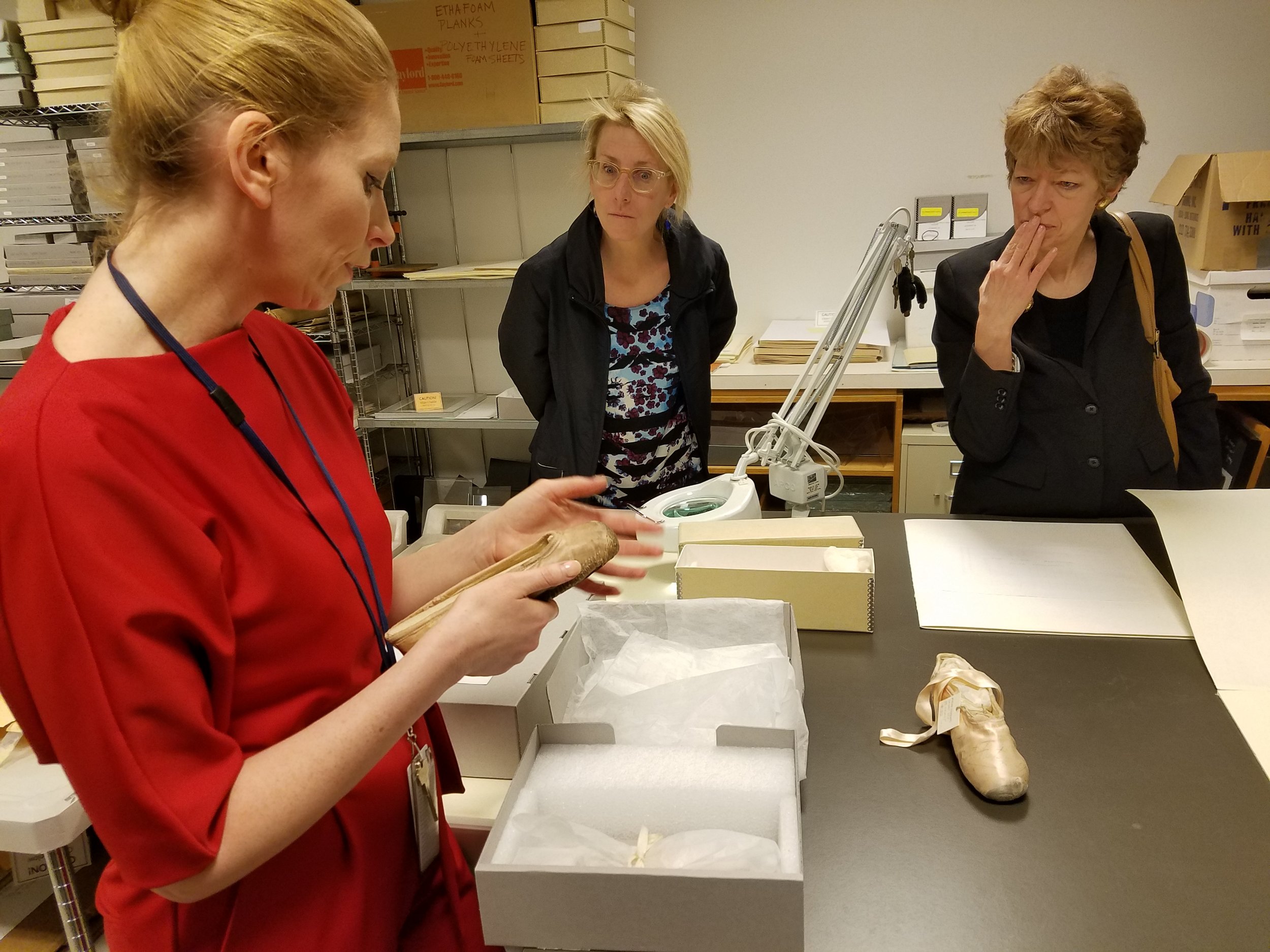
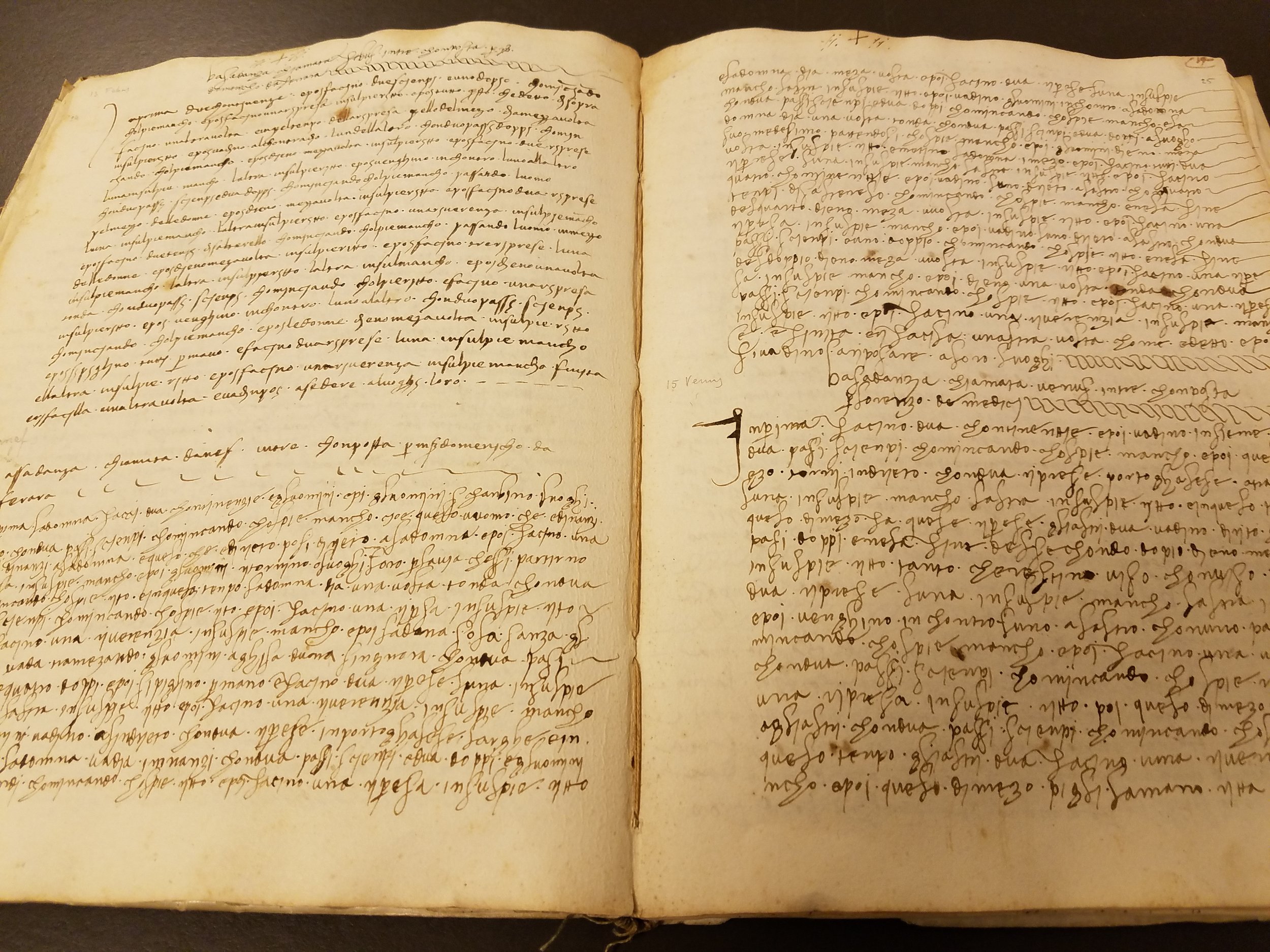
I was among a small group of writers who was led around the place by three of the departmental curators, archivists responsible for music, theater and dance. Imagine getting a glimpse and a curatorial opinion of the ballet shoes worn by Anna Pavlova more than a century ago (photo). Or seeing what the curator described as the oldest known document of choreography in the West, a dance notebook from the court of the Medicis, circa 1453 (photo). The library includes the principal archives of Jerome Robbins, and we caught a glimpse of a rather rare slice of his memorabilia – one of 24 accordion-fold diaries that Robbins crafted out of text and cultural imagery (no photos allowed of that). The library is planning on putting the diaries on display in an exhibit beginning in September 2018.
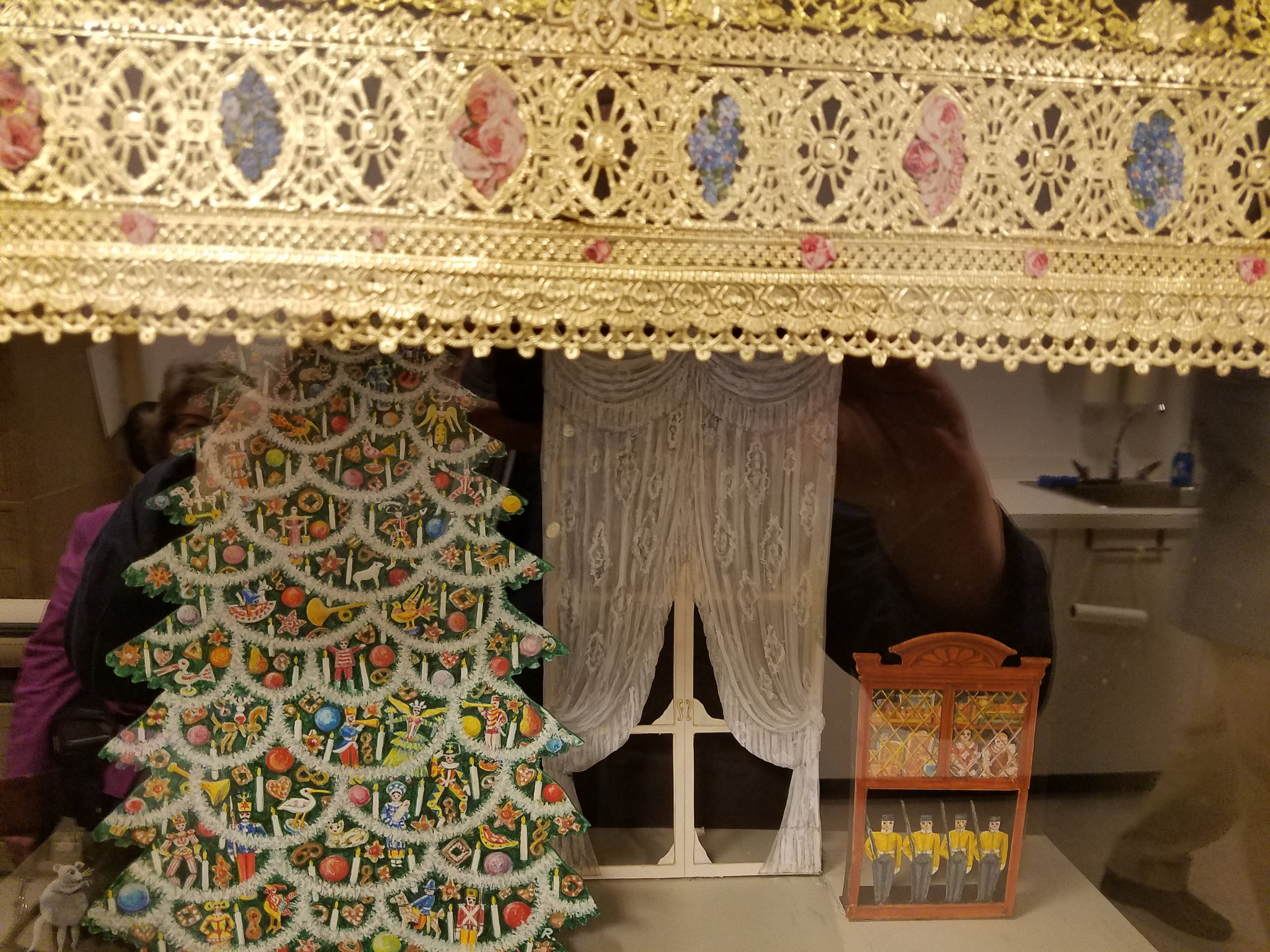
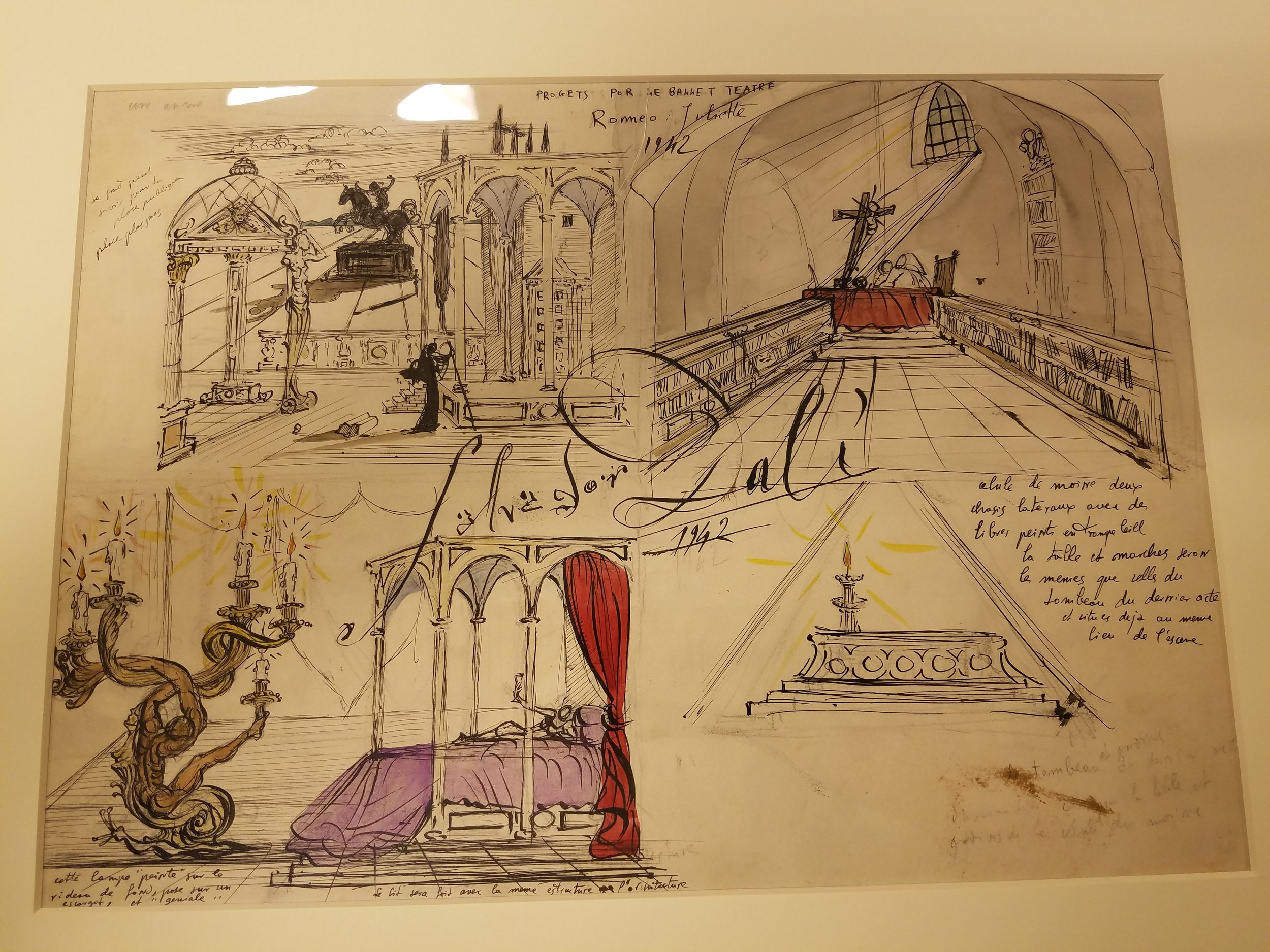
We saw Salvador Dali’s unrealized stage design for a production of “Romeo and Juliet” (photo). And another dance revelation occurred as we passed the model of a stage set for a George Balanchine production of “The Nutcracker” from 1964 (photo). The proscenium arch décor included floral bouquets that the designer, Rouben Ter-Arutunian, reportedly snipped out of Mother’s Day cards from Hallmark. When the stage set was finally realized, the painters meticulously reproduced those flowered images, and, it was suggested, Hallmark probably never received a dime of royalties.
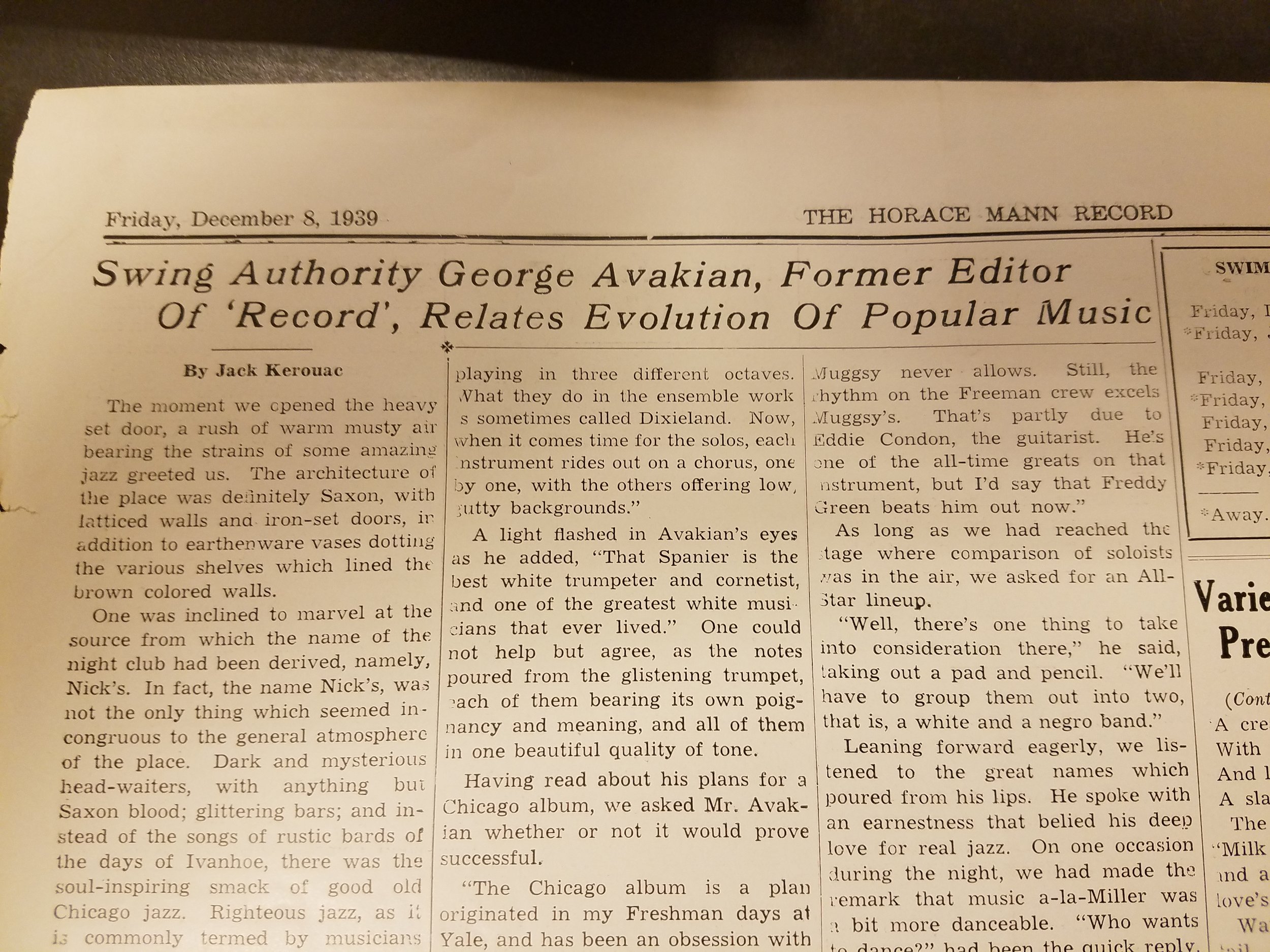
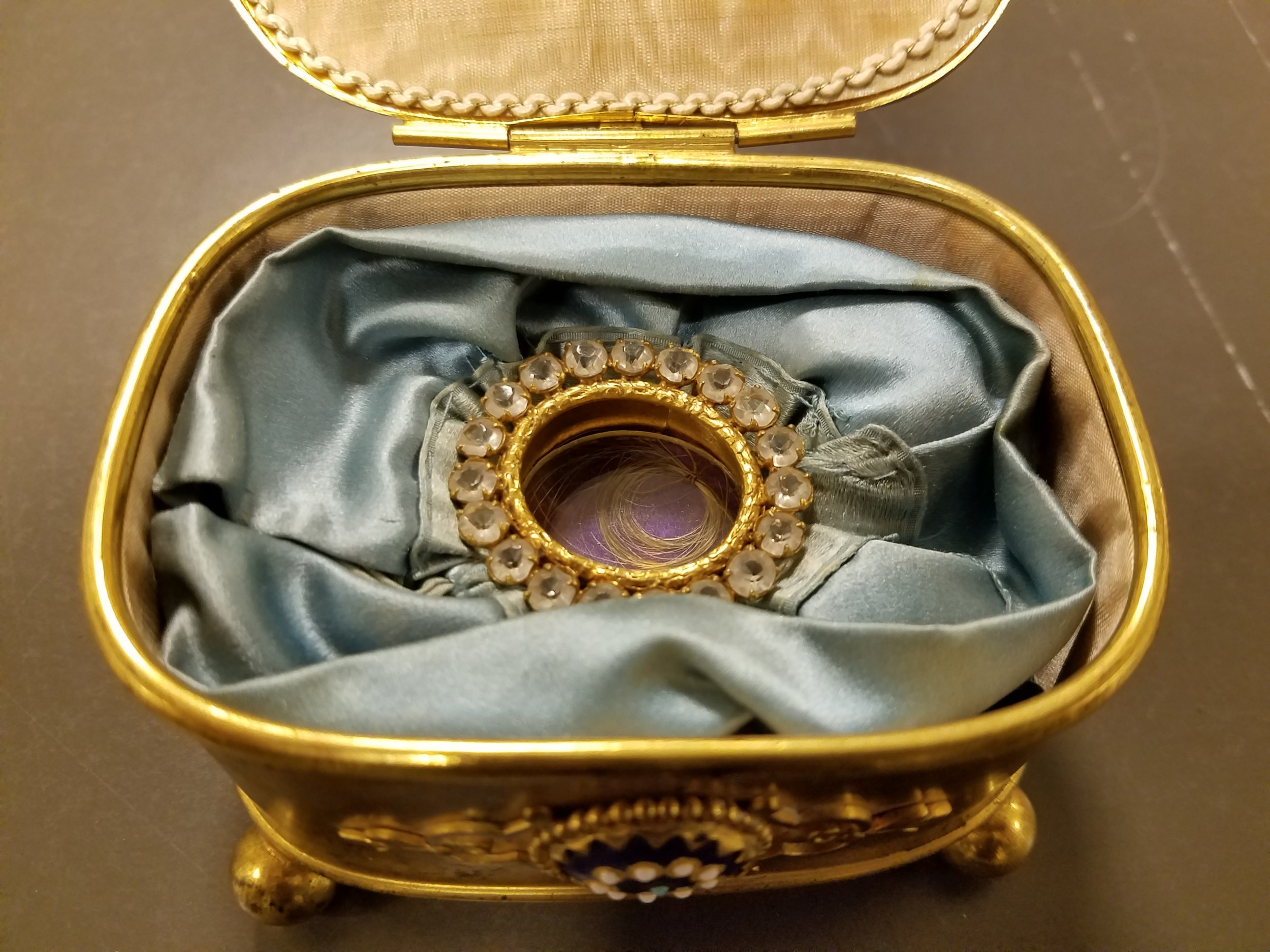
The foundation of the library’s musical collection is classical – I mean, where else can you fawn over a lock of Beethoven’s hair (photo)? But its jazz collection is constantly growing, too. One quirky document: A feature interview of the jazz aficionado George Avakian from the Horace Mann School newspaper under the byline of ... Jack Kerouac (photo). After leaving Lowell, Mass., in 1939, Kerouac spent a year at the New York school before beginning his college education at Columbia. Kerouac was not exactly at his peak. Here’s a little exchange with Avakian, who apparently also once attended Horace Mann and wrote for the newspaper:
“Knowing that you were once editor-in-chief of the Horace Mann RECORD,” we told him, “we were wondering whether or not you would supply us with some jazz information.” This, with a sense of uneasiness.
“Are you from the Record?” he asked, with a broad and disarming smile.
“Yes,” we replied, very much relieved.
“Well that’s fine,” he ejaculated with a smile. “Sit down.”
Offered here, with a smile.
Find the whole Kerouac article at the library’s online archive: https://digitalcollections.nypl.org/items/5ddc5f60-bbbf-0133-e670-00505686d14e
On the Lively and Lonely Road of a Book Tour
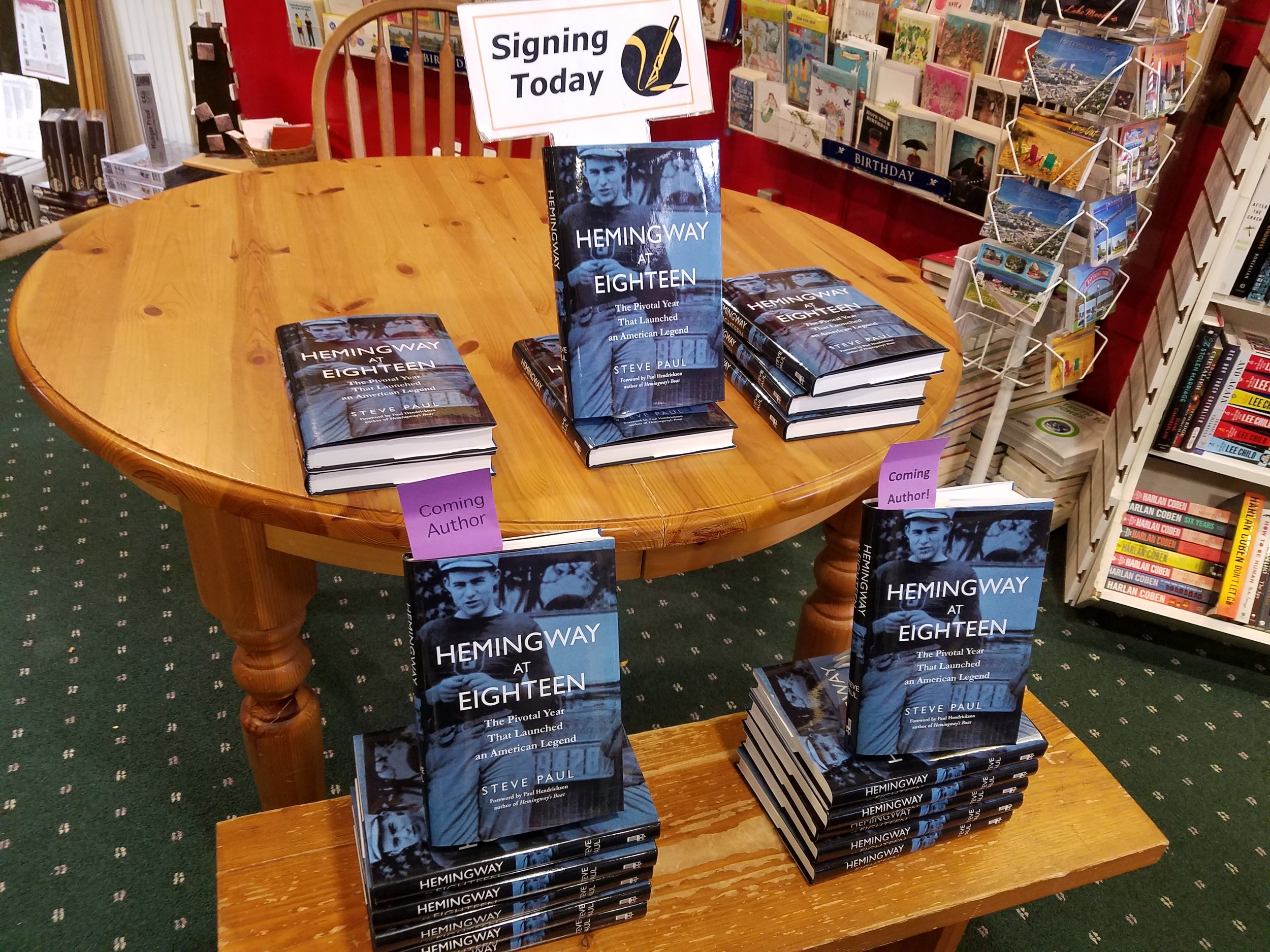
Things were slow at a northern Michigan bookshop one day last fall, so while browsers ignored me and my signing table, I spent some time reading a new collection of Jim Harrison’s food essays. The late writer hailed from Michigan and often referred to his secret fishing place on the Upper Peninsula. I’ve read his fiction off and on over the years, and his poetry, but not much of his food writing, which he produced for various magazines. The essays often read like stream-of-consciousness odes to hedonism. He had one large appetite. He was not only stuffing his face but he often gets in yours, with brawny judgments and prickly opinions. (A blogged a little more about this a few months ago.) But he’s highly entertaining, if you don’t mind the intimations of sex, drugs and rock ‘n roll that sometimes accompany his musings. Some of the pieces in this new book date from the early 1980s, but despite the Reagan-era markers they remain fresh and lively. So here I was at the beginnings of a book tour, which had had a string of early successes before this afternoon of not-much-happening, when I encountered Harrison’s lament about the depressing nature of such things. “Book tours,” he writes, “promote a ghastly self-absorption, a set of emotions inimical to art.” In short, the book-tour grind leaves no room for writing. Perhaps that’s why it has taken months to write these sentences.
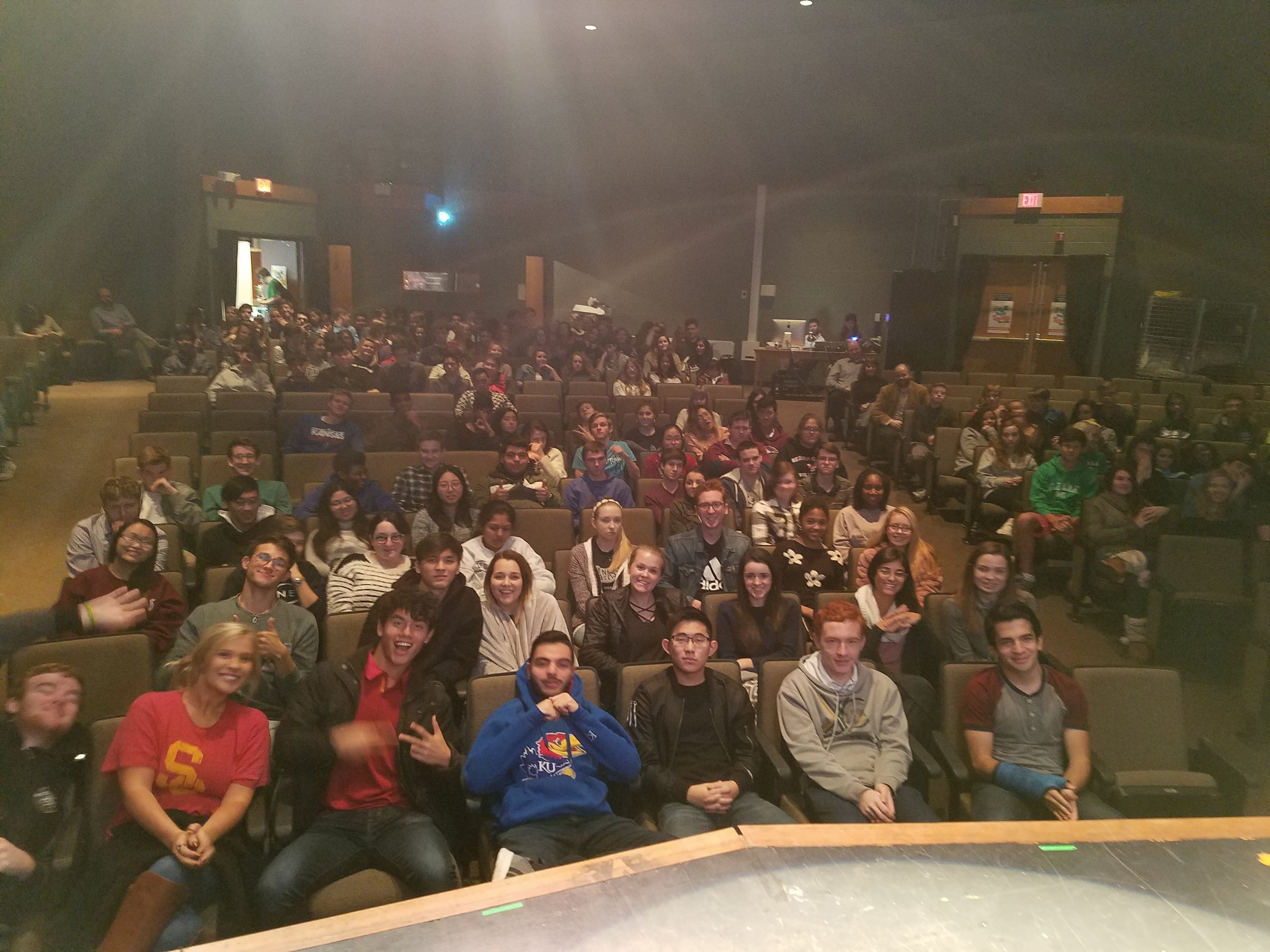
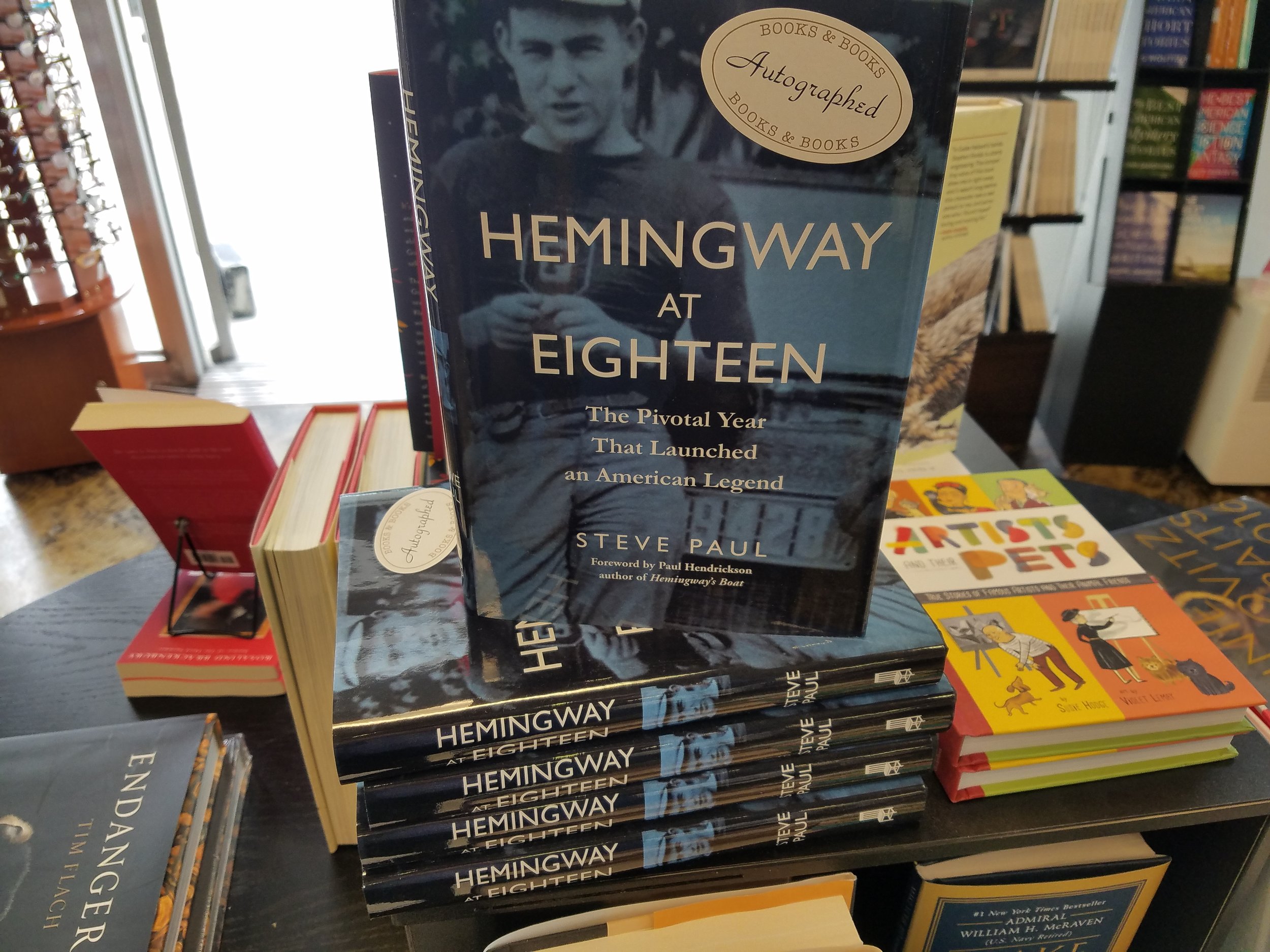
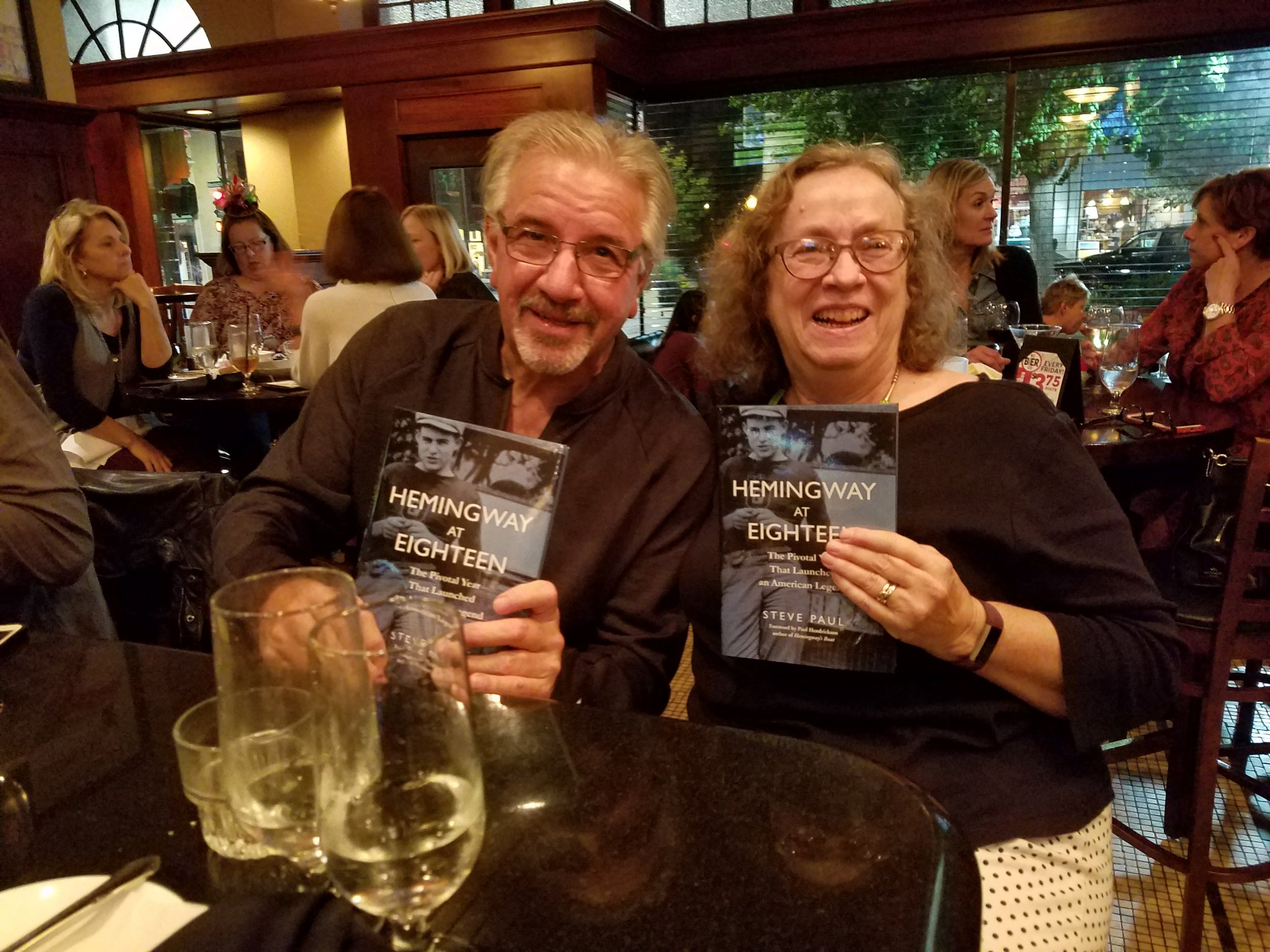
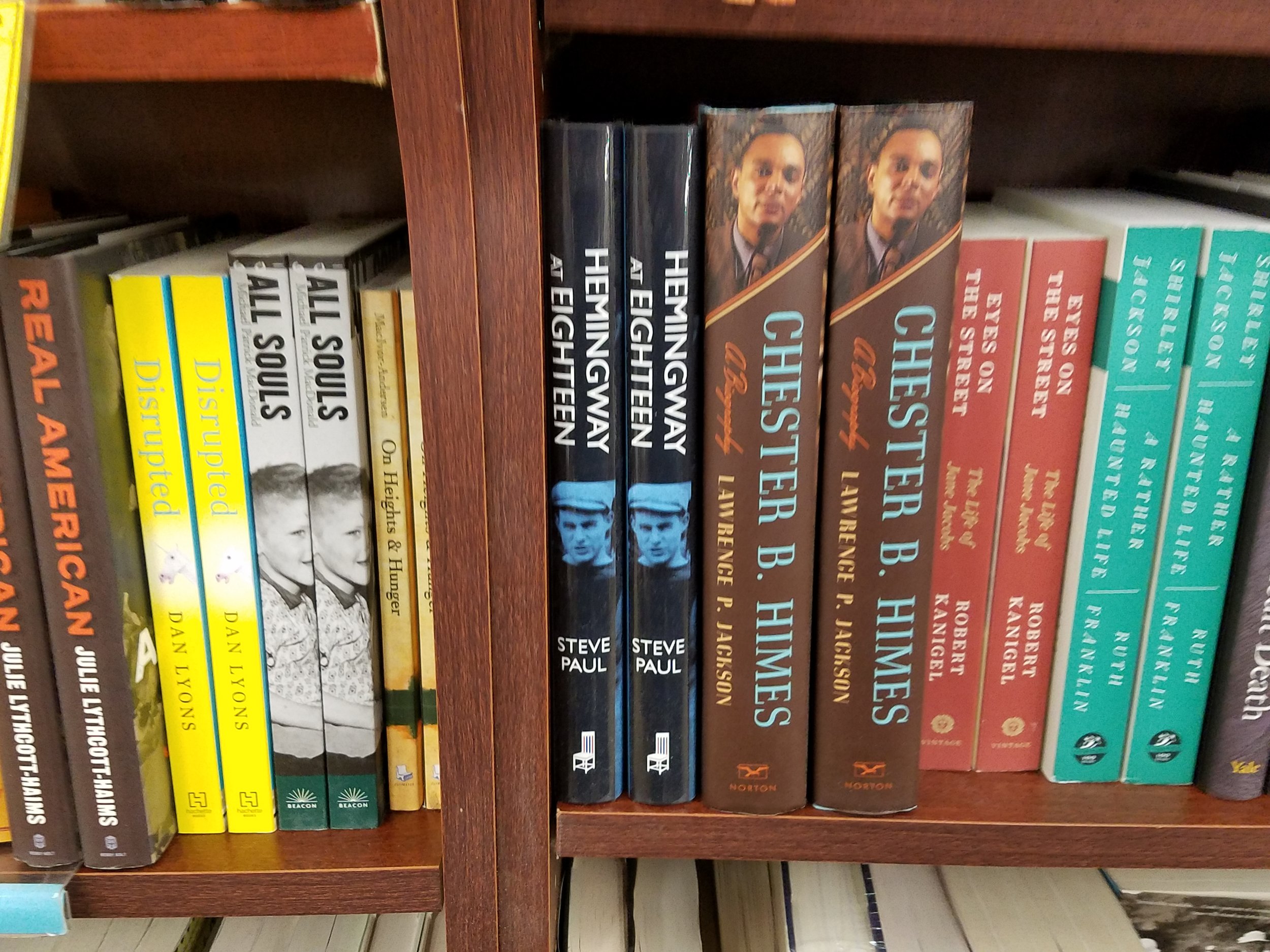
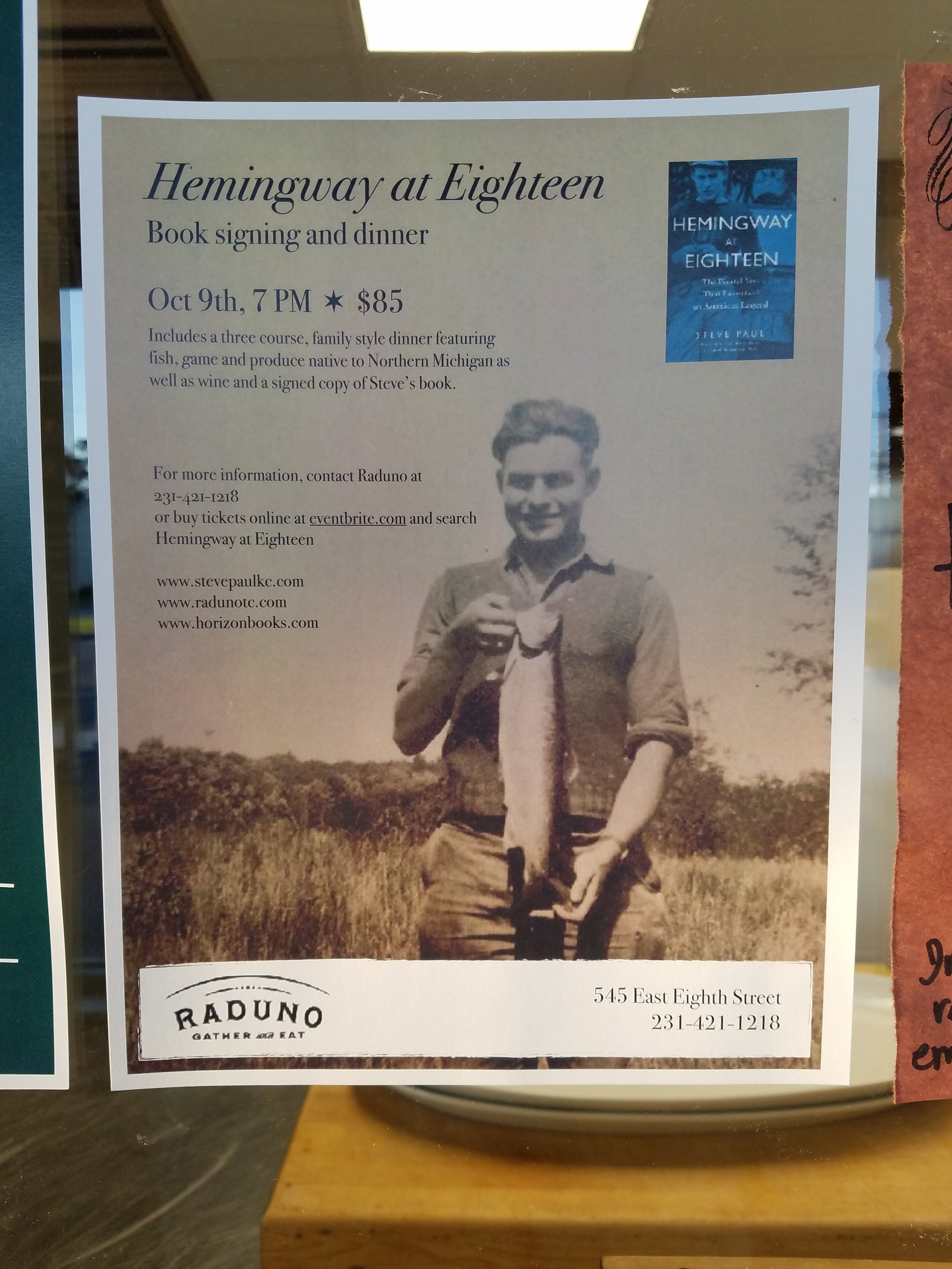
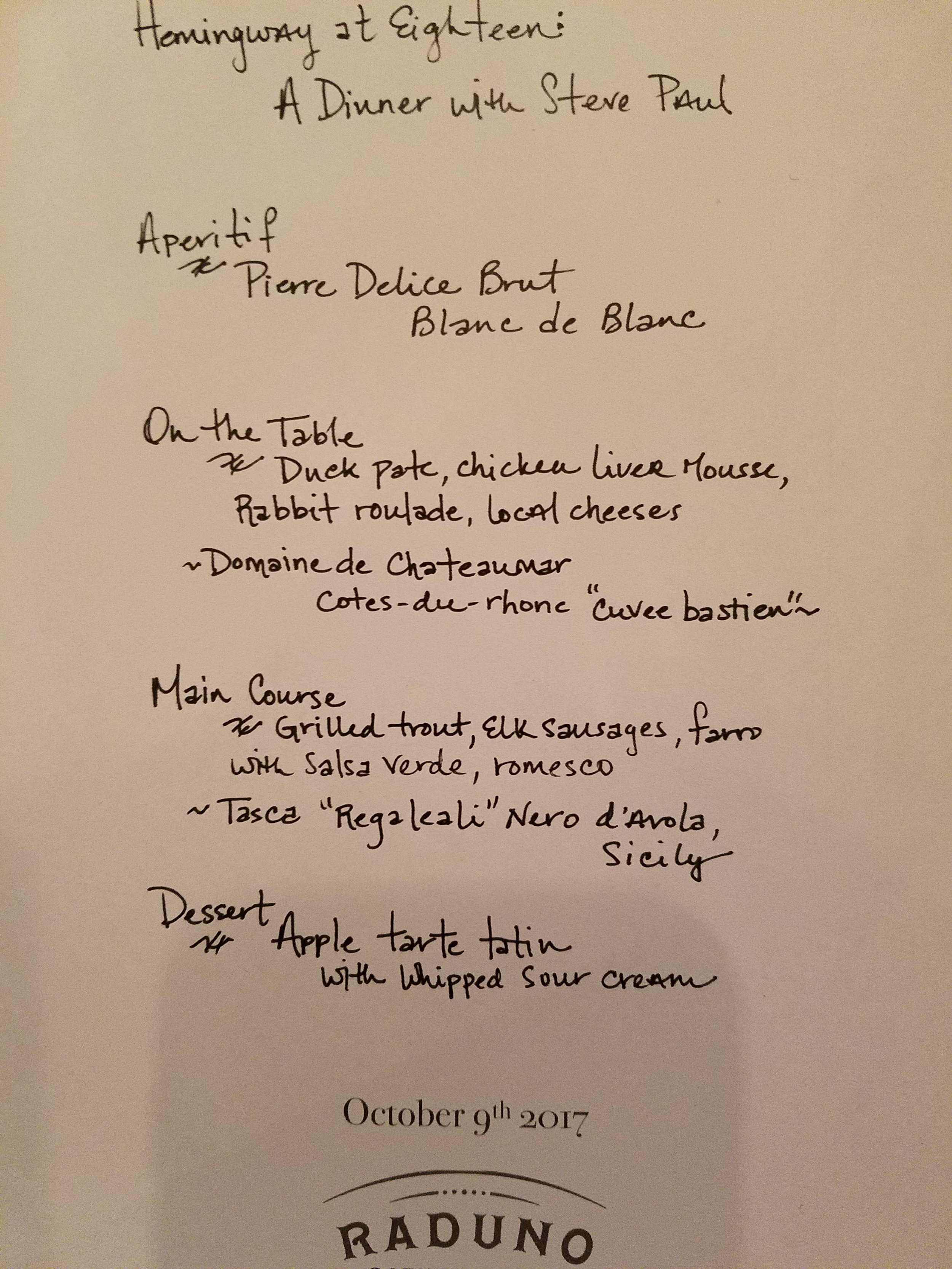
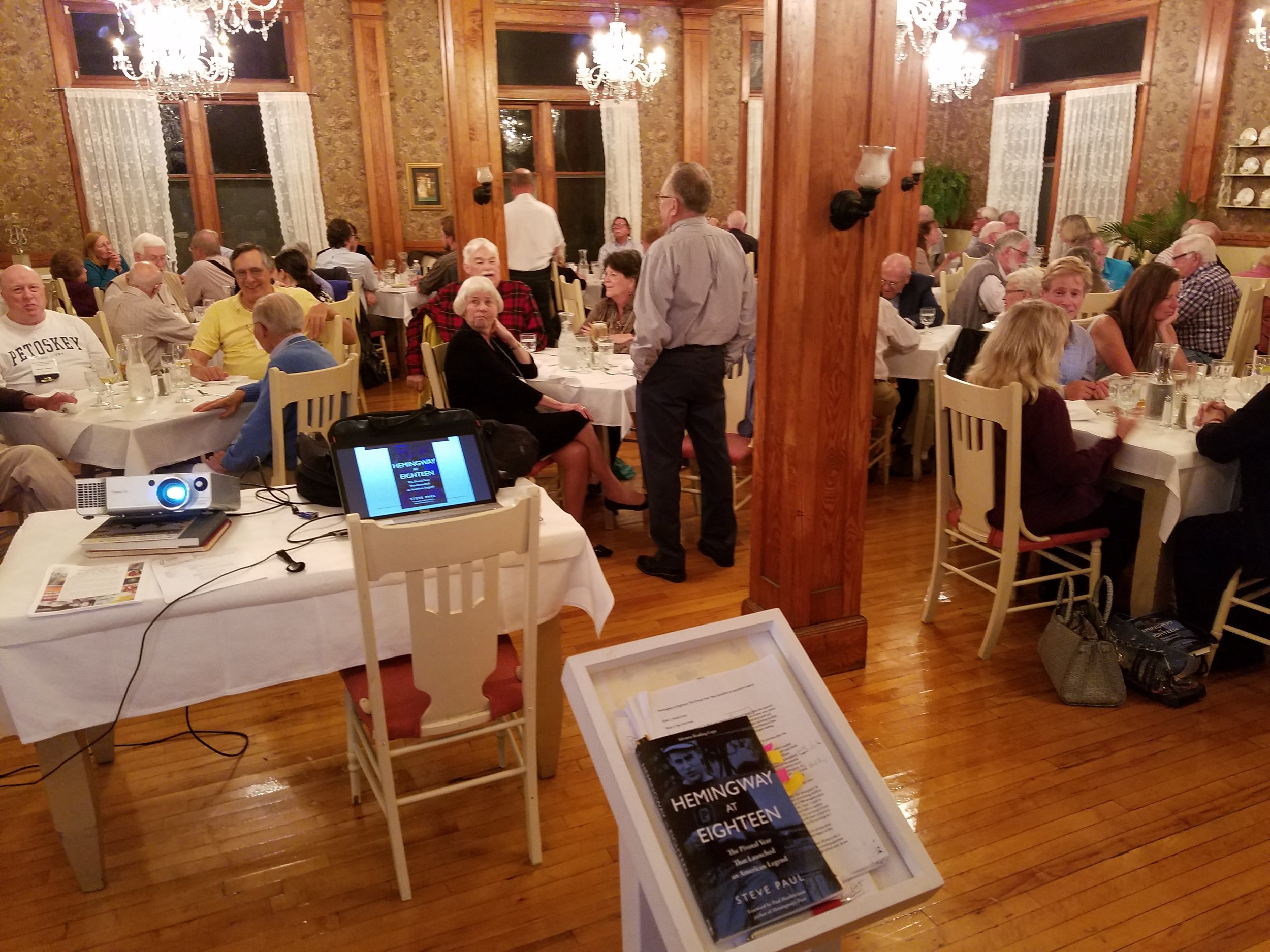
How much of this needs to be remembered? Two Kansas City kickoffs, one private, one public, that felt good and memorable. The bookstores – from Wichita to Petoskey, Mich., to my old home town of Newton, Mass. -- with appreciative audiences and book buyers standing in line for a signature. Or the one in Atlanta that barely remembered I was coming and failed to turn out a single customer. The Hemingway people in his northern Michigan landscape – they are always faithful and generous. A lovely dinner, with a Hemingway-inspired menu (trout, rabbit and other delights at my friend’s new restaurant) in Traverse City. An auditorium full of inquisitive teens in Hemingway’s own high school (Oak Park, Ill.), and a library slide show in his home town, now poignant, because my editor was in that audience and – five months later – she has succumbed to her publishing house’s downsizing. Momentary thought: Did my book do her in?
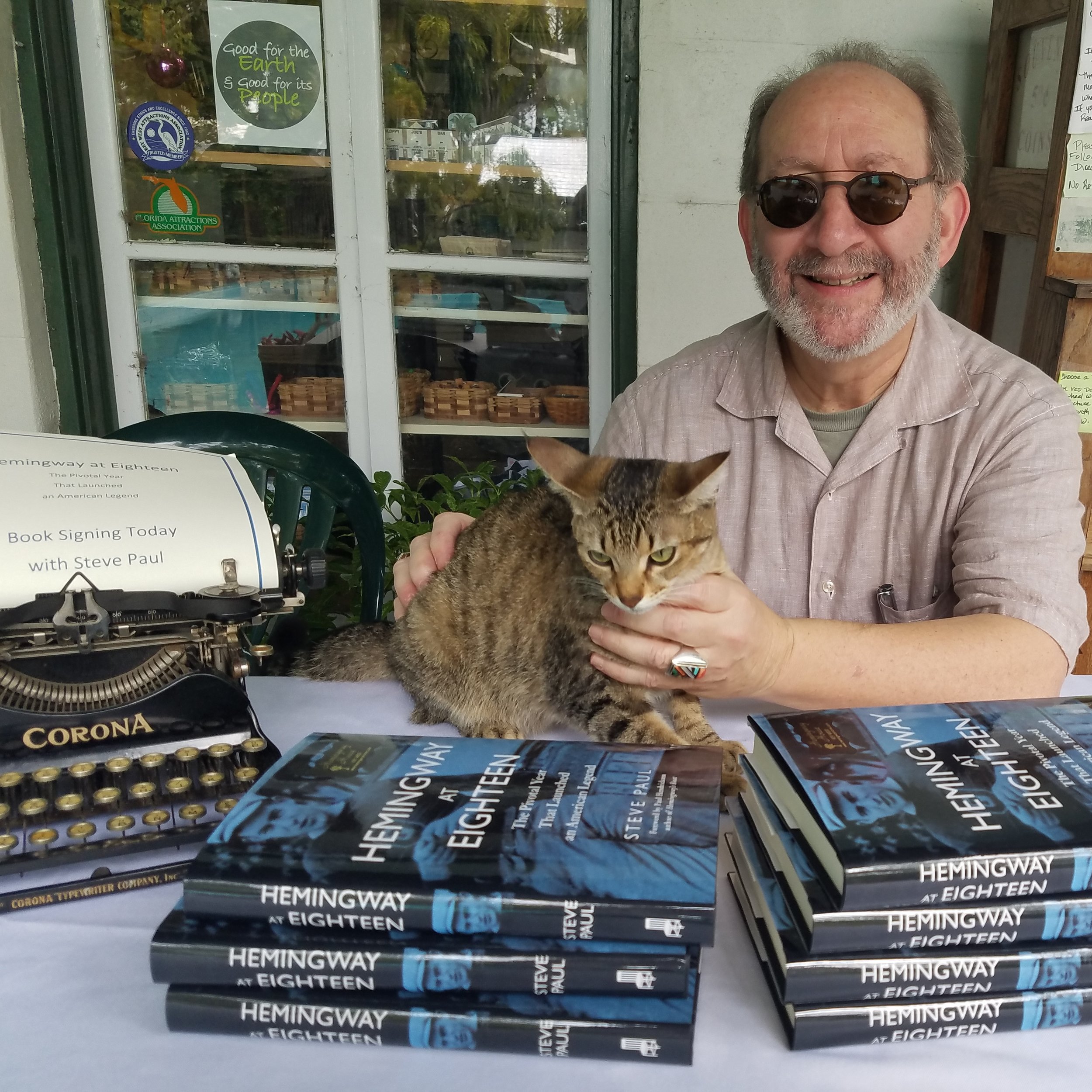
I was grateful for the literary conversation with Jeff Martin in a little Tulsa dive bar and for the people who showed up and bought the book there. At the Hemingway House and Museum in Key West, I hung out poolside with the damn cats, and while stationed at my book table I got to hear five or six tour guides tell the story of the pool and the penny embedded in the patio mortar – actually each delivered a different version of the tale, which generally pits the wandering Hemingway against wife No. 2, Pauline, or vice versa. Although the Atlanta bookstore was a bust, a friend there corralled me into meeting with her middle school journalism students, and I also gave a paper, partly related to my book, in a Hemingway session at the South Atlantic Modern Language Association conference. Two peak experiences, with capacity crowds wound up streaming online: They were joint appearances, actually moderated conversations, with another author, James McGrath Morris, at the John F. Kennedy Presidential Library in Boston and the National World War I Museum in KC. Both were very well received.
Now, in the spring of 2018, my book has been out about six months. It has won two local book awards. I’m still doing occasional small events in town and filling in the summer calendar with events here and elsewhere. Review attention has been disappointingly slight, though most of the published reviews have been favorable and relatively enthusiastic, and another one popped up just recently. Without going into detail, I think I should feel pretty good that, according to my first royalty report, I earned back my advance in the book’s first three months on the market. Hoohah.
I continue to work on Hemingway. A forthcoming paper, for delivery at the American Literature Association conference in San Francisco and the biennial Hemingway Society conference in Paris this summer, finds me sniffing around his relationship with, ahem, wine.
But I am deeply involved in researching a biography of another writer (more on that down the road), so I thought it was time to perform this little recap. It’s mostly an excuse to show some travelogue photos of the book-tour grind on the road.
In Memoriam: Michelle Boisseau
This is a belatedly posted excerpt from a piece I wrote for KC Studio magazine. It first appeared online in December 2017 and in the Jan-Feb 2018 issue of the local arts journal.
Cancer had taken two siblings prematurely as well as her mother, and then, in mid-November, it took her, at the age of 62. But through it all, Michelle aimed the laser focus of her poet’s eye and the wisdom of her philosopher’s heart to carry her — and her inner circle of family and friends — through.
In fact, a predominant theme of her most recent book was how we face mortality. “You can’t talk// your way out of this impasse, said the crows,” she wrote in “Among the Gorgons,” her most recent collection of poems. She called this spiraling life we all engage in, the life that always takes us to death, “The Obstinate Comedy.” Just like her, she might have found the phrase in the work of Leigh Hunt, a London poet and critic of the 19th century known for his association with Keats and Shelley. But the places her poem takes you — “ahead of me something was// taking up all the space”; “each tree a history of flying in place” — are singularly hers, alive with balletic language, and now ours.
To read the whole thing:
http://kcstudio.org/remembering-michelle-boisseau-legacy-language/
One More Time Among the Folk
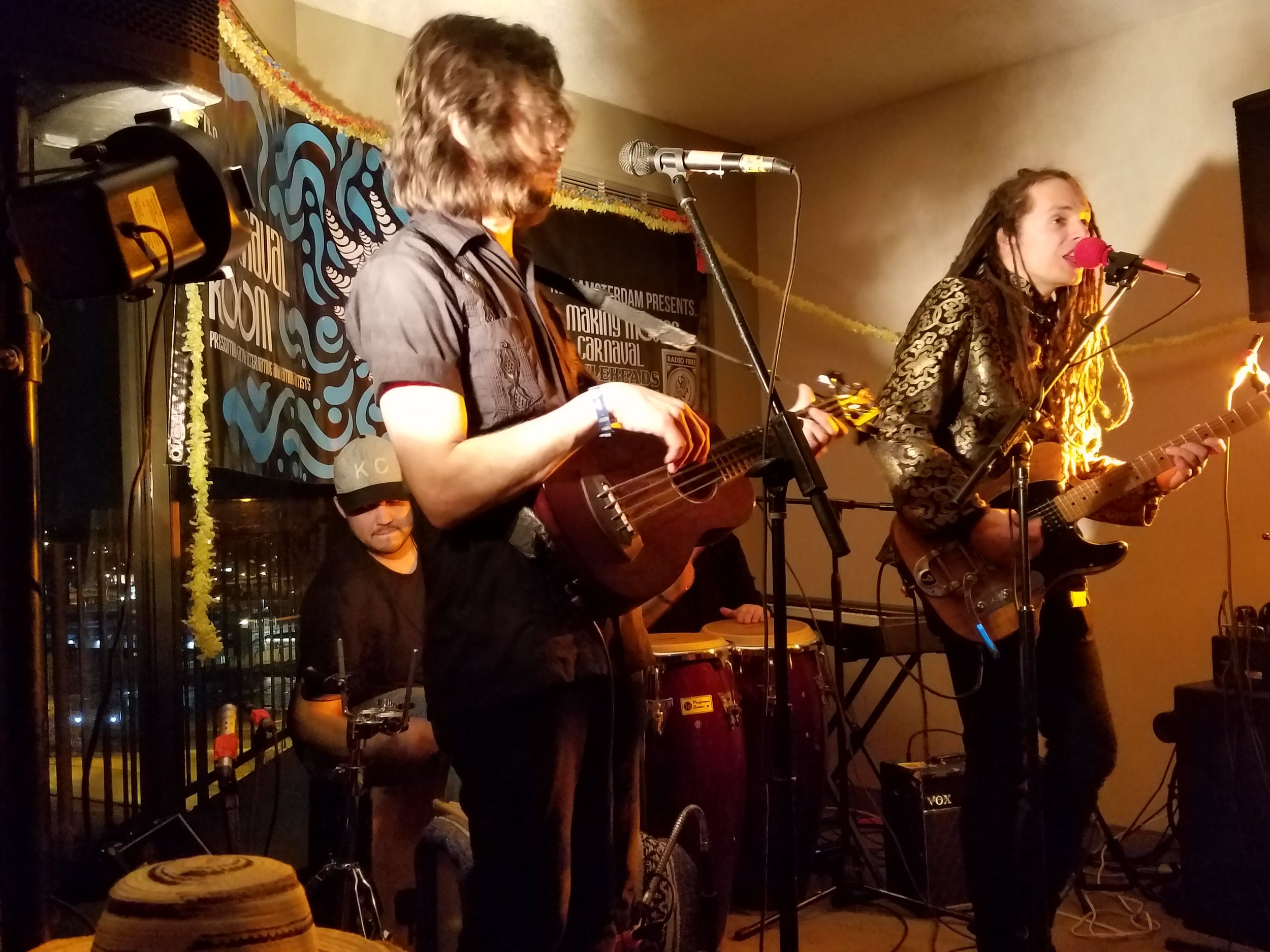
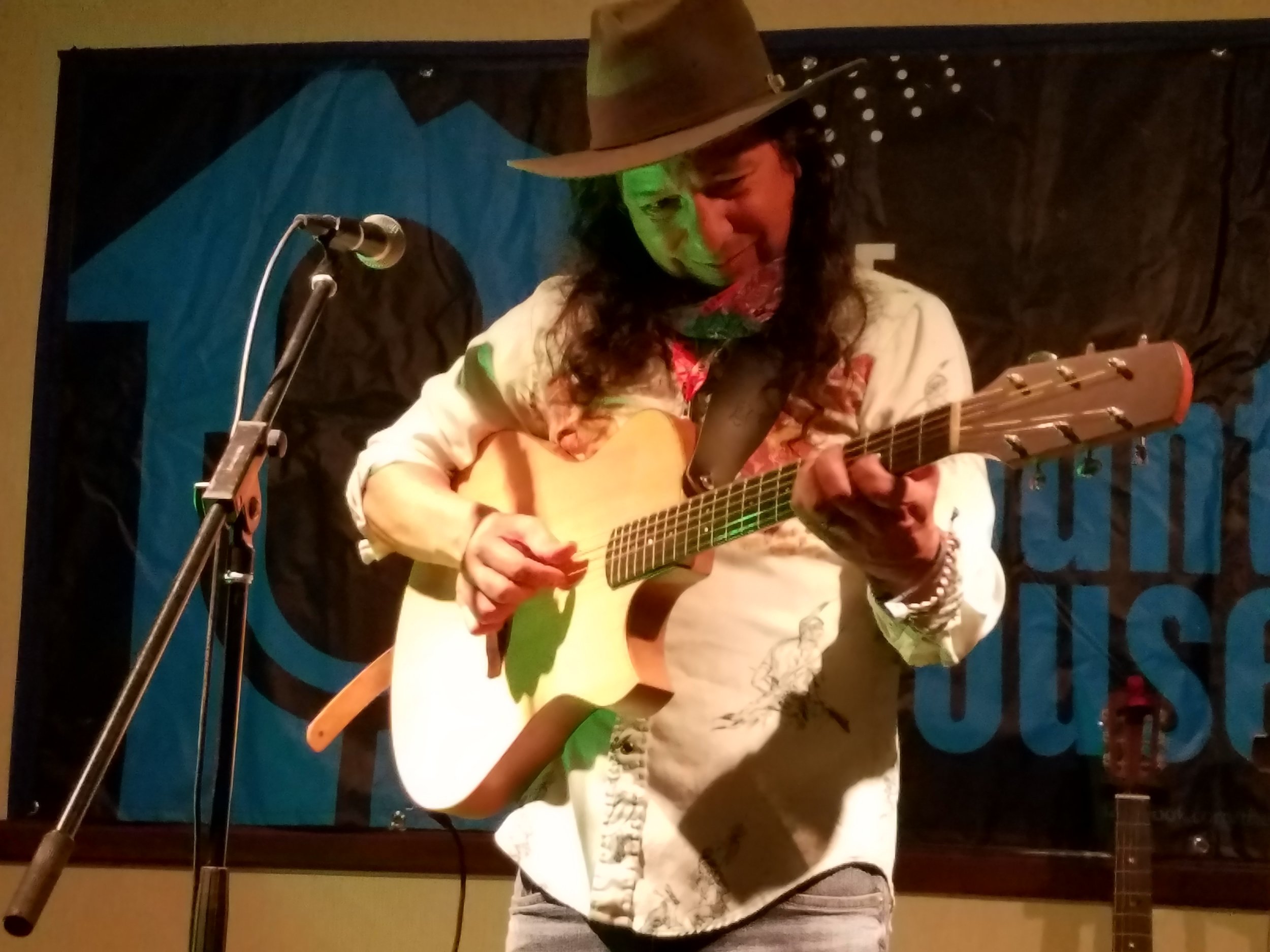
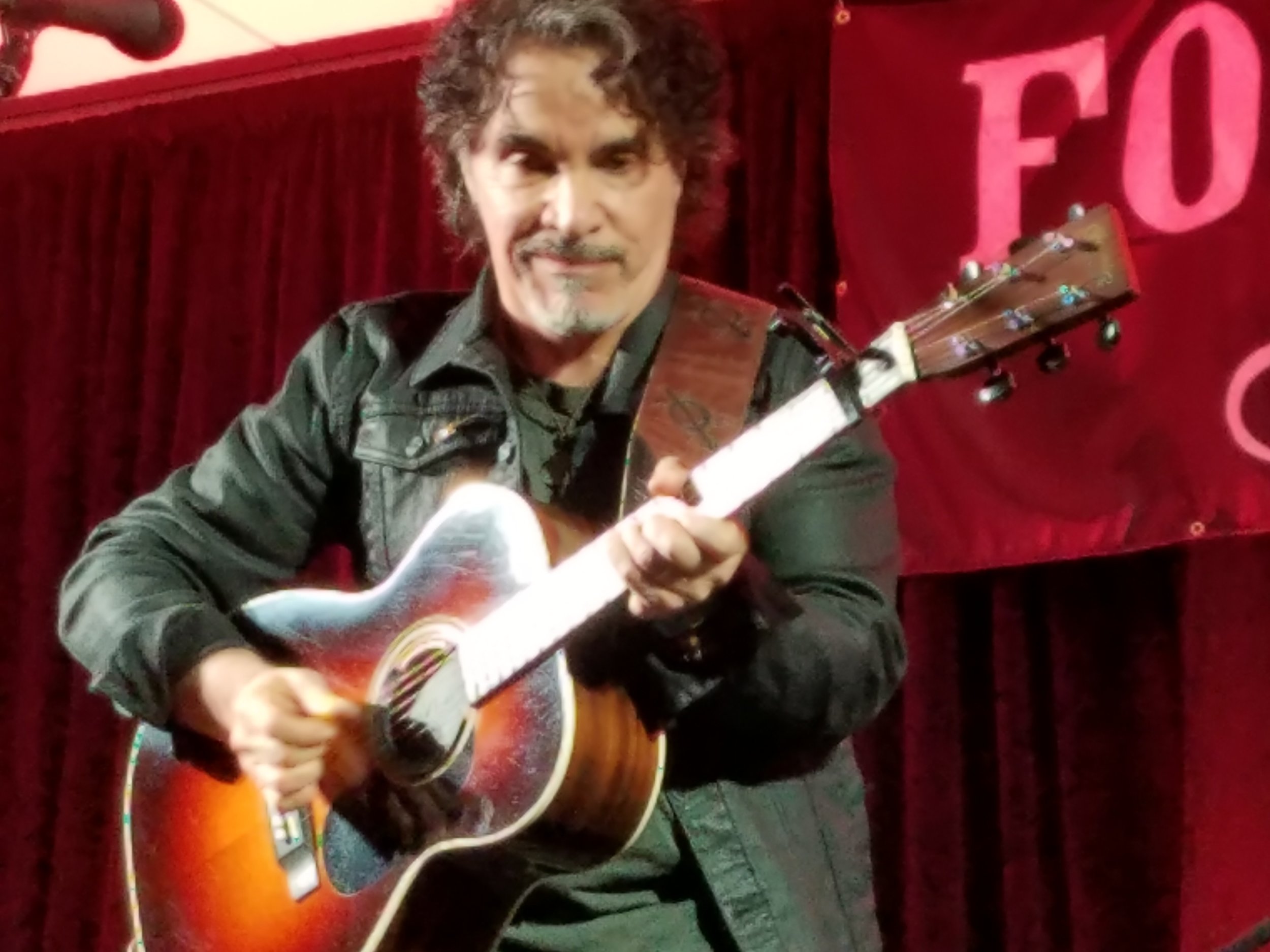
Photo captions (all photos by me; l to r): Nathalie Pires with Ensemble Iberica; Making Movies; David Amram and Tireka Dean, grand-daughter of Lead Belly; Cary Morin; John Oates; Grant Lee Phillips; Missy Raines and the New Hip; Mary Gauthier; the Stray Birds; Rad Lorkovic; Madisen Ward and Mama Bear; Sam Baker; John Gorka; Jorma Kaukonen.
By Steve Paul
Over most of four days, the music flowed through my brain. The Folk Alliance International conference had set down anchor in Kansas City for the fifth year in a row, offering its carnival of music, professional development, networking and late-night jams. As a disciple of the folk-revival of the 1960s and a mostly failed acoustic guitarist, I still find great pleasure in the ringing sounds of strings and the stirring power of song.
So I cleared the decks and went off-grid into this hotel world of music for 12 or 14 hours a day. From lobby buskers to crowded showcase concerts in tiny hotel rooms, the music, as usual was everywhere.
The finger-picking was glorious. Jorma Kaukonen paid homage to the likes of Jesse Fuller and Blind Blake in a solo set one night. I was surprised to learn that the venerable John Oates has a new record devoted at least in part to the music of Mississippi John Hurt, even though it’s called “Arkansas” and unfolds in the hands of a full-fledged band of rockers. (I posted a couple of videos on my YouTube channel.) Cary Morin, a Colorado singer-songwriter-super-guitarist I’ve gotten to know, continues to amaze. And there was an endless supply of kids on the rise and in the hunt for ears, bookings, a record deal, elusive fame.
A tribute session to the late Jimmy LaFave brought a bunch of tears (buckets of rain?). He’d become a favorite of mine in the four previous Folk Alliance gatherings in Kansas City, and I was sorry, like everyone else, to learn that he’d died last summer way too young of a rare cancer. A great songwriter himself, LaFave was also known as a consummate interpreter, especially his covers of Bob Dylan (see "Queen Jane Approximately" and many more). Gretchen Peters, a Nashville songwriter, noted how she’d written a couple of songs that he possessed so completely they became his in the public consciousness. Here’s a Jimmy LaFave song that I wrote, she’d have to say. He once told her that her “On a Bus to St. Cloud” was the greatest song he’d ever heard. (Trisha Yearwood also made great hay with it years ago, so some people think it's hers, too.) I will testify that it’s pretty damn good, and hearing Peters sing it, especially on a stage full of Jimmy LaFave’s friends, was unforgettable.
Mary Gauthier is a much-lauded songwriter with a good handful of records. Her latest CD, “Rifles and Rosary Beards,” just out in January, is a stunning project that channels the voices of military veterans. Co-written with veterans participating in a long-running program, the songs crawl inside experiences of trauma, violence, depression and heartbreak. Gauthier confessed her own surprise as a self-described liberal lesbian hanging around with the military, but, of course, she convincingly sang several of the songs. Check out that record. Soul-stirring.
Another Folk Alliance highlight was the screening of a new movie, “American Folk.” I knew little about the project, but was quickly seduced by its quiet charms. The story: two young musicians meet on a plane. They’re heading from Los Angeles to New York, but, inexplicably, their aircraft turns around and lands back in L.A. It’s Sept. 11, 2001. The horror is depicted subtly, glancingly, but it remains wrenching all these years later. Long story short, he and she (played by singer/songwriters Amber Rubarth and Joe Purdy) borrow an old Chevy van and drive across the country to get to New York. It’s a slow journey that introduces them to numerous human experiences. The gist: the power of music to bring people together. Yes, it’s simple, but very well done. The silences and the intimate camera work are first rate and effective. The movie apparently is streamable here and there.
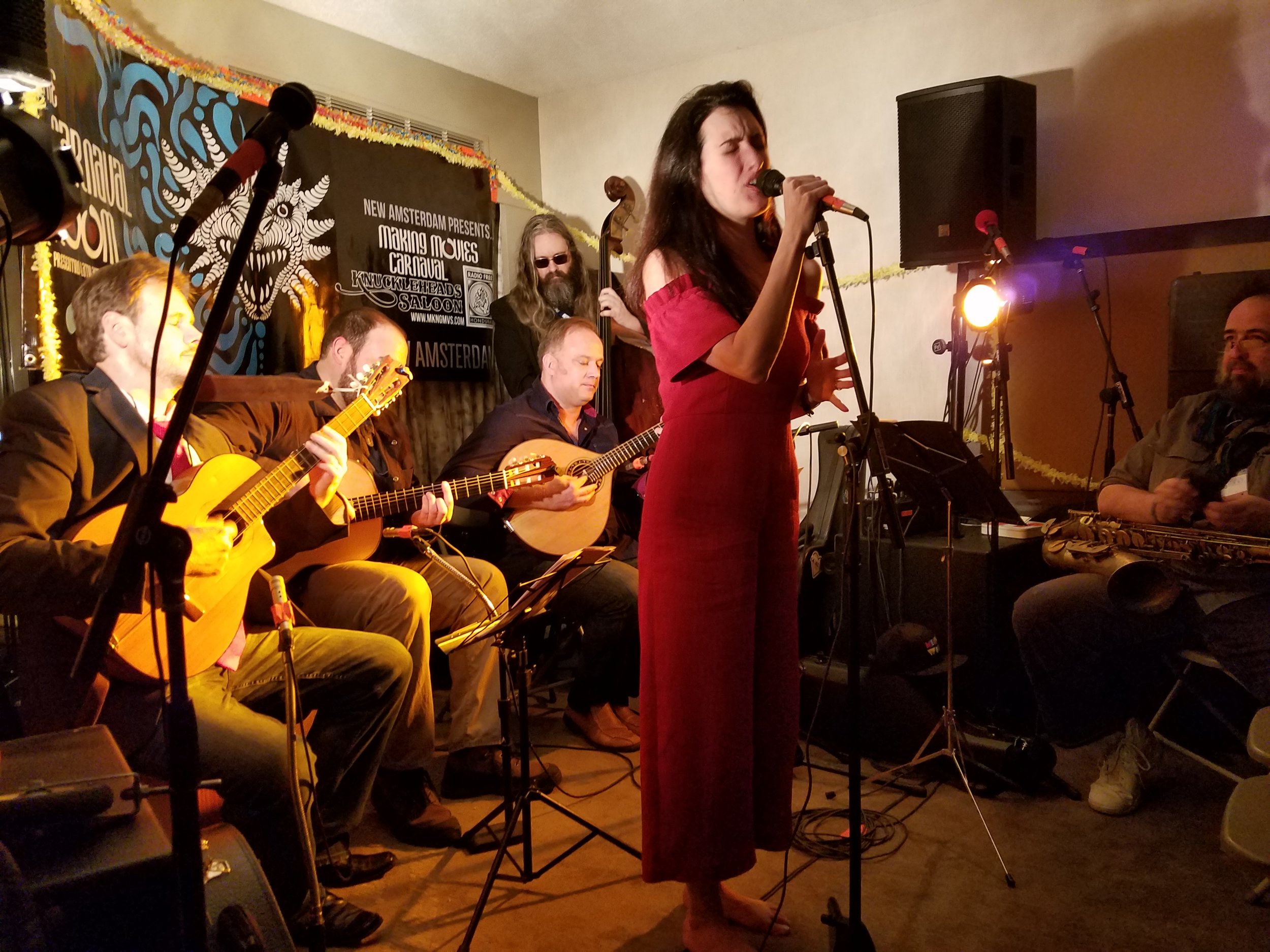
My Kansas City friends were all over the place and put on a Saturday night shindig amid the Westin Crown Center’s cornucopia of hotel-room magic. In various settings Beau Bledsoe and his Ensemble Iberica presented two visiting and extraordinary vocalists: the incomparable fadoista Nathalie Pires and Mireya Ramos, the Latina singer and violinist. But hail also to the effervescent Victor & Penny; Betse Ellis and Clarke Wyatt, who have joined up with a fiddle-guitar duo from St. Louis to perform as the Short Round Stringband; the high-octane Making Movies; the harpist/singer Calvin Arsenia; and Michael McClintock and his Cubanisms band.
The list goes on. And every Folk Alliance attendee can tell you about hearing again from old favorites (hello, Stray Birds, Carrie Elkin, Rad Lorkovic, Sam Baker) and discovering new talents (hmm: Emerald Rae, a classically trained Boston fiddler and singer who combines traditional sounds with ultra-modern impulses).
After five years in Kansas City, Folk Alliance moves on for a couple of years, but it’ll be back. With its headquarters and a daylong folk festival remaining in KC, the conference heads to Montreal in 2019, then a mystery city, then three out of the next four years in Kansas City again (that's 2021, 2022, 2024). Hearing that news was music to my ears.
Just a few days later I took a listen to a double CD I’d bought at the conference, a new release from Smithsonian Folkways Records. It’s a compilation of tracks by singer-guitarist Barbara Dane, called “Hot Jazz, Cool Blues, and Hard-Hitting Songs.”
Now, as I mentioned above, I wasn’t too far behind the leading edge of the folk revival of the 1950s and ‘60s. I saw Pete Seeger, the Staples Singers, Buddy Guy and Janis Ian (!) as early as 1965. Like everybody else, I learned how to play “The House of the Rising Sun” on my guitar, and moved on to finger-picking tunes by Mississippi John Hurt and Elizabeth Cotten. I was there for the rise of Judy Collins, Tom Rush, Joni Mitchell, Richie Havens, Eric Anderson, the Jim Kweskin Jug Band, Dylan, of course, and so many more. So, for the life of me, I can’t remember how I missed Barbara Dane. If I ever encountered her music way back when, the memory is completely erased.
But now, thanks to this project, I’m up to speed with the fiery folk singer. She’s still with us, at 90, and this collection includes some rare recordings that had never been released before. She comes across as something of a chameleon, with a copper-toned alto that seems comfortable spanning styles and cultures, an aching blues here (sounding not a little like Bessie Smith), a jazz-inflected ballad there, or a boisterous worker’s anthem alongside Seeger himself. She represented the voices of working people, truck-driving women, the disenfranchised, the folks looking up at the one-percenters and wondering how they’d get a piece of that.
Dane's personal story is fascinating, and apparently she’s working on a memoir. She came out of Detroit in the 1940s, “a young, white girl taught to walk and talk with Jesus” and wound up befriending and collaborating with the likes of Lenny Bruce, Louis Armstrong and Count Basie and marching for peace and justice. As she writes in the liner notes, “I hope you notice that it is possible to speak your mind in pursuit of that world and still survive. You may lose a few chances for fame and even fortune, but you will gain a priceless dignity and a seat on the train of humanity with destination justice.” She ran a blues club in San Francisco’s North Beach and a record company in the 1970s, whose output was later absorbed by Smithsonian Folkways.
So many of the songs in this package resonate. The historical context is one thing, but the power to speak to today is another. Dane sings Woody Guthrie’s “Deportees,” a landmark lyric based on a true story about the fatal crash of a plane filled with Mexican farm workers; Bob Dylan’s “Only a Pawn in Their Game” (about the assassination of Medgar Evers); James Taylor’s “Mill Work” and a whole host of classic, sometimes bawdy blues tunes. The recordings span some 60 years of passion. I’m glad I found it and thus filled in another deep gap in my musical education.
From the Archives: Checking Out of Reality TV and Into a Folk Alliance Weekend
The Folk Alliance International conference is coming up again in Kansas City. For four glorious days in February I plan to immerse myself in a mind-blowing kaleidoscope of musical experiences. This will be the fifth and last (for now) KC conference, and I can hardly wait. I was poking around in search for something this morning when I came across the following, a quasi-political column that I wrote on the verge of Folk Alliance in 2016 and as that horrendous presidential campaign year was unfolding. I don't think I knew at the time that I'd be retiring just a month or so later. This column first appeared at kansascity.com and The Kansas City Star on Feb. 19-20, 2016. Sorry if it takes you back to a scary place.
"Steve Paul: To quote a sage, this land is your land"
By the time you read this I expect to be in the midst of a lost weekend. Yes, I suffer from an uncontrollable addiction — to music — a condition that has been exacerbated by the annual influx of song slingers and guitar players who gather at the Crown Center hotels in Kansas City for the Folk Alliance International conference.
I’ll spare you some of the high points of lyrical heartbreak, dextrous finger-picking and free-form, nocturnal goings-on of the “folk tribe” to which I pay tribute.
But I will thank the organizers for providing a timely and immersive break from that other tribal ritual consuming so much air space these days. Most of the music-making has taken place out of range of any 24/7 news coverage of the presidential campaign, and I’m happy even to give up glancing at my Twitter feed for at least an hour or two at a time.
That’s not to say this presidential campaign has unfolded without a certain entertainment value. But, Donald Trump in a pissing match with the pope? Who could have seen that coming?
Speaking of torture, the results from two more contests will be flowing into our screens this weekend. It has been difficult to sense any shift from recent trends in momentum, which has the leading candidates of both parties locked in unexpectedly close and death-to-the-finish battles.
If we’re lucky, the Republicans could lose a candidate or two after this weekend’s results. (When exactly will Ben Carson get the message that, aside from not having a clue, he doesn’t have a chance?)
As the GOP field narrows, it won’t be quite so easy for Trump to dominate in the race for committed convention delegates. With fewer candidates in the mix, runners up will have a better chance to reach voting thresholds (often 15 or 20 percent) that will allow them to land apportioned delegates.
So the acid-drenched battle, primarily between Ted Cruz and Marco Rubio, for second and even third place will mean more as the race churns through the Super Tuesday contests (March 1), Michigan (March 8) and a group of meaningful primaries in the middle of March.
Among the Democrats, it’s fair to ask the Hillary Clinton camp exactly when and where did they miss the signal that Bernie Sanders was riding forth on an express train.
Did anyone expect that Nevada, with its large Latino and union factions, would wind up neck and neck? It’s quite reasonable to suggest that Sanders’ message of income inequality resonates in a place that is so much defined by the haves and have nots and so largely populated by those who toil to serve the wealthy.
Clinton’s baggage remains heavy, though a majority of Democrats still view her as the party’s best chance to defeat whichever contorted Republican survives his party’s offensive demolition derby because, of course, no candidate is ever perfect and no politician is ever an angel.
Sanders’ appeal to the idealism and rebellion of youth (and many of their feel-the-Bern elders) will be a strong storyline when the history of this presidential campaign is written. So will the utterly surreal and weirdly American story of Trump, no matter what happens in the coming months.
I’m looking forward to dropping out for a couple of days. It might feel something like having a real life, not a constant loop of polling updates, attack ads, verbal inanities and solemn dissection of all of the above. I’ll miss the Sunday morning shows. I’ll take the news in small doses.
Maybe I will think a bit about Nevada this weekend, given that I’ll be holed up inside a hotel where time will stand still and machinations of the outside world will hardly penetrate. Just like Vegas, that is. But for this weekend at least I’m hanging my hat with the music makers. And if there’s any justice in this world, they are the ones who will inherit the earth.
In Key West, Exploring the Many Alluring Worlds of Caribbean Writers
An uncanny bit of synchronicity lit a fuse underneath the recent Key West Literary Seminar. The seminar, devoted this year to “Writers of the Caribbean,” kicked off in early January on the very day that Washington D.C. fell victim to reports that the alleged leader of the free world had disparaged various brown-skinned homelands as “shithole countries.” Edwidge Danticat, a New Yorker who writes frankly and plaintively of her native Haiti, addressed the matter head on from the seminar stage. The first words out of her mouth on a panel on “unpacking paradise” the next day: “I’m apparently from a shithole country … so we never had that paradise.” Others throughout the weekend echoed her disgust -- sometimes subtly or ironically, sometimes quite openly. But the subtext certainly heightened the seminar’s great opportunity, which for me was to discover a vibrant geography of literature with which I’d had far too little experience.
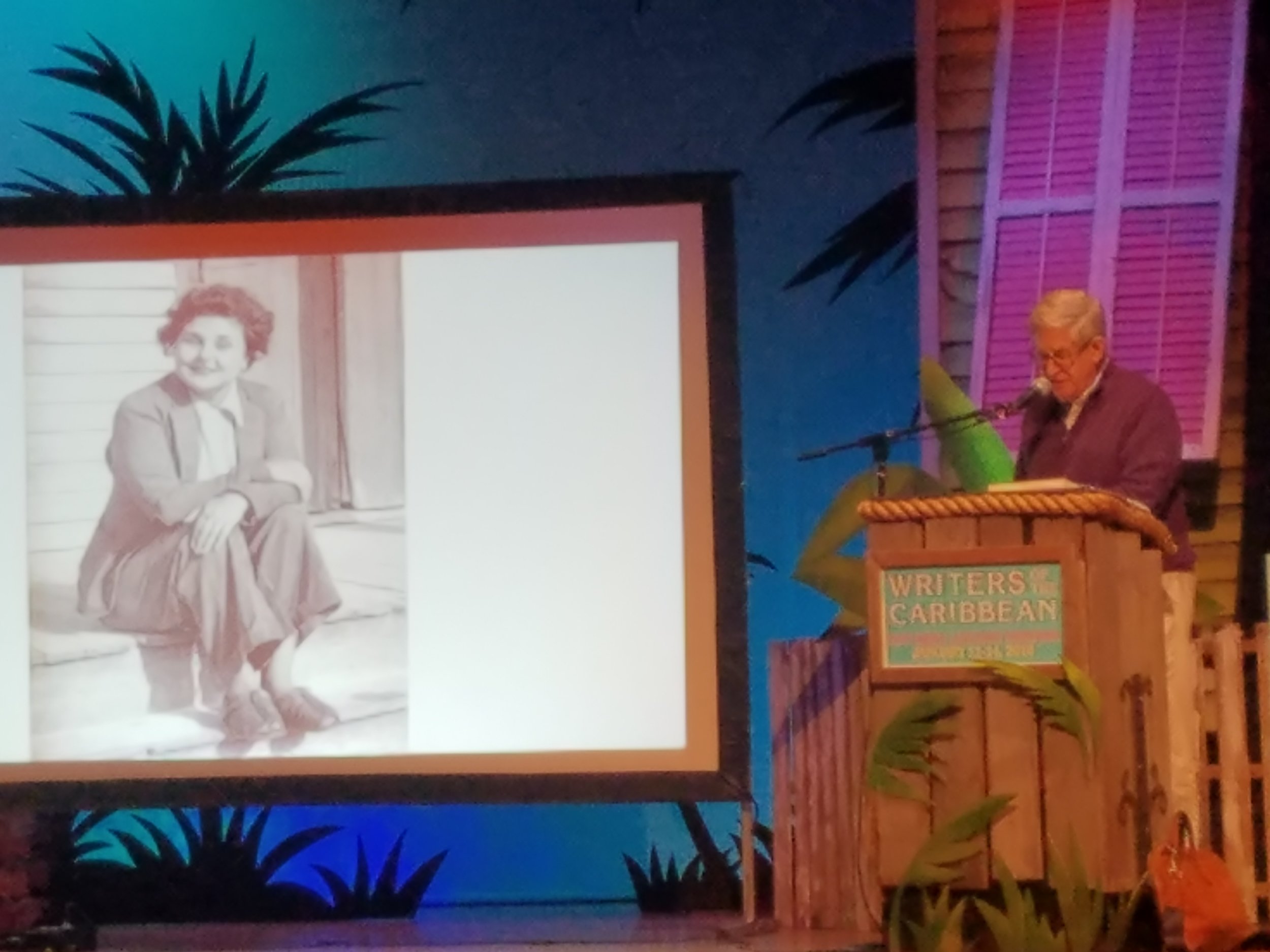
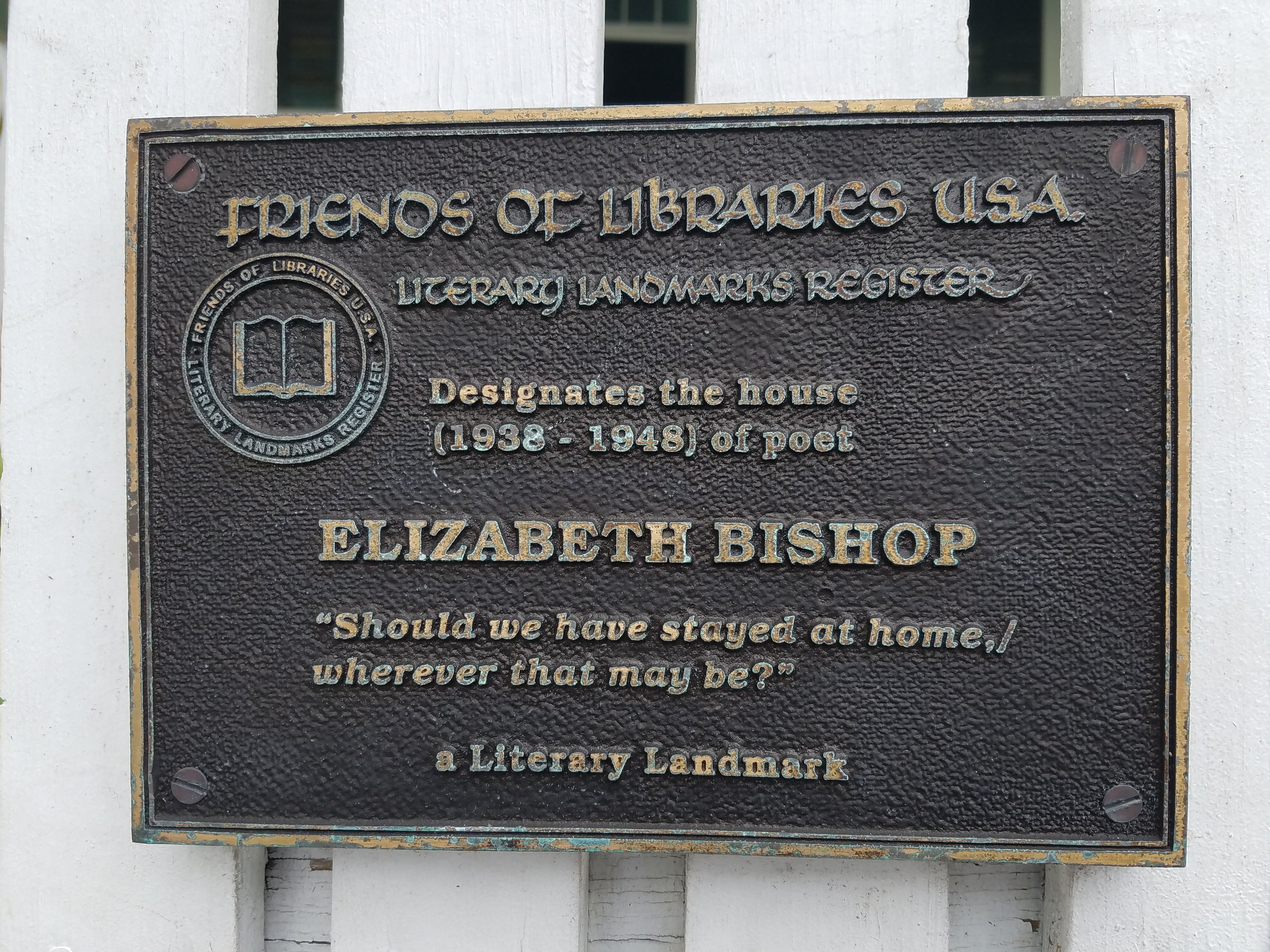
The spirit of Derek Walcott, the great poet from the island of St. Lucia who died last March, infused the seminar. Elizabeth Bishop, who lived in Key West in the 1930s and ‘40s, was cited frequently as well. I’d been reading some of Walcott’s long-line poems recently, and I flashed on my only personal encounter with him. It was 1999 in Boston – he was teaching at Boston University at the time – and he was one of the many global writers invited to speak and sometimes argue during an event commemorating Ernest Hemingway’s 100th birthday. Walcott was somewhat dismissive of the worst of Hemingway’s tendencies but gave him credit for infusing some of his prose with the sound of fine poetry. The examples he read, as I recall, were convincing.
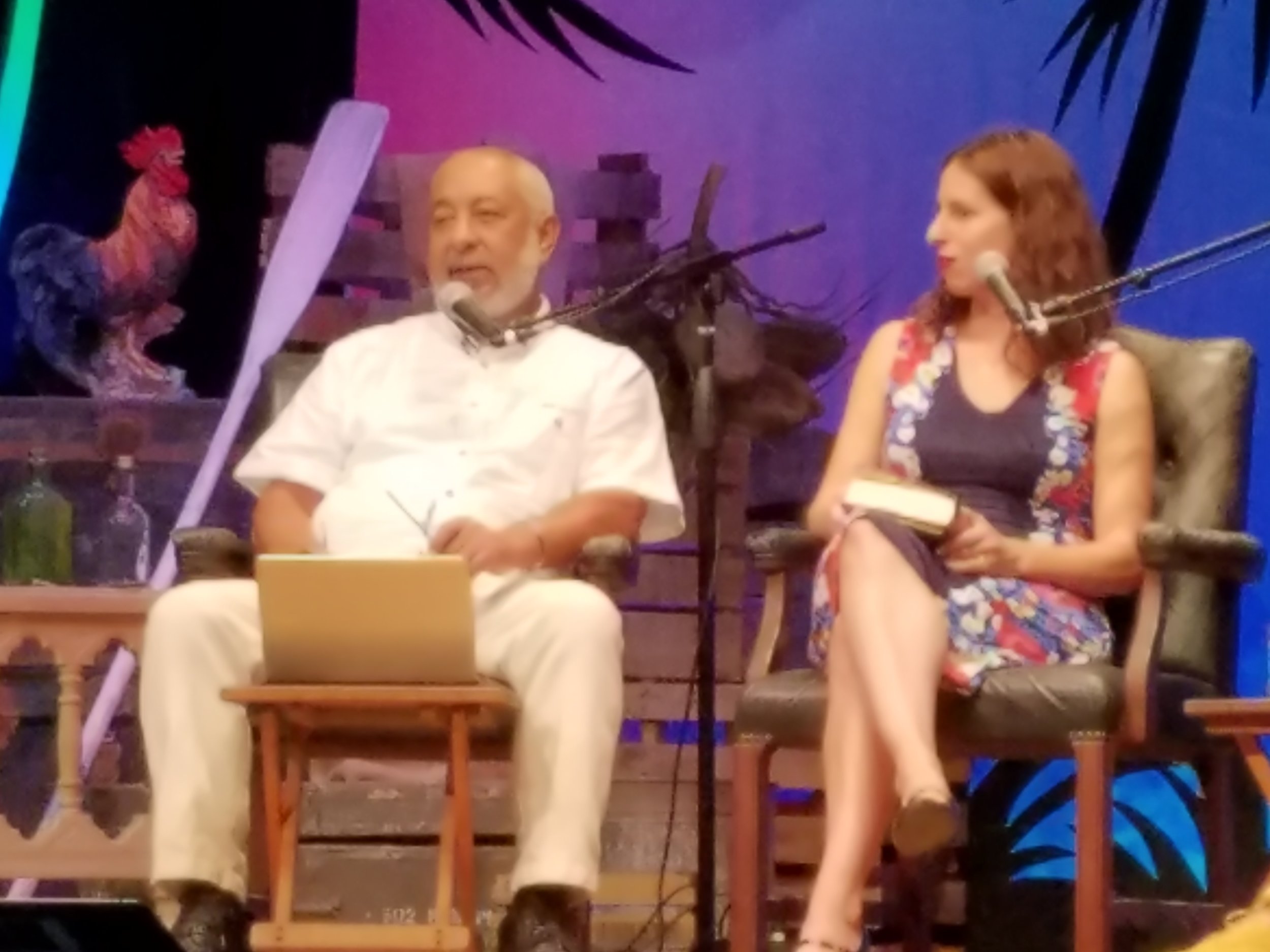
Hemingway’s name barely came up during this Key West seminar; I’m sure if it had, the writers who identify as Caribbean would not have been overly kind to the privileged American who made Cuba his home for two decades. Then again, the great Cuban writer Leonardo Padura, another big-name seminar participant, has acknowledged his debt to Hemingway. (In Cuba, he said, everyone wants to plagiarize Hemingway.) The outsized appetites of Padura’s recurring character, the police detective Mario Conde, certainly parallel Hemingway’s at times, though Padura’s prose, in its English translations, tends more towards lush expressionism, as if he were a painter with an overloaded brush, rather than Papa-style restraint. Padura still lives in Havana, where he manages to walk the fine artistic line that criticizes by slant and irony and thus allows him a certain protected status as well as the ability to publish outside Cuba. Nevertheless his account of the brutally unfair publishing system in Cuba was enlightening. A writer spends three years working on a novel and gets about $250 from a Cuban publisher, he said: “Being a writer in Cuba is practically an act of faith.” (The seminar happened to align with an art exhibit by the youngish Abel Barroso, a highly ironic and talented Cuban who also has earned the chance to show and sell overseas. We had met Barroso in his home during an art tour five years ago, and it was rewarding to see and hear him, during an opening event, surrounded by large and memorable pieces of his work.)
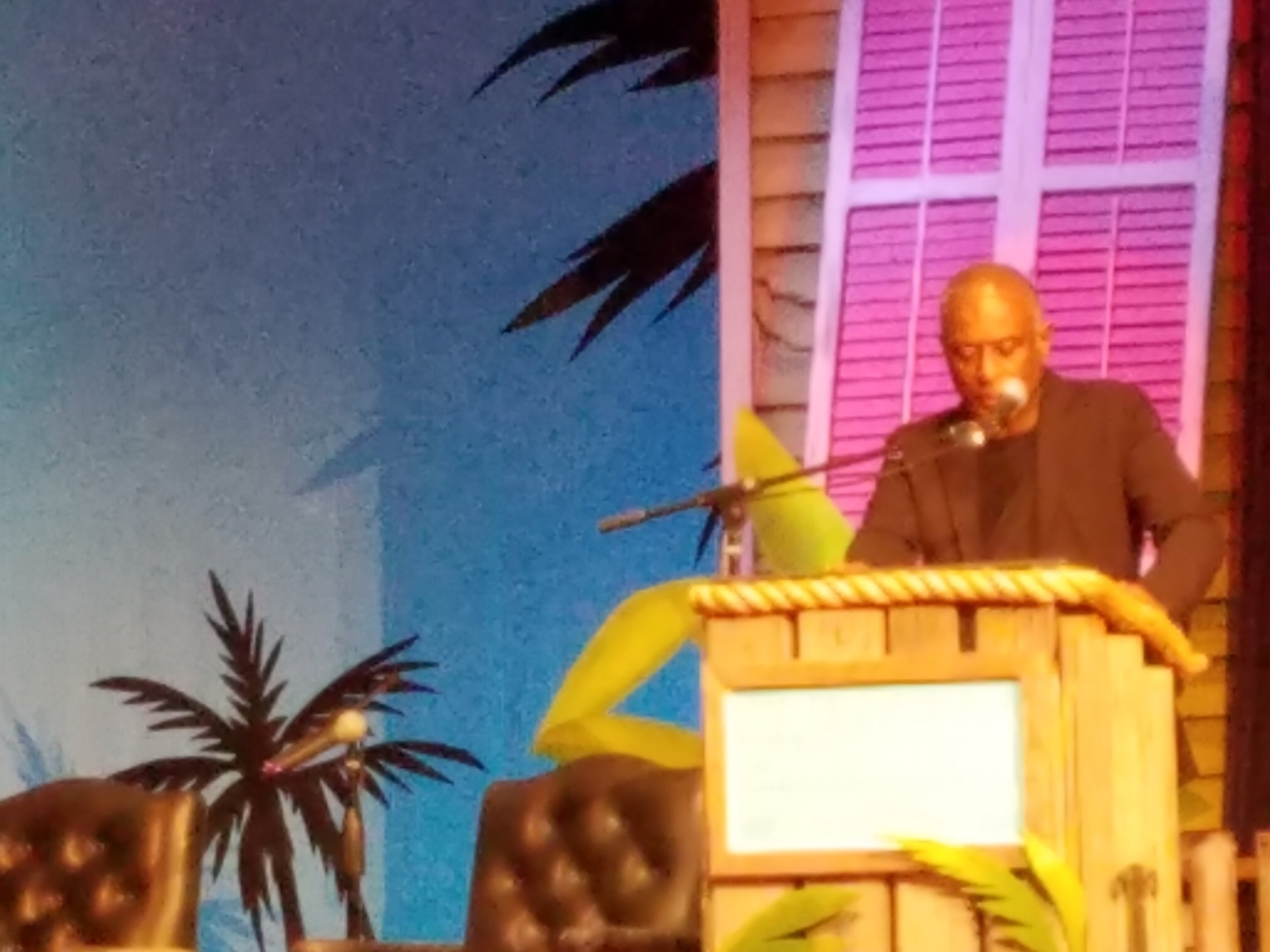
Caryl Phillips delivered one of the major highlights of the seminar when he read from a forthcoming novel, A View of the Empire at Sunset. In it, he imagines an episode from the life of the complicated writer Jean Rhys (Wide Sargasso Sea) as she returns to the island of Dominica, where she’d grown up before setting off for her Bohemian existence in London, Paris and elsewhere. Little is known about her six weeks on the ground there, which gave Phillips his opening for invention, he conceded. His excerpt was stunning, and I’m sure I was not the only listener planning to snatch the novel up when it comes out in May. Phillips, another displaced islander, also impressed with a keynote essay at one evening’s tribute to Walcott. Phillips spoke about Walcott’s early experience in New York, amidst the theater world in 1958-59. It was a period of mostly unhappiness. Walcott was largely alone, ignored by the literary elite and too disciplined for the Beat crowd, Phillips noted. He cut his fellowship short. “In New York,” Phillips said of Walcott, “by learning what he wasn’t, he learned what he was – a West Indian.” Phillips’s rather downbeat portrait prompted the publisher Jonathan Galassi to lament the next day that Phillips had left out Walcott’s later successes. Well, sure, but it bears reminding that true achievement often follows failure, and the status of a Caribbean outsider in New York’s high-brow white culture was a point not lost on the rest of us.
Jamaica Kincaid shared a typically circuitous essay on the subject of cultural appropriation. She began with an image of Dana Schutz's controversial painting of the embalmed mangled face of Emmett Till, and came down on the side of chilling-out about it. "All that we make belongs to all of us," Kincaid said. "The only thing we can't take from us is freedom."
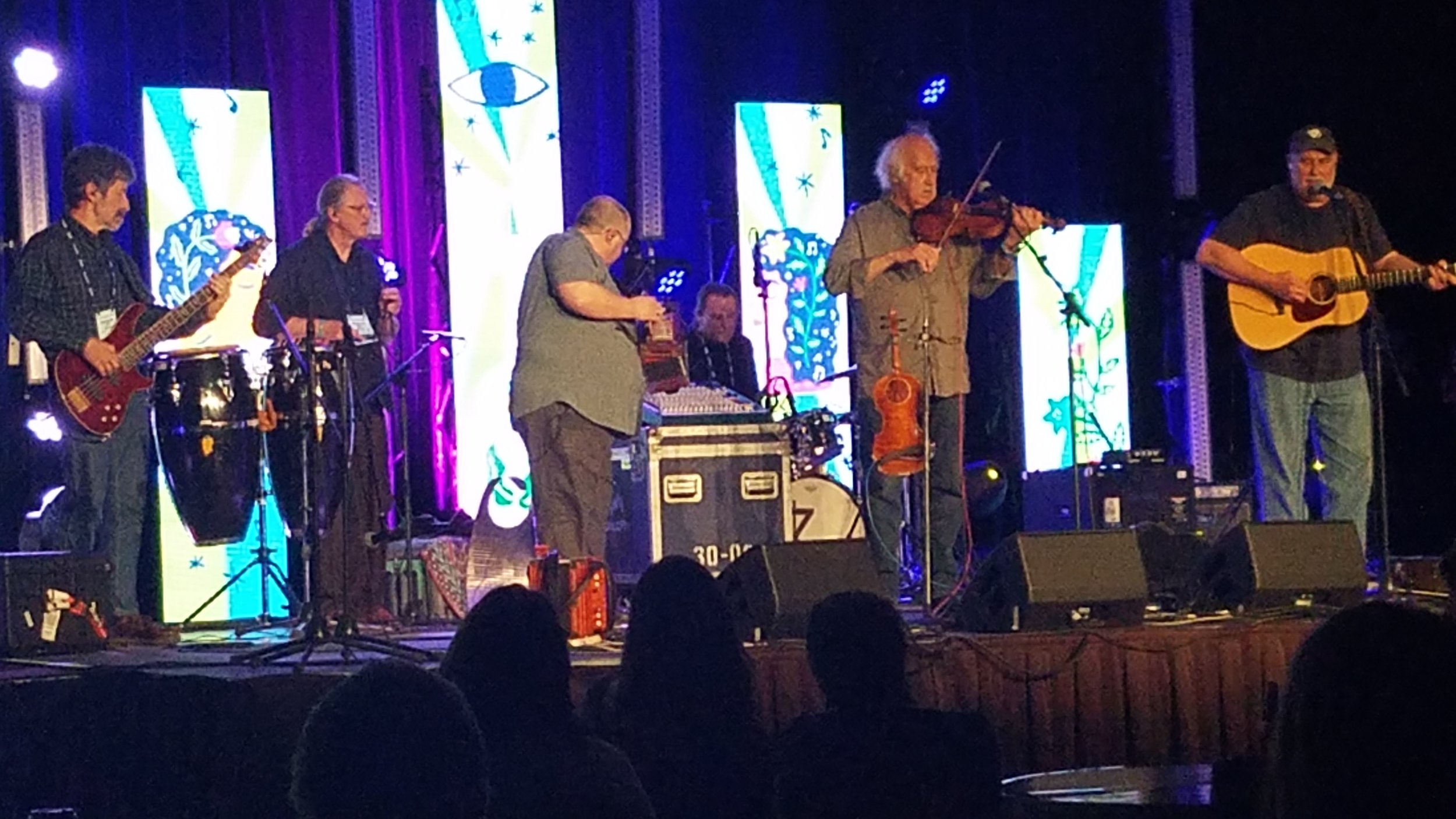
Along with the superstar presenters such as Phillips, Danticat, Padura, and Kincaid, the seminar gave voice to a slew of younger writers. I’d read Teju Cole (Open City and some of his writing on photography) and Marlon James’s A Brief History of Seven Killings, but had not yet encountered the likes of Rowan Ricardo Phillips, Kei Miller, Ishion Hutchinson (National Book Critics Circle winner in poetry for 2016), Nicole Dennis-Benn, Andre Alexis, or Tiphanie Yanique. Each had a unique perspective on where he or she had come from (Antigua, Jamaica, Trinidad, U.S. Virgin Islands) and what informs the poetry and prose. I read one of Hutchinson’s book’s on the airplane heading home. Rowan Ricardo Phillips began his wide-ranging, beautifully rendered keynote talk ("I Who Have No Weapon But Poetry") with a reading from Emily Wilson's new translation of The Odyssey (note to self: must read). He read the chapter where Odysseus confronts the Cyclops and tricks the sleeping giant with the "No Man maneuver," suggesting perhaps the potential power of a Caribbean identity as No Man. (Read Polyphemus as the U.S., or the current POTUS?) And it was a subtle prelude to Phillips's later acknowledgment of Walcott, whose masterwork is the epic Omeros. (Time to revisit that, too, and to read Rowan Phillips's books as well.)
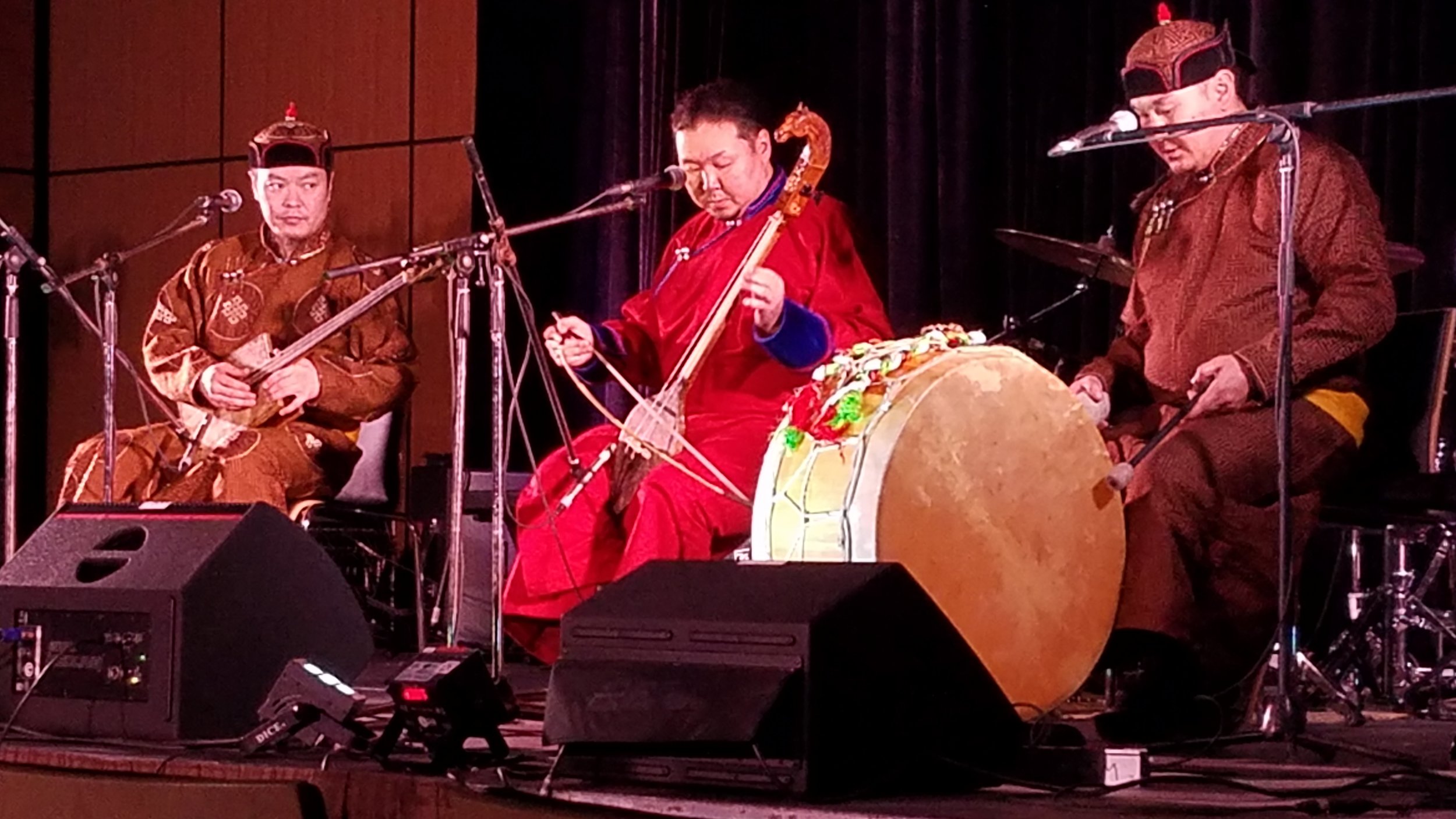
Marlon James’s novel is steeped in Jamaican patois. He had trouble writing it early on, almost defeated by the task of juggling its multiple voices, he said, until someone suggested he read William Faulkner’s As I Lay Dying. I also appreciated his shout-out to Jessica Hagedorn’s novel Dogeaters (1990), which I’d admired years ago, as the “greatest novel about Jamaica” even though it’s set in the Philippines. I never got a chance to suggest to James that A Brief History of Seven Killings, winner of a Man Booker prize, reminded me a bit of Richard Price’s streetwise novel of young drug dealers, Clockers, but it did. I’ll look forward to a forthcoming TV series based on James’s big novel. James is an executive producer and one of five writers working on scripts for the 10 episodes (for Amazon). More power to him.
All of this literary immersion, of course, takes place deep in the heart of Duval Street, the spine of Key West’s daily carnival of unleashed hedonism. Key West is slowly recovering from the hurricane that ravaged the middle Keys; though it suffered relatively little damage, Key West is still affected by misperceptions, and the tourist business did not yet seem fully up to speed. Some street performers certainly were having a tough time of it. “These literary fuckers aren’t giving anything up,” said one noodling flutist. He was crouched on a sidewalk down the block from the San Carlos Institute, a historic Cuban building that houses the annual seminar.
I felt rather lucky landing a place in the seminar, which has been going on for 36 years. The seminar sells out quickly and seems to have become a literary playground for Key West’s high society. (Next year: Margaret Atwood!) Oh well; I can think of worse places to take a winter vacation. And the chance to expand my literary boundaries and add to my must-read piles seems kind of worth it.
10 Thoughts About Boston for a Friend Who's Moving There
A friend is moving to Boston so I gave her some thoughts about my hometown. I haven’t lived there for many years, but I get back every so often and love to experience new places and old. Some people will find this list clichéd or surely incomplete (no mention of public transit? I love the T). So be it for now.
(I’ve gotta say, the other day I got a lump in my throat when the Patriots came back to win that AFC championship game. The Pats are not exactly my first team, but I was a little surprised to sense the hometown pride. Turns out I’ll be in New York on Super Bowl Sunday. It’s not quite halfway between Foxborough and Philly, though close enough, and I suspect there won’t be many Patriots fans in the sports bars. We’ll see.)
So here goes. Not in any particular order.
Fall in love with the ocean. Sandy beaches on Cape Cod to rocky coast of Maine. Find the places that move and mesmerize you.
Neptune Oyster Bar, North End. Yes it's tiny and sometimes takes hours to get in, but I like the place, especially sitting at the bar. Some of the freshest oysters, etc., in town. Lobster rolls two ways. Good beer and wine.
Harvard Square. Overly gentrified and sorta too trendy, but it's the heart of intellectual and multi-cultural Cambridge. Bookstores, shops, restos, coffee or tea and the leafy pleasure of walking around Harvard Yard. I bought my first jazz albums at the Coop just about 50 years ago (Coltrane, Monk, Cannonball Adderley) and my first copy of Howl at the newsstand outside. The vibe remains if you know where to look. Try the Red House (was closed for renovation last time I was there) or new place, Waypoint. Always new restaurants opening.
Speaking of which: Craigie on Main. Between Central and Kendall squares in Cambridge. One of my go-to restaurants. Again, I like the bar: creative cocktails, good wines, French-style cooking. Pricey, but you can get a burger too. One of my Boston faves.
The Granary Burial Ground. When you walk the historic streets of downtown Boston take a stroll through this quaint old cemetery. It'll put you in touch with the spirit (and spirits), you know, names like Adams, Franklin, et al. (Photo)
Boston Common. One of the nation's truly great public spaces. Parkland, pond, etc. On northeast corner, on Beacon Hill across from Statehouse, don't miss the bronze sculpture (by Saint Gaudens) commemorating the Massachusetts 54th Volunteer Infantry Regiment, the black soldiers fighting for the Union in Civil War (photo). And a few steps away from there is another great (and expensive) Boston restaurant: No 9 Park, one of restaurateur Barbara Lynch's signature places. Thoughtful, creative, potentially romantic.
The art museums: Museum of Fine Arts and the Gardner (photo) are mere blocks apart, so plan a twofer. (At the MFA, don't miss the sublime installation, "pivot blue green," by former Kansas Citian Anne Lindberg, in the contemporary wing; look up. Photo) Harvard's museums also worth checking out. And the ICA, near the Seaport (take the Silver Line!), is cutting edge in a cool building (photo).
Bukowski. OK, not every joint has to be expensive. This great dive bar and griil will appeal to your inner beer nerd. It's up a side street from Prudential Center (where you can indulge in the new Eataly). Good burgers and sandwiches; sassy servers. Pretty sure Bukowski, named for the grimy LA poet, is cash only.
JFK Library and Museum. To be a real Bostonian you must make a pilgrimage (via Red Line and a shuttle bus) to this important place of local and national history. The library also houses one of the most significant collections of Hemingway material, in the non-public research rooms upstairs. Let me know if you go and I will try to drop a word and get you a peek into the Hemingway Room. Also new out there is a Ted Kennedy center, but I haven't been there.
Fenway. Quirky and iconic. Surely you'll go there to see the Royals. Fun option: try the Bleacher Bar. Some seats have a window view overlooking center field, or there's TV above the bar. It’s open year round if you’re in the neighborhood. Also in the neighborhood: Eventide Oyster, a Boston branch of the well-regarded Portland (Maine, of course) restaurant, opened to wild expectations in 2017.
This food thing: A sweet and melancholy affair
I have a large appetite. Food is not just nutrition but celebration. And life is too short to eat boring food, just as it’s too short to drink unremarkable wine. So I splurge sometimes. I cook with focus, adventure and a kind of subdued passion. I go for new tastes.
Yet, lately, I tend to eat less. Call it diabetes discipline. That’s optimistic. The numbers are good, though my liver would tend to disagree. Still, if tempted with a whole roasted fish or an oozing burrata with smoked trout roe, I’m all over it, at least for a few bites. Turns out that a heaping plate of crispy beef from a local, old-reliable Chinese restaurant can remain the centerpiece of four leftover lunches. I mean, why stuff yourself?
These thoughts began arising as I read a new collection of the late Jim Harrison’s food-and-life essays. The book’s title, A Really Big Lunch, refers to a spectacularly excessive, 37-course feast (or was it 42?) put on by a French chef and friend of Harrison’s. Even Harrison, whose appetites clearly were larger than mine, felt overwhelmed, almost defeated at one point. Harrison holds nothing back as a writer, and some readers might be turned off by his lecherous confessions and old-school impropriety (the essays reach as far back as the 1970s). But looking past all that, which, in the current sexual-harassment environment, becomes admittedly harder to do, he has wise and entertaining things to say about food and wine. I plan to cherry-pick some of Harrison’s wine writing for a paper I’m planning to give at a Hemingway conference, in Paris, in 2018. And imagine my surprise when I realized recently that in my modest collection of bottles I’ve got a Domaine Tempier Bandol from a few years back, which apparently was Harrison’s favorite wine in the world.
So, food, wine and cooking. From time to time I pay attention to the appetites.
On a fall Saturday, with nothing much else going on, I turned some of the last of our yard tomatoes into a marinara. They were not lovely orbs. They weren’t even deeply red, but they would do for a kitchen improvisation. It took a while in boiling water to loosen their skins, but when that was done I set them aside to cool. Chopped onions and garlic and the last of some baby carrots in the fridge. I was hoping to add tomato paste to the simmering stew, to add some color and heft, but alas I could find none on the shelf. Here’s a suitable substitute: a small jar of prepared tapenade; hmm, red peppers, some kind of cheese, why not? The tapenade turned the marinara a bit orange, but with salt, pepper and dried herbs, it all tasted pretty fine nearly two hours later when I turned off the burner. I put some of the marinara in a bag to freeze, and held out a good portion to eat the next day.
One Sunday, we found some frozen lamb chops in the freezer. I chopped onion and garlic. I opened a red wine (a mass market red Zinfandel) and a jar of vegetable stock I’d made around Thanksgiving. Ta da: braised lamb, with little potatoes and carrots. We ate lamb chops for days.
As a onetime restaurant critic, my radar remains fairly well tuned when we go out to eat. Yet, I failed myself on a recent trip to Toronto. Though I managed to sample a decent variety of tastes in a couple of days – pub food, tapas at a trendy Sherry bar -- I missed the hugely important world of alluring Asian cuisines that seem to define dining in that capital of cultural diversity. Next time, for sure. A recent trip to Atlanta gave us a sampling of that city’s burgeoning fine-dining scene, though we barely scratched the surface. In Boston this fall, at the Neptune Oyster Bar (pictured), I managed to consume some of the finest oysters on the half shell I’d ever met. In Kansas City, I’ve sampled a couple of promising new restaurants lately and always find pleasure and creativity when returning to old favorites (Novel, the Rieger, the Antler Room, to name just three). And I had one of the best meals of the year when birthday splurging in Corvino’s Tasting Room (details in a previous blog). But I always have to remind myself that some of the other best meals of the year occurred in domestic settings: A humbly generous and bustling family meal around an extended kitchen table at the Zia Pueblo in New Mexico; an intimate and poignant Thanksgiving tribute with family members of a close friend who had died just the week before.
With the holidays in full swing, I expect much feasting ahead, some of it happy, some, so it goes, melancholy. The warmth of the kitchen, the clink of glasses, all that love on our plates – sure, we can’t help but feel grateful for what we have.